
Vitamin C Serum: Why the Whole Internet Is Searching for It Right Now
Skin Science · The Most-Searched Edit
More people search for vitamin C serum than almost any other skincare product. Most of them are searching because the one they already own stopped working.

Not every vitamin C serum is built to last past week three
Short answer: vitamin C serum is exploding in search right now because it genuinely works when formulated well, and a huge share of the people searching for it are trying to figure out why the bottle they already bought turned orange, started stinging, or simply stopped doing anything.
Type "vitamin C serum" into any search bar right now and you will fall into a genuinely enormous amount of traffic. It is, by most measures, one of the single most-searched skincare products that exists, ahead of almost every ingredient with a similarly loyal following. That is not new, exactly — vitamin C has been a skincare mainstay for years. What is new is why so much of that search volume exists: a huge percentage of it is people troubleshooting a serum that already disappointed them.
That disappointment has a name, a cause, and a fix. Here is the honest version of what is actually going on with vitamin C serum in 2026 — why it is everywhere, why so many bottles fail before they are even finished, and what separates a vitamin C serum that is quietly doing nothing from one that is actually changing your skin.
Why Vitamin C Is Having Such a Moment
Part of the appeal is simply that vitamin C delivers a result you can see. Within a few weeks of consistent use, most people notice brighter, more even-toned skin — a genuinely visible payoff that few other ingredients offer this quickly. Add to that its role as one of the best-studied topical antioxidants, its support for collagen production, and its ability to help fade the kind of dullness and discoloration that dominates modern skincare conversations, and it is easy to see why it has become the ingredient everyone wants to understand better rather than a passing trend.
But there is a second, less flattering reason vitamin C dominates search: a remarkable number of vitamin C serums on the market are formulated with an ingredient that is, quite literally, falling apart in the bottle before it ever reaches your skin.
The Orange Bottle Problem, Explained
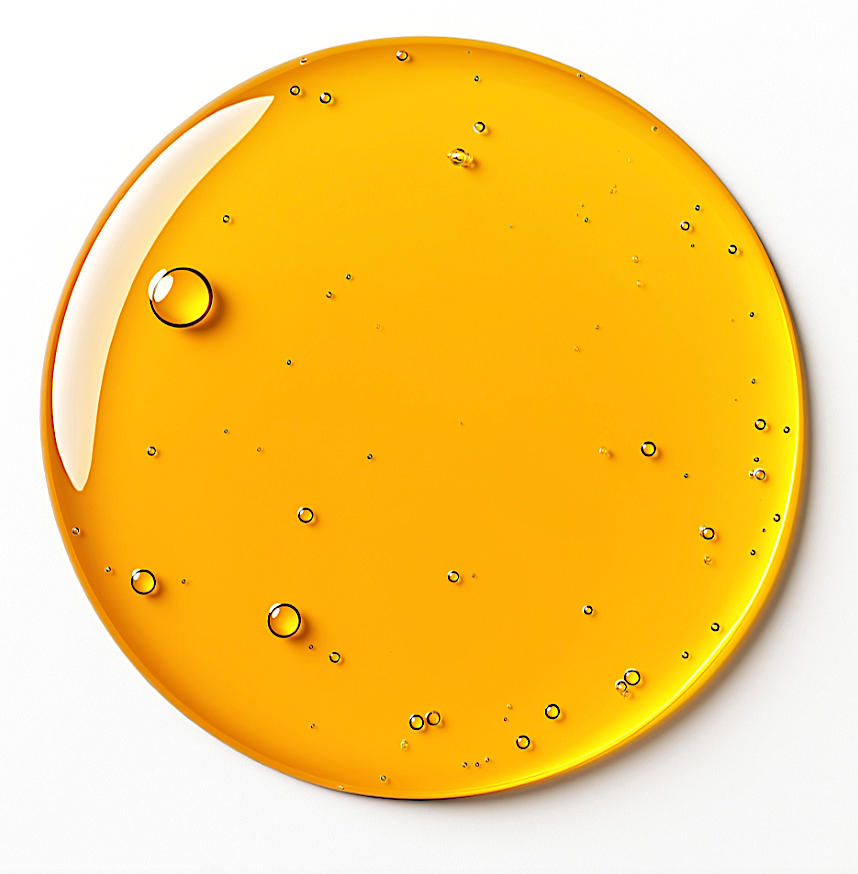
If you have ever owned a vitamin C serum that went from clear or pale yellow to a deep amber or brown, you have watched oxidation happen in real time. The culprit is almost always L-ascorbic acid, the original and most heavily researched form of vitamin C. It is genuinely effective in a lab setting, but it is also famously unstable — it begins to degrade the moment it is exposed to air, light, or even the water already present in most formulas.
Once that degradation happens, the serum is not just less effective. The oxidized byproducts can also be mildly irritating, which is a large part of why so many people associate vitamin C serum with stinging, redness, or a reaction they did not expect. The ingredient did its job in the marketing photo and then quietly failed inside the bottle sitting on your bathroom shelf.
This is precisely why both of I'm Fabulous's vitamin C serums are built around a different form entirely: tetrahexyldecyl ascorbate, or THD. It is oil-soluble rather than water-soluble, which means it does not carry the same instant-oxidation problem, penetrates the skin efficiently because it can move through the lipid layers of the skin barrier rather than sitting on top of it, and remains active for far longer — both on the shelf and once it is on your face. It is a formulation choice, not a marketing one, and it is the difference between a serum that works on day one and a serum that keeps working on day ninety.

Stability is not glamorous. It is the entire point.
What Actually Separates a Good Vitamin C Serum From a Bad One
Most vitamin C shopping advice fixates on percentage — 10%, 15%, 20% — as though a higher number automatically means a better serum. In practice, the form of vitamin C used, the formulation it is suspended in, and how it is packaged matter more than the number on the front label.
The form of vitamin C. L-ascorbic acid has the deepest research history but is unstable and can be irritating, particularly for sensitive or reactive skin. Derivative forms like THD trade a small amount of raw research volume for dramatically better stability, gentler tolerability, and, in practice, more consistent real-world results because the ingredient survives long enough to actually do something.
What it is formulated without. A serum built with water as the first ingredient gives L-ascorbic acid exactly the environment it needs to degrade fastest. I'm Fabulous's Vitamin C Super Brightening Serum is deliberately formulated without water as a first ingredient, suspending THD instead in jojoba, rosehip, and sea buckthorn oils that support the skin barrier while they deliver the active ingredient.
How it is packaged. Light is one of vitamin C's biggest enemies. A serum sold in clear glass or plastic is degrading every time it sits on a sunlit shelf or bathroom counter, regardless of how well it was formulated at the factory.
Inside the I'm Fabulous Vitamin C Serums
I'm Fabulous carries two vitamin C serums, built for two different skin priorities, and both formulated around THD rather than L-ascorbic acid.
The Vitamin C Super Brightening Serum is built for dry, sun-affected, or discoloration-prone skin. It uses 20% tetrahexyldecyl ascorbate suspended in a water-free base of jojoba, rosehip, and sea buckthorn oils, with geranium oil added specifically to calm the inflammation that so often accompanies dullness and dark spots. It is rich enough to double as a lightweight moisturizer on its own.
The Vitamin C Hydrating Serum pairs the same stable vitamin C base with a concentrated botanical hyaluronic acid, aimed at anyone whose priority is plumping and hydration alongside brightening — a strong option for skin that is dehydrated, showing early fine lines, or dealing with sun damage that needs both correction and moisture at once. It is formulated for both morning and evening use and is suspended in violet glass bottles specifically to block the UVA and UVB light that would otherwise degrade the formula on the shelf.
How to Actually Use Vitamin C Without Wasting It
Vitamin C does its best work in the morning, layered underneath sunscreen, where its antioxidant properties help defend the skin against the UV exposure and environmental stress it will face over the course of the day. Applying it at night is not wrong, but it is missing the ingredient's most natural use case.
The most common routine question is whether vitamin C can be used alongside peptides, particularly copper peptides, and the honest answer is: generally yes, with a little intention around timing. We have covered this in real detail in two dedicated pieces — whether you can use a vitamin C serum while using a copper peptide serum and whether GHK-Cu peptide serum can be used alongside vitamin C — and both are worth reading in full before combining the two in a single routine. If peptides are new to you generally, our piece on what peptides actually are and how they work is a good place to start.
Retinol is the other ingredient people most often ask about pairing with vitamin C. As we cover in our piece on copper peptides versus retinol, retinol is generally best reserved for the evening, which naturally separates it from a morning vitamin C application without any extra effort on your part.
One habit worth building regardless of which serum you choose: store it away from direct sunlight, keep the cap tightly closed between uses, and take the color seriously. A vitamin C serum that has shifted from pale yellow to a deep orange or brown has told you, honestly, that it has oxidized and is no longer worth the real estate on your skin.
Questions, Answered
Why is vitamin C serum so popular right now?
Vitamin C serum is one of the most-searched individual skincare products, driven by its visible, relatively fast brightening effect and its position as one of the few ingredients with strong evidence behind it for both antioxidant protection and collagen support. Interest has also grown as more people learn that not all vitamin C serums are formulated the same way.
Why does my vitamin C serum turn orange or brown?
That color change is oxidation. It happens because the most common form of vitamin C used in skincare, L-ascorbic acid, is chemically unstable and breaks down quickly when exposed to air, light, and water. Once it has oxidized, the serum is no longer doing much for your skin and can even be mildly irritating.
What is the difference between L-ascorbic acid and other forms of vitamin C in skincare?
L-ascorbic acid is the most researched form but also the least stable and the most likely to irritate sensitive skin. Derivative forms such as tetrahexyldecyl ascorbate (THD) are oil-soluble, penetrate the skin efficiently, and remain stable far longer, which means the serum is still doing its job by the time you get to the bottom of the bottle.
Can I use vitamin C serum with retinol or peptides?
Yes, though timing matters more than most people realize. Vitamin C generally works best applied in the morning under sunscreen, while retinol is typically reserved for night. Vitamin C and peptides such as copper peptides can be used in the same routine, though many formulators recommend alternating or spacing them to avoid any theoretical interaction, which is covered in more detail in our dedicated articles on the topic.
What should I actually look for in a vitamin C serum?
Look at the form of vitamin C used, not just the percentage on the label. A stable, well-formulated serum using a derivative like THD at a meaningful concentration will generally outperform a high-percentage L-ascorbic acid serum that oxidizes within weeks. Packaging matters too: vitamin C serums should be in opaque or tinted glass, not clear plastic.
A Vitamin C Serum That Actually Survives the Bottle.
Formulated with stable, oil-soluble THD instead of oxidizing L-ascorbic acid — because a serum that degrades on the shelf was never doing your skin any favors.
Shop Vitamin C SerumsOrganic · Vegan · Made in the USA