What Is PDRN in Skincare? The Salmon DNA Ingredient, Explained
The Skin Edit | The Ingredient Issue | October 2026
The Repair Code
PDRN, the DNA-derived ingredient behind Korea's famous "salmon facials," has become the breakout skincare ingredient of 2026. We explain what it is, what it can and can't do in a serum, and why we paired it with NAD+ in our new formula.
Written by the I'M FABULOUS COSMETICS® studio, with notes from our founder, a Master Esthetician of more than twenty years | 9 minute read
For years, it was a whispered secret of Seoul's dermatology clinics: an injectable treatment made from purified DNA fragments, prized not for adding volume but for helping skin look rested, repaired and renewed. Then the ingredient left the clinic. Today PDRN appears in serums, essences, creams and even makeup, and it has become one of the most searched skincare terms of the year.
Trends move fast. Our job is to slow them down, read the research, and tell you what is real. So here is our honest guide to PDRN, and the thinking behind the newest version of our best-selling serum.
The short answer
PDRN (polydeoxyribonucleotide) is a skincare ingredient made from purified DNA fragments, traditionally sourced from salmon or trout and increasingly from plants or microbes. On ingredient lists it often appears as sodium DNA. Injectable PDRN has been used in aesthetic medicine since the early 2000s and is studied for its role in skin recovery and regeneration. In topical serums, PDRN is valued as a soothing, skin-conditioning ingredient that supports hydrated, smoother-looking skin, though clinical evidence for topical use is still emerging and results depend on the full formula. It pairs well with NAD+, antioxidants, peptides and hyaluronic acid.
Chapter oneWhat is PDRN?
PDRN stands for polydeoxyribonucleotide: a mixture of DNA fragments that have been extracted and highly purified. The best-known source is salmon or trout DNA, which is why PDRN is often nicknamed "salmon DNA" and the clinic treatments "salmon facials." Plant-derived versions, from sources such as ginseng, soybean or green tea, and microbial versions made through fermentation are increasingly available.
In cosmetic ingredient lists, DNA-derived ingredients are typically listed as sodium DNA. So if you are looking for PDRN on a label, that is usually the name to find.
Chapter twoFrom the clinic to the serum
PDRN began its life in medicine and aesthetic clinics, where it is injected directly into the skin. Research on injectable PDRN has focused on tissue repair and recovery, and has been encouraging. In the 2010s, Korean clinics popularized PDRN injections as "skin healers" rather than fillers, and K-beauty brands later brought the ingredient into everyday topical products.
Here is the part most brands leave out: a serum is not an injection. PDRN is a large molecule, so applied to the skin it works mainly at the surface, where it acts as a hydrating, soothing and conditioning ingredient. Researchers are actively studying topical PDRN, but the evidence is still emerging, and the results you see depend heavily on the complete formula around it.
“A great ingredient is only the beginning. The formula around it is what your skin actually experiences.”
From our founder's treatment room notes
Chapter threePDRN vs. NAD+ vs. GHK-Cu vs. exosomes
The four most talked-about "regenerative" ingredients are often confused. Here is how they differ.
| PDRN | NAD+ | GHK-Cu | Exosomes | |
|---|---|---|---|---|
| What it is | Purified DNA fragments | A cellular energy coenzyme | A copper-binding peptide | Tiny vesicles that carry signals between cells |
| Typical source | Salmon, plants or microbes | Lab-made | Lab-made | Plant or cell cultures |
| Known for | Recovery and soothing | Energy and resilience | Firmness and repair | Renewal and radiance |
| Topical evidence | Emerging | Emerging | More established | Emerging |
| Best paired with | Hydrators, NAD+, peptides | Niacinamide, antioxidants | Hydrators, gentle actives | Hydrators, peptides |
Curious about the others? Read who should use copper peptides.
Inside the new formula
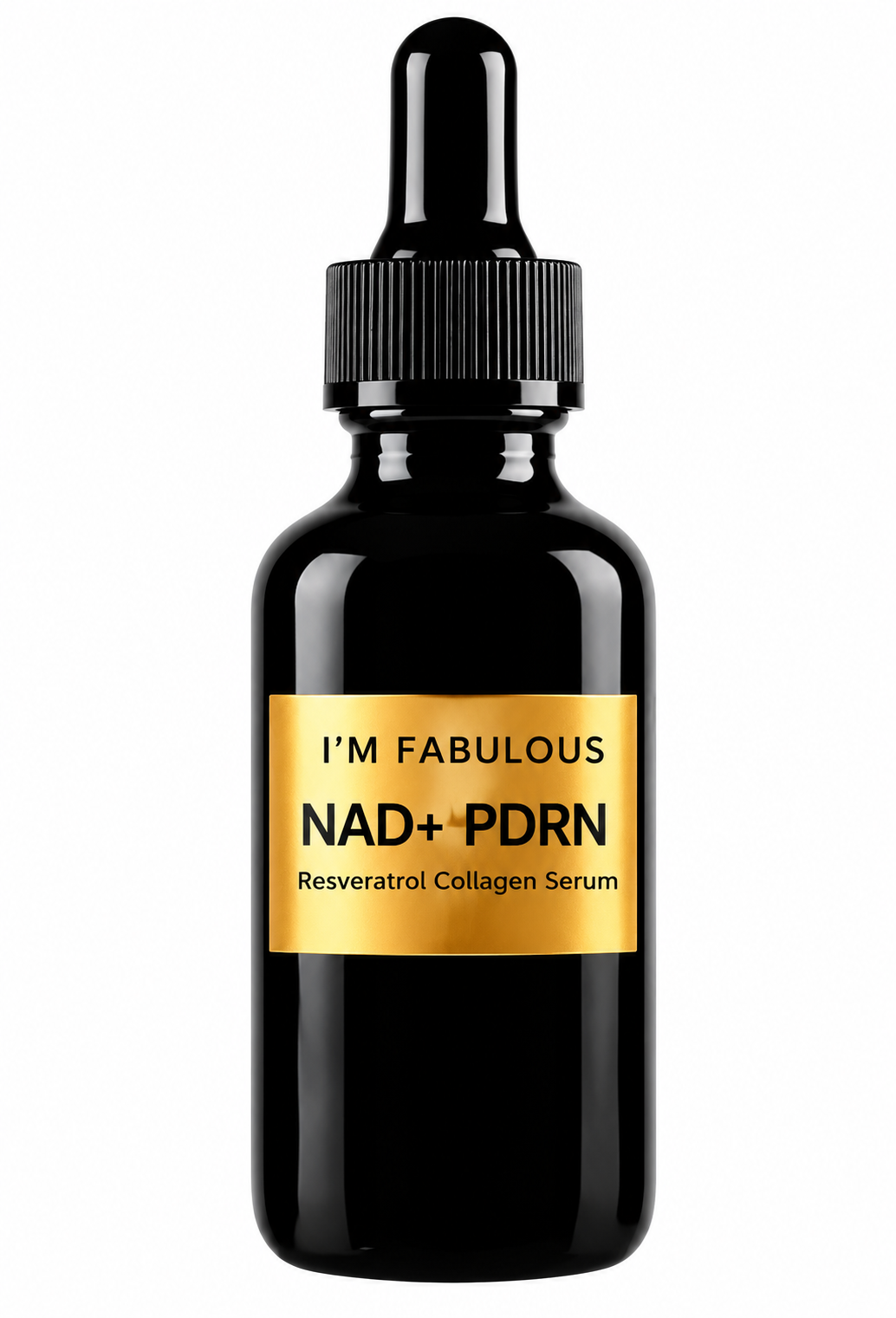
NAD+ PDRN Resveratrol Collagen Serum. 30 ml in black glass. Fragrance-free and made in the USA.
- Sodium DNA (PDRN)
- A DNA-derived conditioning ingredient for soothed, supple-looking skin.
- NAD+ & niacinamide
- The energy coenzyme and its well-studied vitamin B3 precursor, for radiance and a stronger barrier.
- Resveratrol & 3-O-ethyl ascorbic acid
- Antioxidant support and a stable vitamin C for brightness.
- Sodium hyaluronate & glycerin
- Humectants that draw in water for immediate plumpness.
- Soluble collagen, seaweed, aloe & rosemary
- Silky hydration, comfort and botanical antioxidants.
Chapter fourWhy we paired PDRN with NAD+
Our original NAD+ Resveratrol Collagen Serum was built around energy: NAD+ and niacinamide to support tired, stressed skin. With PDRN, the new formula adds a second idea: recovery. Energy and recovery are two sides of how healthy skin keeps itself looking youthful, and we wanted one serum that speaks to both, surrounded by antioxidants and hydrators that deliver a visible difference from the first week.
We believe in honesty as much as innovation. Research has not established that any topical serum reverses skin aging, and no specific timeline has been clinically established for this finished formula. What you can expect is softer, more hydrated, more radiant-looking skin, with improvements in texture and the look of fine lines building over weeks of consistent use.
Chapter fiveWho it's for, and how to use it
The serum is designed for mature skin and for anyone noticing dryness, dullness, fine lines or a tired-looking complexion, whether in their 40s, 50s, 60s or beyond. It is lightweight enough for morning and evening, and works for men who want one effortless step.
- Cleanse. Start with clean, dry skin.
- Apply. Press a few drops of the NAD+ PDRN Serum into the face and neck, morning or evening.
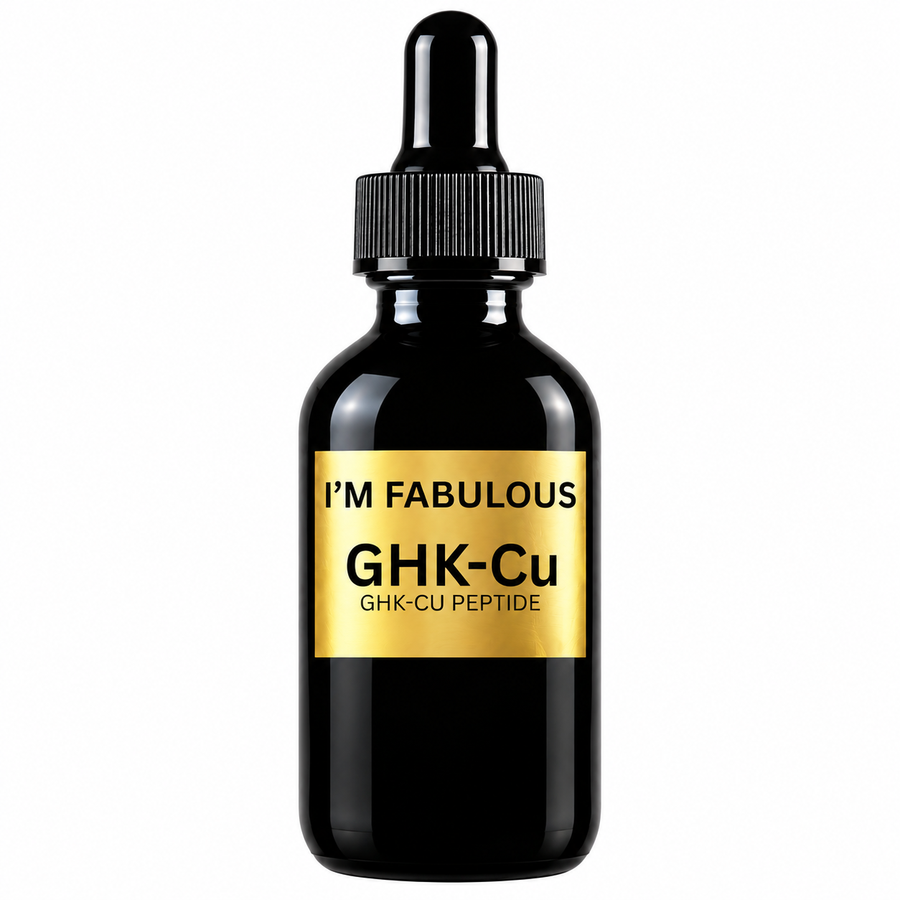
- Layer. If you use GHK-Cu Copper Peptide Serum or a retinoid, introduce them gradually and patch-test if your skin is sensitive. The formula already contains niacinamide and a vitamin C derivative.
- Moisturize. Seal with Peptide Collagen Repair Cream.
- Protect. By day, broad-spectrum SPF 30 or higher.
Over 50? Pair this serum with our complete anti-aging routine after 50. For the bigger picture, read our guide to skin longevity.
The questions we're asked mostPDRN, answered
What is PDRN in skincare?
PDRN (polydeoxyribonucleotide) is an ingredient made from purified DNA fragments. Originally used in injectable clinic treatments, it now appears in serums and creams as a soothing, skin-conditioning ingredient that supports hydrated, smoother-looking skin.
Is PDRN made from salmon sperm?
Traditionally, yes: the most common source is salmon or trout DNA, which is why it's nicknamed "salmon DNA." Plant-derived and microbial versions also exist. If the source matters to you, check with the brand.
Does topical PDRN actually work?
Injectable PDRN has the strongest research. Topical PDRN is a large molecule that works mainly at the skin's surface as a hydrating and soothing ingredient, and clinical evidence is still emerging. Results depend on the full formula.
What is sodium DNA on an ingredient list?
Sodium DNA is the cosmetic ingredient name commonly used for DNA-derived ingredients such as PDRN.
What is the difference between PDRN and exosomes?
PDRN is made of purified DNA fragments, while exosomes are tiny vesicles that carry signals between cells. Both are studied for skin renewal, and topical evidence for both is still emerging.
What is the difference between PDRN and GHK-Cu?
PDRN is a DNA-derived ingredient investigated for skin recovery, while GHK-Cu is a copper-binding peptide studied for firmness and repair. They can be used in the same routine; introduce them gradually.
Can I use a PDRN serum with retinol or vitamin C?
Many routines combine them. The I'M FABULOUS NAD+ PDRN Serum already contains niacinamide and a vitamin C derivative, so introduce retinol gradually and patch-test if you have sensitive skin.
How long does a PDRN serum take to work?
Skin can feel softer and more hydrated shortly after application. Changes in texture and the look of fine lines typically require several weeks of consistent use. Results vary.
Energy, meet recovery.
NAD+, PDRN, resveratrol, niacinamide and vitamin C in one weightless, fragrance-free serum. Made in the USA, with three complimentary samples in every order.
Discover the NAD+ PDRN SerumThis article is for educational purposes and is not medical advice. Cosmetic products are not intended to diagnose, treat, cure or prevent any disease. Individual results vary. Read our medical disclaimer.