Exosome Treatments Cost Up to $2,500 a Session and Carry an FDA Warning. Here's the Honest Comparison
I'M FABULOUS COSMETICS · The Ingredient Science Edit
Exosome facials are booked out weeks in advance at med-spas across the country. The FDA, meanwhile, has spent the last several years quietly, repeatedly warning about exactly the category of products those specific facials actually rely on.
Quick summary: Exosomes, tiny cell-derived vesicles carrying growth factors and signaling molecules, have become one of the biggest trends in professional aesthetics, with treatments running anywhere from roughly $900 to $2,500 per session. What most marketing around them leaves out: no exosome product currently has FDA approval for cosmetic use, and the FDA has issued repeated warnings, including reports of real infections, tied to unapproved exosome products. None of that means exosome science itself is fake or without genuine merit. It means the specific products being sold at many med-spas exist in a regulatory gray zone worth understanding before you spend real money on one. Topical peptides work through a genuinely different, considerably more established mechanism, at a small fraction of the typical professional cost.
What Exosomes Actually Are
Exosomes are tiny, cell-derived vesicles, typically 30 to 150 nanometers across, that carry proteins, growth factors, and genetic material between cells as part of normal biological communication. In aesthetic medicine, exosomes derived from plant or human stem cell sources are applied topically, often immediately after microneedling to take advantage of temporarily increased skin permeability, with the goal of accelerating collagen remodeling and tissue repair. It's genuinely fascinating, legitimate science, and the underlying biology of exosome-mediated cell communication is real and reasonably well-documented across various broader research contexts, particularly outside the world of aesthetics specifically.
The trend has grown fast. Estimates of the exosome skincare and aesthetics market vary considerably depending on the source, ranging from several hundred million to a few billion dollars depending on how the category is defined, with growth rates commonly cited in the 10 to 17% annual range. Clinics and med-spas account for a substantial, growing share of where these particular treatments actually end up being administered.
The Part the Marketing Usually Leaves Out
Here's what doesn't show up in most exosome facial advertising: no exosome product currently carries FDA approval for cosmetic or aesthetic use. That's not a technicality. In 2019, the FDA issued a public safety notification after receiving reports of serious adverse events, including infections, linked to unapproved exosome products used in a clinical setting. That warning wasn't a one-time event. The agency has continued sending warning letters to companies marketing unapproved exosome products through 2024 and into 2025, specifically calling out multiple products being actively sold and marketed into the aesthetics and wellness space.
We want to be precise about what this does and doesn't mean. It doesn't mean every exosome treatment is dangerous, or that the underlying science is fraudulent. It means the specific commercial products behind many exosome facials exist without the regulatory oversight that would normally apply to a product introduced into skin, especially post-microneedling, when the skin barrier is temporarily compromised and more vulnerable to whatever's actually in that vial.
"Interesting science and an approved, regulated product are not the same thing, and the gap between them is exactly where the FDA's warnings live."
Why We're Telling You This Instead of Just Selling Against It
It would be easy to write this article as a simple hit piece designed to scare you away from a competing treatment category and toward our products instead. That's not what this is, and we think you deserve better than that kind of framing. The honest picture is more nuanced: exosome biology is real, the regulatory situation around commercial exosome products is genuinely concerning, and topical peptides are a mechanistically different tool, not a direct substitute that does the same thing for less money. All three of those things are true simultaneously, and pretending otherwise wouldn't serve you.
How Topical Peptides Actually Work, Mechanistically
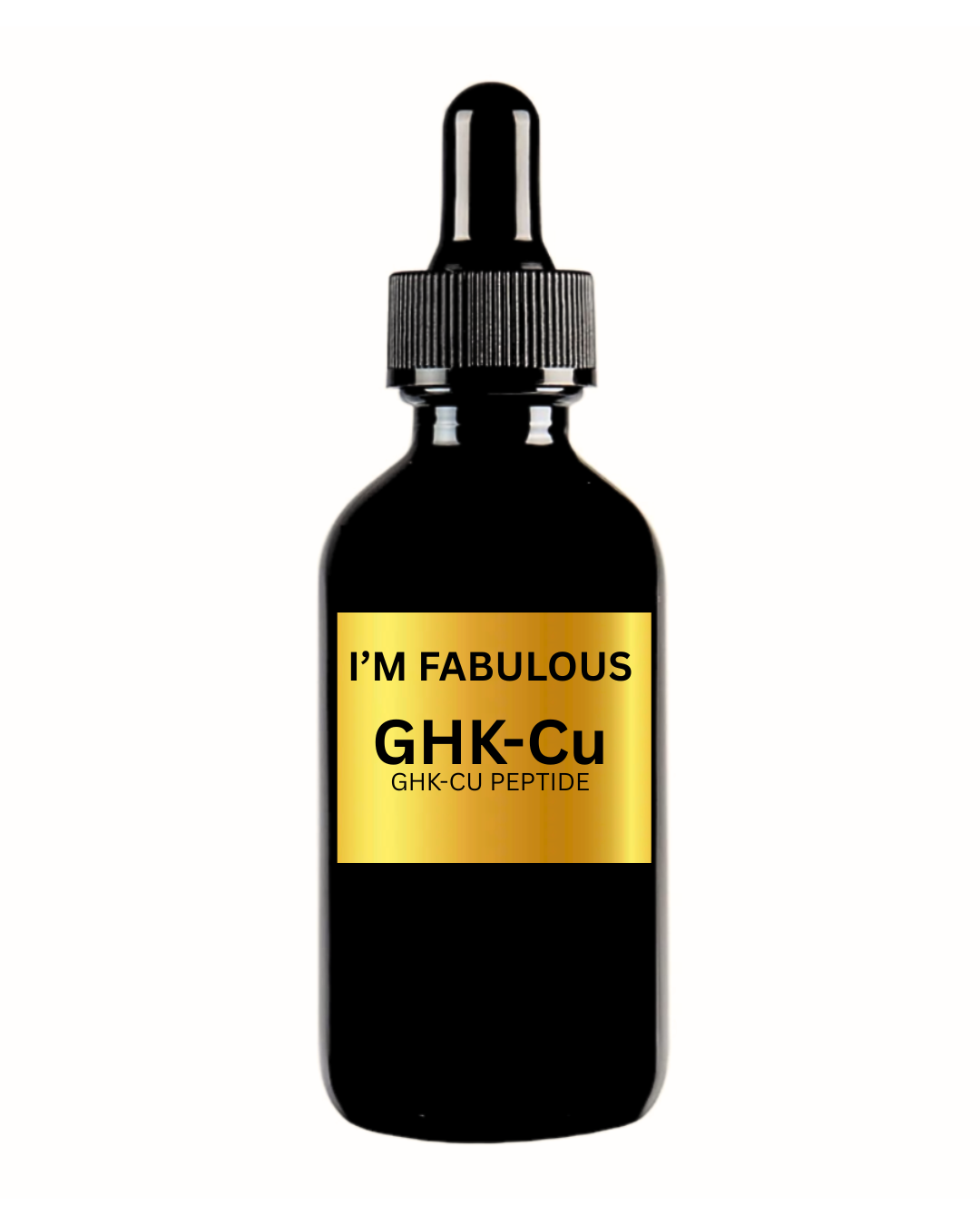
Peptides like GHK-Cu don't work the way exosomes do, and we're not going to claim otherwise. GHK-Cu functions through specific, well-characterized receptor and enzyme interactions, delivering copper to enzymes like lysyl oxidase that play a direct role in collagen cross-linking and remodeling. Published research has shown GHK-Cu increases secretion of growth factors including basic fibroblast growth factor and VEGF, and supports angiogenesis and collagen remodeling in laboratory and animal studies.
That's a real, clearly defined biochemical mechanism, distinct from the broader, far less-characterized payload of proteins, growth factors, and genetic material that exosomes actually deliver to surrounding tissue. Both approaches fall under the general umbrella of "cell-signaling skincare," but conflating them, claiming a topical peptide serum is "basically the same as an exosome treatment," would be inaccurate marketing we're not willing to use, even though it might sell more product in the short term.
The Honest Limitation Worth Naming
In the interest of that same honesty: a meaningful share of the research supporting GHK-Cu's growth-factor and collagen-remodeling effects comes from in vitro and animal studies rather than large-scale human clinical trials. That's a real limitation, and it's one that applies to a lot of skincare ingredient research generally, not a flaw unique to GHK-Cu. What it means practically: the mechanism is genuinely well-supported at a cellular level, but claiming certainty about exact magnitude of visible results in human skin requires more caution than some marketing in this category tends to apply.
The Cost Comparison, Plainly Stated
A single professional exosome session commonly runs anywhere from roughly $900 to $2,500, and most protocols recommend multiple sessions spaced over weeks or months for visible results, meaning a realistic course of treatment can run into five figures. A full bottle of our GHK-Cu Copper Peptide Serum costs $149 and, used consistently, lasts months of daily application. That's not a claim that the two deliver identical results, they operate through different mechanisms and likely different magnitudes of effect. It's a plain statement of what each actually costs, so you can make an informed decision about where your skincare budget goes.
Why Post-Procedure Timing Matters for Either Approach
One detail that applies regardless of which approach you're considering: skin is more permeable and more vulnerable immediately after microneedling or similar procedures, which is exactly why exosome products are typically applied at that moment, to take advantage of increased absorption. That same increased permeability is also exactly why product safety and sourcing matter more in that window, not less. Whatever you're applying to freshly microneedled skin, whether a professional exosome product or a topical peptide serum, deserves scrutiny about what's actually in it and where it came from.
Building a Peptide-Based Routine Instead
For anyone deciding to prioritize topical peptides over a professional exosome treatment, whether for cost, regulatory caution, or simply wanting to start with a lower-risk option first, a straightforward routine works well: GHK-Cu Copper Peptide Serum as the core cell-signaling active, paired with the NAD+ Resveratrol Collagen Serum for cellular energy support through an entirely separate pathway. For anyone specifically managing expression lines alongside general skin quality, adding Syn-Ake or SNAP-8 addresses that concern through yet another distinct mechanism entirely.

Why the Microneedling Pairing Matters Either Way
Whether you're considering a professional exosome treatment or building a topical peptide routine at home, the connection to microneedling is worth understanding on its own terms. Microneedling creates controlled micro-channels in the skin, temporarily increasing permeability so that whatever's applied afterward can penetrate more effectively than it would on intact skin. That's exactly why exosome products are typically applied immediately post-procedure in professional settings, and it's also why product sourcing and safety matter more in that specific window, not less, since anything applied to freshly microneedled skin has a more direct path into deeper tissue.
For anyone building an at-home routine around tools like our mesotherapy tool, the same logic applies: a well-formulated, fully-disclosed-ingredient peptide serum is a meaningfully lower-uncertainty choice to pair with at-home microneedling than an unregulated product with unclear sourcing, regardless of which category that product falls into.
Estheticians Are Asking These Same Questions
This isn't purely a consumer-side conversation. Estheticians and spa professionals who work with clients considering exosome add-ons are increasingly having to navigate the same regulatory ambiguity described throughout this article, often fielding client questions they don't have fully satisfying answers to. For licensed professionals building out service menus, our estheticians and spas resource covers how peptide-based professional protocols fit into a clinic setting without the same regulatory uncertainty currently surrounding commercial exosome products.
Two Composite Examples
Consider someone who researched exosome facials after seeing them recommended repeatedly on social media, only to discover during her own research that the specific products used at several nearby providers weren't disclosed clearly, and that pricing for a recommended multi-session protocol would run well over $6,000. She opted to start with a topical peptide routine instead, a lower-cost, lower-uncertainty starting point, while continuing to research providers more carefully before considering an in-office treatment later.
Or consider someone who had already budgeted for professional exosome treatments and, after reading about the FDA's warnings, specifically asked her provider about product sourcing and regulatory status before proceeding. That's exactly the kind of informed conversation this article is meant to support, not necessarily talking anyone out of a professional treatment, but making sure the decision is made with full information rather than marketing alone.
Why the Regulatory Gap Exists in the First Place
It's worth understanding why exosome products ended up in this gray zone at all, since it's not simply a matter of the FDA being slow to act. Exosomes derived from human cellular material are classified as biological products under existing law, meaning they're subject to the same premarket review and approval requirements as other biologics. That's a rigorous, expensive, multi-year process. A significant number of companies selling exosome products commercially have not gone through that process, instead marketing products under looser cosmetic or wellness framing that doesn't accurately reflect what a biological product derived from human or stem cell material actually is under the law. The FDA's warning letters have specifically targeted this exact pattern, companies marketing what are functionally unapproved biological drugs as though they were simple cosmetic additives.
That distinction matters enormously for anyone evaluating a provider's claims. A provider who describes their exosome product as "natural" or "plant-derived" isn't necessarily describing something outside FDA jurisdiction, and framing it that way doesn't change the underlying regulatory reality of what's actually being injected or applied.
What Happened in the Reported Adverse Events
The FDA's original 2019 safety notification specifically cited multiple patients in Nebraska who experienced serious adverse events after treatment with unapproved products marketed as containing exosomes. The reported harms included serious infections, a significant and sobering outcome for a treatment marketed primarily as an aesthetic or wellness enhancement rather than a medical necessity. That case wasn't presented by the FDA as an isolated anomaly, it was presented as the reason for the broader public warning that followed, and the pattern of enforcement action against additional companies in the years since suggests the underlying sourcing and manufacturing concerns weren't limited to a single bad actor.
How to Read Marketing Claims More Critically
Given everything above, it's worth arming yourself with a few specific red flags before considering any exosome-based treatment. Be skeptical of providers who describe their product as "FDA-registered" or "FDA-compliant" without specifying actual approval status, these terms sound official but don't mean what most patients assume they mean, and registration is a far lower bar than approval. Be equally skeptical of claims that a product is "exempt" from FDA oversight because it's derived from plant sources rather than human cells, since the regulatory analysis depends on intended use and biological activity, not simply the source material. And treat any provider who can't clearly explain their product's sourcing and manufacturing process, in plain language, as a meaningful red flag on its own.
Why Topical Peptides Sidestep This Entire Category of Risk
Topical peptide serums exist in a fundamentally different regulatory category than injectable or professionally-applied biological products. Cosmetic peptide formulations, properly labeled with disclosed ingredient lists, fall under cosmetic regulation rather than the biologics pathway that exosome products are legally required to follow. That's not a loophole, it's an accurate reflection of what a topical peptide serum actually is: a cosmetic formulation with defined, disclosed ingredients, not a biological product carrying cellular material of uncertain origin and composition. This is part of why the safety conversation around topical peptides looks so different from the one currently surrounding exosome products, they're genuinely different categories of product facing genuinely different levels of regulatory scrutiny, for legitimate reasons tied to what each product actually is.
Building Trust Through Ingredient Transparency
Given how much of this article has focused on what happens when sourcing and composition aren't disclosed clearly, it's worth being explicit about our own approach. Every product referenced throughout this article lists its complete ingredient composition, no proprietary blends obscuring what's actually in the bottle, no vague "biological complex" language standing in for specifics. You can review our full ingredients philosophy and see exactly what's in every formulation before you buy, which is precisely the kind of transparency this entire article has argued you should expect from any product going on or into your skin, regardless of category.
What This Means for Combining Approaches
None of this is necessarily an either-or decision. Some clients reasonably choose to pursue both, a professional treatment from a provider they've vetted carefully alongside the safety questions outlined above, plus a consistent topical peptide routine at home to support results between sessions and maintain skin quality on an ongoing basis. What matters isn't picking one category and rejecting the other entirely, it's making each individual decision, professional treatment or home product, with the same level of informed scrutiny rather than assuming either category is automatically safe simply because it's popular or well-marketed.
What to Actually Ask a Provider Before an Exosome Treatment
If you're still considering a professional exosome treatment after reading this, that's a legitimate choice to make with a licensed provider, and there are specific, reasonable questions worth asking first. Ask directly what specific product is being used and whether it has FDA clearance or approval for the intended use. Ask where the exosomes are sourced from and how the provider verifies safety and sterility. And ask what happens if there's an adverse reaction, what the provider's protocol is, and whether they've had any patients experience complications. A provider confident in their product's safety record should be able to answer all three clearly and specifically, not vaguely.
What Makes Peer-Reviewed Evidence Different From Marketing Claims
It's worth pausing to explain why this article keeps distinguishing between in vitro studies, animal studies, and human clinical trials, since that distinction gets flattened constantly in skincare marketing across the entire industry, not just around exosomes. In vitro research, studies conducted on cells in a lab setting, tells you whether a mechanism is plausible at a cellular level. Animal studies add a layer of information about how that mechanism behaves in a living system. Human clinical trials, particularly large, randomized, controlled ones, are what actually establish how an ingredient performs in real skin, at real concentrations, over real time periods, accounting for the enormous variation between individual people's biology.
A lot of skincare marketing, across every brand and every ingredient category, cites the first two types of evidence while implying the confidence level of the third. We're naming this pattern directly because it's exactly the kind of overreach we're trying to avoid in how we talk about our own products, including GHK-Cu, where we've been explicit that human clinical evidence remains more limited than the cellular-level research would suggest on its own.
Why Cost Transparency Matters Beyond the Sticker Price
The cost comparison earlier in this article focused on the price difference between a professional exosome session and a bottle of topical serum, but it's worth extending that comparison further. A realistic exosome treatment protocol, several sessions spaced over months, plus any recommended maintenance sessions afterward, can realistically total anywhere from several thousand to well over ten thousand dollars depending on the provider and protocol. A topical peptide routine, used consistently over the same time period, typically costs a small fraction of that, even accounting for reordering multiple bottles over months of daily use. That math matters for anyone making a genuinely informed decision about where limited skincare and aesthetics budget should go first.
The Placebo and Expectation Effect Worth Acknowledging
In the interest of complete honesty, it's worth naming something that applies to nearly every category of cosmetic and aesthetic treatment, including our own products: expectation and the ritual of an expensive, professionally-administered treatment can genuinely influence perceived results, independent of the treatment's actual biological mechanism. This isn't a reason to dismiss reported satisfaction with exosome facials as meaningless. It is a reason to be appropriately cautious about relying purely on anecdotal testimonials, from any product or treatment category, as a substitute for the kind of controlled research described above.
Why We're Comfortable Making This Comparison Publicly
Publishing an article that explicitly avoids overselling our own product, acknowledging real limitations in the human clinical evidence for GHK-Cu rather than glossing over them, is a deliberate choice. We'd rather earn trust through consistent, verifiable honesty than win a single sale through inflated claims we can't actually back up. If you've read this far, you now know more about the actual regulatory and evidentiary landscape around both exosomes and topical peptides than most marketing in either category will tell you directly, and that's precisely the point of publishing something like this in the first place.
A Note on Individual Skin Variation
Whichever approach you choose, professional exosome treatment, topical peptide routine, or both together, individual results vary meaningfully based on skin type, age, existing skin condition, and consistency of use. No single article, including this one, can promise a specific outcome for your specific skin. What we can promise is accurate information about mechanism, cost, and regulatory status, so that whatever you decide, you're deciding with real information rather than marketing alone.
Why This Isn't an Anti-Exosome Article
To be direct: this isn't an argument that exosome science is fake or that everyone using these treatments is being misled. Legitimate, well-sourced, properly regulated exosome products may well exist and may well be used safely by informed providers and patients. The point is narrower and more useful than a blanket condemnation: the regulatory gap around this category is real, verified by the FDA's own public statements, and it's exactly the kind of information that should factor into a decision this expensive, not be buried under enthusiastic marketing copy.
Signs a Provider Is Being Appropriately Transparent
Just as there are red flags worth watching for, there are positive signals worth recognizing too. A provider who volunteers information about product sourcing before you ask, who's comfortable acknowledging the current regulatory gray zone rather than deflecting the question, and who presents realistic rather than dramatic before-and-after expectations is generally operating with a higher standard of transparency than one who avoids these topics entirely. The same standard applies to how any skincare brand, including ours, talks about its own products: comfort discussing limitations is generally a better trust signal than uniformly enthusiastic claims with no caveats attached anywhere.
What This Article Doesn't Cover
To be complete about scope: this article focuses specifically on topical and professionally-applied exosome products used in aesthetics and skincare, not exosome research being conducted in broader medical and oncology contexts, which involves different regulatory pathways, different evidence standards, and different risk-benefit calculations entirely. Conflating aesthetic exosome marketing with legitimate medical research happening in oncology or regenerative medicine would be its own kind of inaccuracy, and that's not the comparison this article is making.
Where Topical Peptides Fit Into the Bigger Picture
None of this positions topical peptides as a strictly superior replacement for every professional treatment. They're a different tool, well-established mechanistically, backed by real if imperfect research, priced accessibly, and available without the regulatory uncertainty currently surrounding exosome products specifically. For a broader view of how peptides fit into a complete skincare approach, our skincare protocols guide and ingredients philosophy page lay out the full formulation approach behind our product line.
The honest bottom line: Exosome biology is real. The FDA's warnings about unapproved commercial exosome products are also real. Topical peptides aren't the same thing as exosomes and shouldn't be marketed as such, but they offer a mechanistically distinct, well-priced, lower-uncertainty option worth understanding before you spend thousands of dollars on a treatment category still navigating real regulatory questions.
Frequently Asked Questions
Has the FDA approved exosome products for skincare or aesthetics?
No exosome product currently has FDA approval for cosmetic or aesthetic use. The FDA issued a public safety notification after adverse events including infections linked to unapproved exosome products, and has continued sending warning letters to companies marketing unapproved exosome products through 2024 and 2025.
Are topical peptides the same thing as exosomes?
No, and it would be inaccurate to claim otherwise. Peptides like GHK-Cu work by binding specific receptors and enzymes, supporting processes like collagen remodeling through defined pathways. Exosomes carry a broader, less-characterized payload of proteins, growth factors, and genetic material between cells. Both fall under the general umbrella of cell-signaling skincare, but they work through genuinely different mechanisms.
How much does a professional exosome treatment cost?
Pricing varies significantly by provider and product, but professional exosome treatments commonly range from roughly $900 to $2,500 per session, with some providers charging considerably more, and most protocols recommend multiple sessions for visible results.
Is there strong human clinical evidence for GHK-Cu specifically?
GHK-Cu has real, peer-reviewed research support, including evidence that it increases growth factor secretion and supports collagen remodeling, but a meaningful share of that evidence comes from in vitro and animal studies rather than large-scale human clinical trials. That's a genuine limitation worth naming honestly rather than overstating.
Should I avoid exosome treatments entirely?
That's a decision to make with a licensed provider who can speak to the specific product's sourcing and safety record. What's worth knowing before that conversation is that no exosome product currently carries FDA approval, and asking a provider directly about product sourcing and regulatory status is a reasonable, informed question to bring to that appointment.
The Bottom Line
The aesthetics industry moves fast, often faster than the regulatory bodies meant to oversee it, and exosome treatments are a clear current example of that gap. That doesn't mean the science is worthless or that everyone should avoid it. It means the decision deserves the same scrutiny you'd apply to any other significant medical or cosmetic spending, real information about sourcing, safety record, and regulatory status, not just enthusiasm from social media or a provider's marketing materials. Topical peptides won't replace what a well-sourced, professionally administered treatment might offer, but they're a genuinely research-backed, transparently priced, lower-uncertainty place to start, or to build a foundation around, while you make that larger decision with full information. Whichever path you choose, the goal of this article was never to steer you toward a purchase you weren't ready to make with clear eyes. It was to make sure the decision you do make, whenever you make it, is grounded in the actual facts rather than whichever version of the story happened to reach you first.
SHOP GHK-CU SERUM → SHOP ALL SERUMS →
Want to learn more about the science behind our formulations? Browse our bestselling serums or read our skincare protocols guide. This article reflects publicly available FDA statements and peer-reviewed research as of 2025-2026 and is for informational purposes only. It is not medical advice and is not a substitute for consultation with a licensed dermatologist or aesthetic provider. See our medical disclaimer for more.