How to Smooth Out Wrinkles After 60: What Actually Works at This Stage of Skin
The Mature Skin Edit
Skin after 60 is thinner, drier and slower to repair, which means the aggressive routines of your forties no longer work. Here is what does: a gentler, layered approach built around protection, hydration and collagen support.
Quick answer: To smooth out wrinkles after 60, combine five things: daily broad-spectrum SPF 30 or higher, rich hydration with hyaluronic acid and barrier lipids, collagen-signaling peptides such as GHK-Cu, expression-line peptides such as SNAP-8, and a gentle retinoid or bakuchiol introduced slowly. Hydration plumps lines within days, texture improves in 4 to 6 weeks, and wrinkles visibly soften between 10 and 20 weeks. Wrinkles cannot be erased with skincare alone, but they can look significantly smoother, firmer and softer with consistent use.
~30%
Collagen lost in first 5 years after menopause
~2%/yr
Further collagen loss for ~20 years
10-20 wks
Typical timeline for visible softening
SPF 30+
Non-negotiable every morning
"After 60, the goal is not to scrub wrinkles away. It is to rebuild support, restore moisture and protect what you have, so skin looks smoother because it is healthier."
Why Wrinkles Deepen After 60
Wrinkles after 60 are the result of several slow processes arriving at once. Collagen, the protein that gives skin its structure, declines steadily from our twenties, but the drop accelerates sharply after menopause. Dermatology sources estimate that women can lose up to about 30 percent of their skin collagen in the first five years after menopause and roughly 2 percent more every year for the next two decades. Estrogen helps skin retain moisture, supports elastin and keeps the skin plump and inflammation low, so when levels fall, skin becomes thinner, drier and more fragile almost at the same time.
On top of hormonal change, decades of ultraviolet exposure have accumulated. Sun damage breaks down collagen and elastin fibers, which is why deep lines often appear first on the forehead, around the eyes and mouth, and across the neck, the places that have seen the most sun and movement. Repeated facial expressions carve the same creases for sixty years, and as skin loses its ability to bounce back, those creases stay etched even when the face is at rest.
Volume loss adds a third layer. The fat pads and bone structure that once held the face up shift and shrink, so skin that has lost firmness has less underneath to support it, and folds around the nose and mouth become deeper. Slower cell turnover leaves a dull, rough surface that emphasizes every line, and a weaker moisture barrier means skin loses water faster. Understanding these causes explains why the right routine after 60 looks different from the right routine at 40: it needs to rebuild, hydrate and protect rather than exfoliate and resurface.
What Is Realistic: Smoothing, Not Erasing
Honest expectations make the difference between a routine you stick with and one you abandon. Topical skincare cannot lift sagging skin or fully erase deep creases that have formed over decades. What it can do is improve hydration, which immediately plumps lines; strengthen the barrier, which makes skin look calmer and more even; support collagen and elastin activity, which gradually improves firmness; and soften the look of expression lines. Those are meaningful improvements, and together they create skin that looks visibly smoother, more rested and more luminous.
Timelines matter too. Mature skin renews itself more slowly than younger skin, so changes that might show in six weeks at 35 can take closer to ten to twenty at 65. Instant effects come from hydration and light-reflecting ingredients. Visible texture improvement tends to appear around four to six weeks. Real softening of lines usually shows between 10 and 20 weeks of consistent daily use. Taking a photo in the same lighting every two weeks is the best way to judge progress, because day-to-day changes are too gradual to notice in the mirror.
Step One: Protect With Daily Sunscreen
Sunscreen is the single most evidence-backed anti-wrinkle step at any age, and it matters after 60 because skin already carries decades of damage that further exposure continues to compound. Dermatologists consistently rank sunscreen and retinoids as the two interventions with the strongest science behind them. A broad-spectrum SPF of 30 or higher, applied every morning to the face, neck, chest and the backs of the hands, slows further collagen breakdown and prevents new sun spots, which also keeps skin looking more even.
Mineral formulas with zinc oxide or titanium dioxide are usually the best fit for mature skin because they are gentle, less likely to sting and well tolerated around the eyes. Choose a hydrating formula rather than a mattifying one, since dry skin shows lines more prominently, and reapply every two hours during outdoor time. Treat sunscreen as the foundation that every other product in this routine depends on.
Step Two: Rebuild Hydration and the Skin Barrier
Dry skin makes every wrinkle look deeper. Dehydrated skin cells shrink and lose their plumpness, which exaggerates fine lines, and a weakened barrier lets water escape and irritants in. For mature skin, hydration is not a finishing touch, it is the base layer of the whole routine. Look for layered hydration: humectants such as hyaluronic acid to draw water in, and emollients and barrier lipids such as plant oils and ceramides to seal it there.
Apply a hydrating serum to slightly damp skin right after cleansing so it can bind moisture, then lock it in with a richer moisturizer. Our Hyaluronic Acid Hydrating Serum is an easy foundation for this step, and cleansing with a gentle, non-foaming cleanser in lukewarm water protects the barrier you are building. If your skin feels tight after washing, your cleanser is too harsh, and that alone can make lines look deeper by evening.
Step Three: Signal Peptides for Collagen Support
Peptides are short chains of amino acids that act as messengers in the skin, and they are among the most recommended technologies for mature skin because they work with the skin rather than irritating it. Signal peptides tell fibroblasts, the cells that produce collagen, to do their job. Carrier peptides, such as copper peptide, deliver trace minerals that support repair. Together they help the skin rebuild structure gradually, which is exactly what thinning mature skin needs.
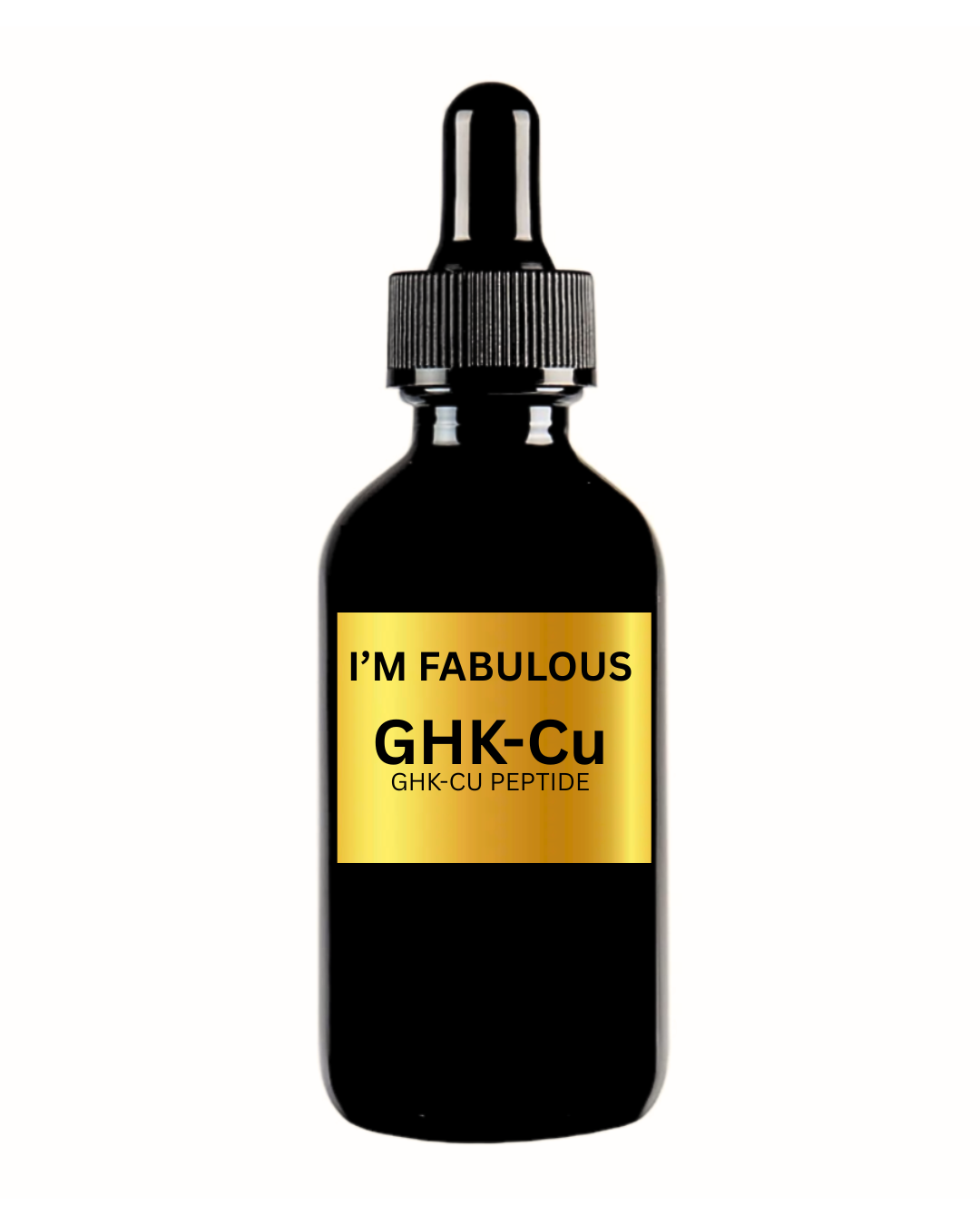
GHK-Cu, or copper peptide, is the standout. It occurs naturally in the body, declines with age, and has been studied for its role in supporting collagen, elastin and wound repair. A published clinical study reported a significant reduction in wrinkle volume in participants who used a copper peptide cream over twelve weeks, and our own complete guide to the best peptide serums for wrinkles breaks down the evidence in detail. The I'M FABULOUS GHK-Cu Copper Peptide Serum is a lightweight organic formula that suits thin or sensitive skin, and it layers easily under moisturizer morning and night.
Because peptides work gradually, give them a full ten to twenty weeks before judging results. They are also unusually well tolerated, which is why they are often the first active recommended for skin that has become sensitive to retinol or acids.
Step Four: Softening Expression Lines With SNAP-8 and Syn-Ake
Lines around the eyes, forehead and mouth form because the same muscles contract thousands of times a day. A newer class of peptides, known as neurotransmitter-inhibiting peptides, helps soften the look of these dynamic lines by gently reducing how forcefully those muscles contract. They are not a replacement for injectables and do not paralyze muscles, but they offer a gentle topical way to soften expression lines over time.
The SNAP-8 Peptide Serum and the Syn-Ake Peptide Serum are the two options in this category, and many people alternate them with GHK-Cu, using copper peptide in one application and an expression-line peptide in the other. Apply them to the forehead, between the brows, around the eyes and along the smile lines, where movement lines are most pronounced. Our guide on anti-aging ingredients explains how these peptides fit alongside retinoids, antioxidants and hydrators.
Step Five: Retinoids and Bakuchiol, Introduced Gently
Retinoids remain one of the best-researched wrinkle treatments in dermatology. They speed up cell turnover, stimulate collagen production and improve the appearance of fine lines, texture and pigmentation. The challenge after 60 is tolerance: thinner, drier, post-menopausal skin can become red, flaky and irritated by strong retinoids, and irritation makes wrinkles look worse, not better.
The solution is a slower, gentler approach. Start with a low-strength retinol or a plant-based alternative such as bakuchiol, which has been shown to deliver comparable benefits to retinol with much less irritation. The Retinol Bakuchiol Serum pairs both in one formula. Use it two nights a week at first, always on dry skin and followed by moisturizer, then move to every other night over several weeks if your skin stays comfortable. If you experience persistent redness, burning or peeling, scale back and let the barrier recover. For a closer look at the trade-offs, read our comparison of peptides versus retinol.
Step Six: A Rich Collagen Night Cream
Night is when the skin does most of its repair work, and mature skin benefits from a richer formula that supports the barrier while peptides and antioxidants do their work. Look for a cream with peptides, plant oils, silk amino acids and ingredients that mimic the skin's natural lipids, so moisture stays locked in overnight.
The Peptide Collagen Repair Cream is built for exactly this: a nourishing, plant-based cream with edelweiss plant stem cells, silk amino acids, sunflower and jojoba oils and botanical hyaluronic acid. It is a good last step at night after your serums, and it also works well on the neck and decolletage, which age just as visibly as the face and are often neglected.
The Luxury Tier: Caviar Lifting Serum
For those who want the most concentrated, indulgent option, the Caviar Luxury Lifting Serum is formulated for dry, mature skin that needs a lifting and firming boost. It combines marine caviar extract with SNAP-8 peptide, plum oil, sea kelp bioferment and edelweiss plant stem cells in a rich, fast-absorbing serum designed to support the look of firmness, hydration and elasticity. It is a premium formula priced accordingly at $1,000 for 30 ml, and a little goes a long way: one to two drops are enough for the face and neck.

One reviewer describes the caviar serum as "another level," noting all-day hydration and a lifting effect without greasiness, and the serum holds a 5-star average across 34 reviews on our site. Mature, thinning and post-menopausal skin that has become resistant to ordinary skincare is often where this type of concentrated formula shows the most noticeable difference.
Comparing the Wrinkle-Smoothing Options
The table below shows how each type of active contributes, so you can build a routine that matches your skin's needs and your budget.
| Active | What it does after 60 | Typical timeline | I'M FABULOUS option |
|---|---|---|---|
| Sunscreen | Stops further collagen breakdown and new sun damage | Protective from day one | Daily mineral SPF 30+ |
| Hyaluronic acid | Draws water into the skin to plump fine lines instantly | Immediate to a few days | Hyaluronic Acid Hydrating Serum |
| Copper peptide (GHK-Cu) | Supports collagen, elasticity and repair signaling | Visible from 10-20 weeks | GHK-Cu Copper Peptide Serum |
| SNAP-8 / Syn-Ake | Softens the look of expression lines | 4-12 weeks | SNAP-8 Peptide Serum |
| Retinol / bakuchiol | Speeds turnover and stimulates collagen with less irritation | Gradual over 12 weeks | Retinol Bakuchiol Serum |
| Peptide collagen cream | Seals in moisture and supports the barrier overnight | Comfort in days; firmness over weeks | Peptide Collagen Repair Cream |
| Caviar and marine actives | Concentrated lifting, hydration and elasticity support | Noticeable feel within days; look over weeks | Caviar Luxury Lifting Serum |
A Simple Routine for Skin Over 60
A routine that is too complicated is a routine that gets abandoned. This version has two short steps in the morning and four at night, and every product has a clear role.
Morning
Cleanse gently with lukewarm water. Apply the Hyaluronic Acid Serum to damp skin, then the GHK-Cu Copper Peptide Serum. Finish with moisturizer and broad-spectrum SPF 30 or higher on the face, neck, chest and hands.
Evening
Cleanse thoroughly but gently. Apply SNAP-8 or Syn-Ake peptide serum to expression-line areas. Two nights a week, use the Retinol Bakuchiol Serum on dry skin, building to alternate nights as tolerated. Finish with the Peptide Collagen Repair Cream on the face and neck. If you use the Caviar Lifting Serum, add one to two drops before the cream.
Weekly
Skip harsh scrubs entirely. If you want exfoliation, use a mild lactic or mandelic acid once every week or two, only when skin is comfortable, and never on the same night as retinol.
If you prefer an all-in-one set, our Deep Wrinkle & Firming Treatment Bundle pairs the Volumizing & Skin Plumping Serum, the DMAE Supreme Serum and the Peptide Collagen Repair Cream for mature skin, at a 15 percent saving compared with buying each separately.

What to Expect Week by Week
Weeks 1 to 2: Skin feels softer and more comfortable as hydration improves, and fine lines look slightly plumper. Introduce one new product at a time so you can tell what your skin tolerates. A little tightness is normal; stinging or redness is a sign to slow down.
Weeks 3 to 6: Texture becomes smoother and skin looks more luminous. Dry patches settle and makeup sits better. This is a good point to begin using the retinol or bakuchiol on a regular schedule if you have not already.
Weeks 7 to 12: Fine lines start to soften and the skin feels firmer and bouncier. Expression lines around the eyes and forehead begin to look less pronounced, especially where you have been applying peptides consistently.
Weeks 13 to 20: Deeper changes appear as collagen support builds. Wrinkles look visibly softer, contours look more defined, and the skin looks more even and rested. Continue the routine to maintain results, since collagen support is ongoing rather than a one-time fix.
Do Not Forget the Neck, Chest and Hands
The neck and decolletage are thinner than the face, have fewer oil glands and are exposed to sun and gravity every day, which is why crepey texture and horizontal lines often appear there first. Extend every step of your routine down to the collarbone and chest, including sunscreen, and apply serums and cream with gentle upward strokes. The backs of the hands show age quickly too, so a dab of peptide serum and cream plus SPF each morning helps keep them in step with your face.
Eyes and Mouth: The Most Expressive Zones
The skin around the eyes is the thinnest on the face, and the area around the mouth is moved constantly by speaking and eating, so both show lines early and stubbornly. Use eye-specific formulas rather than face products, applied with the ring finger using a light patting motion. Our Super Peptide Eye Serum and Power Anti-Aging Eye Cream are designed to be used together, with the serum underneath and the cream on top to seal it in. For lines around the mouth, apply peptide serum along the smile lines and the area above the lip before your cream.
Where Microneedling and Professional Care Fit In
At-home skincare does most of the work, but some people add gentle professional or at-home microneedling to help active ingredients reach deeper layers and stimulate repair. If you choose this route, mature skin needs a conservative approach: shorter needle lengths, less frequent sessions and meticulous hygiene, and it should be avoided entirely if you have active skin conditions, are on blood thinners, or have very fragile skin. Our step-by-step guide to using a hydra needle to micro-infuse topical peptides explains the technique, and a licensed esthetician or dermatologist can advise on in-office options such as radiofrequency, light therapy or peels that complement your home routine.
Layering Order and Textures That Suit Mature Skin
The order you apply products affects how well they work. A reliable rule is to go from the thinnest texture to the thickest: water-based serums first, then richer serums or oils, then cream, then sunscreen in the morning. Peptide and hydrating serums belong right after cleansing, when skin is slightly damp and most receptive. Retinol or bakuchiol goes on dry skin at night, because moisture can increase penetration and with it the chance of irritation. Creams and oils go last to seal everything in.
Texture matters as much as ingredients after 60. Gel and watery formulas absorb quickly but may not provide enough comfort for very dry skin, while rich creams can feel heavy in summer. Many people do best rotating textures by season, using a lighter cream in warm months and a richer one in winter, and adding a facial oil or the caviar serum on nights when skin feels especially dry. If your skin ever feels tight, itchy or stings when you apply a product, that is a barrier problem and a signal to simplify for a week or two before continuing.
Building the Routine on a Budget
You do not need every product at once. If you are starting from scratch, the highest-value order is sunscreen first, then a hydrating serum and a good night cream, then one peptide serum such as GHK-Cu, and only after that a retinol or bakuchiol product and any specialty serums. This sequence delivers the biggest improvements first and lets you add steps as you see how your skin responds. A simple routine used every day for five months will outperform an elaborate one used inconsistently, so choose the version you will actually follow, and treat extra products as upgrades rather than requirements.
Mistakes That Make Wrinkles Look Worse After 60
Skipping sunscreen. Even on cloudy days, UVA rays continue to break down collagen and deepen existing lines.
Over-exfoliating. Physical scrubs and strong acids strip the already thinner barrier, causing dryness and irritation that exaggerate lines. Mature skin needs gentle renewal, not aggressive resurfacing.
Starting too many actives at once. Introducing a retinoid, a peel and a new serum in the same week makes it impossible to tell what is working, and increases the chance of irritation. Add one product every one to two weeks.
Using hot water and harsh cleansers. Hot showers and foaming cleansers strip natural oils and leave skin tight. Lukewarm water and a creamy or gel cleanser protect the barrier.
Expecting overnight results. Mature skin renews slowly, and people who stop at week six miss the changes that appear between weeks ten and twenty.
Lifestyle Habits That Support Smoother Skin
Skincare works best when the body supports it. Adequate protein intake provides the amino acids the skin uses to build collagen, and antioxidant-rich foods such as berries, leafy greens and colorful vegetables help counter oxidative stress. Staying hydrated, sleeping seven to eight hours and managing stress all matter, since poor sleep and chronic stress raise cortisol and slow skin repair. Not smoking and limiting alcohol and sugar protect collagen from accelerated breakdown, and regular movement improves circulation, which helps deliver nutrients to the skin. For a broader view of how daily habits and skincare work together, our guide to skin longevity goes into more depth.
Menopause, Hormones and Your Skin
Because the hormonal shifts of menopause drive so much of the change in skin after 60, some women ask whether hormone therapy affects wrinkles. Research suggests that estrogen can influence skin thickness, collagen and hydration, but hormone therapy is a medical decision with broader health considerations that should be made with your doctor, not for cosmetic reasons alone. What you can control at home is giving skin the support it needs as hormones change: richer hydration, collagen-supporting peptides, gentle actives and strict sun protection. Our broader guide, the best anti-aging routine after 50, walks through the earlier stages of this transition if you want to see how your routine has evolved.
When to See a Dermatologist
Skincare can soften wrinkles, but some changes need medical attention. See a dermatologist if you notice a new or changing spot, a sore that does not heal, persistent redness or scaling, or sudden changes in skin texture. After 60, annual skin checks are a good habit because skin cancer risk rises with cumulative sun exposure. A dermatologist can also advise on prescription retinoids, in-office treatments such as lasers, fillers or neuromodulators, and whether those options suit your goals and health history. Home care and professional care often work best together. Review our professional skincare protocols and ingredient guide for more detail on how each active works.
Frequently Asked Questions
Can you really smooth out wrinkles after 60?
Yes, you can visibly soften them. Topical skincare cannot erase deep wrinkles, but consistent use of sunscreen, hydrating products, collagen-signaling peptides and a gentle retinoid or bakuchiol can make fine lines and moderate wrinkles look noticeably smoother, firmer and less deep over 10 to 20 weeks. Results are strongest when skincare is combined with sun protection and healthy habits.
What is the best ingredient for wrinkles after 60?
Sunscreen and retinoids have the strongest scientific backing, and peptides are the most recommended supporting ingredient for mature skin. For skin over 60, which is often thinner and drier, a gentle approach works best: daily SPF, a copper peptide such as GHK-Cu, an expression-line peptide like SNAP-8, hydrating hyaluronic acid, and a gentle retinol or bakuchiol introduced slowly.
How long does it take to see results on mature skin?
Hydration and plumping effects show up within days, but structural improvement is slower. Most people see smoother texture in 4 to 6 weeks and clearer wrinkle softening between 10 and 20 weeks of consistent use. Mature skin renews more slowly than younger skin, so patience and daily consistency matter more than strength.
Is retinol too harsh for skin over 60?
Not necessarily, but it should be introduced carefully. Post-menopausal skin is thinner and more easily irritated, so start with a low concentration or with bakuchiol, a plant-based retinol alternative, apply it two nights a week, and increase slowly as your skin adapts. Always pair it with moisturizer and daily sunscreen, and stop if you develop persistent redness or peeling.
Do peptides work for wrinkles after 60?
Peptides can help. Signal peptides such as copper peptide GHK-Cu encourage the skin's own repair and collagen activity, and expression-line peptides such as SNAP-8 help soften the look of lines caused by repeated muscle movement. They work gradually and are well tolerated by most mature skin, which makes them a good fit for sensitive or thinning skin.
Does menopause cause wrinkles to get worse?
Yes. Estrogen supports collagen, elasticity and moisture in the skin, and as levels fall after menopause, skin can lose up to about 30 percent of its collagen in the first five years and roughly 2 percent more each year after. This is why wrinkles, dryness and thinning often accelerate in the late 50s and 60s, and why richer hydration and collagen support become more important.
What should I avoid if I want smoother skin after 60?
Avoid skipping sunscreen, using harsh scrubs, over-exfoliating, layering too many strong actives at once, and washing with hot water or foaming cleansers that strip the barrier. Mature skin repairs more slowly, so irritation can linger and make wrinkles look deeper. Gentle, consistent routines outperform aggressive ones.
The Bottom Line
Wrinkles after 60 respond best to a patient, layered routine that respects how skin has changed. Protect it every day with sunscreen, hydrate it deeply, support collagen with peptides, soften expression lines with targeted actives, and introduce retinol or bakuchiol gently. Give the routine ten to twenty weeks, track your progress with photos, and keep the habits that support healthy skin from the inside. You will not erase sixty years of living, and you do not need to, but you can absolutely look smoother, firmer and more radiant than you do today. Browse the full serum collection to build your routine.
Start with the serum that supports collagen
Organic, vegan and gentle enough for mature, sensitive skin.
Shop GHK-Cu Copper Peptide Serum
This article is for educational purposes only and is not medical advice. Results vary by skin type, age and consistency of use. Always patch test new products, use daily sunscreen, and consult a qualified healthcare provider about hormone therapy, prescription treatments or any skin changes. See our medical disclaimer for full details. Collagen and menopause figures reflect commonly cited dermatology estimates and the American Academy of Dermatology's guidance on skin care during menopause.