What Is the Best Skincare Routine for Aging Skin? A Dermatologist-Informed 6-Step Plan
The Aging Skin Edit
Aging skin does not need more products. It needs the right ones, in the right order, used consistently. Here is the complete routine, step by step, with what to use morning and night and how to adjust it in your 40s, 50s and 60s.
Quick answer: The best skincare routine for aging skin has six steps: (1) a gentle, non-stripping cleanser, (2) a hydrating serum, (3) a copper peptide such as GHK-Cu to support collagen, (4) an expression-line peptide such as SNAP-8, (5) a rich moisturizer, and (6) broad-spectrum sunscreen of SPF 30 or higher every morning. At night, add a gentle retinoid or bakuchiol, introduced slowly. Hydration plumps lines within days, texture improves in 4 to 6 weeks, and visible softening of wrinkles typically appears between 10 and 20 weeks of consistent use.
6 steps
Cleanse, hydrate, peptides, expression lines, moisturize, protect
SPF 30+
Non-negotiable every morning
4-6 wks
Texture and radiance improve
10-20 wks
Visible softening of lines

"A great anti-aging routine is not about erasing time. It is about protecting what you have, restoring moisture and giving skin the signals it needs to keep repairing itself."
Why Skin Changes as It Ages
Skin ages for two reasons: time and exposure. Intrinsic aging is the slow, genetic decline in collagen, elastin and moisture that begins in our twenties. Extrinsic aging comes from the sun, pollution, smoking, stress and sleep loss, and it is responsible for most of the visible damage: fine lines, deep wrinkles, uneven tone and rough texture. The good news is that extrinsic aging is the part you can influence most.
The changes follow a pattern. Collagen production slows, so skin loses firmness. Cell turnover slows, so the surface looks duller and rougher. The moisture barrier weakens, so skin loses water faster and feels tight or dry. Natural oils drop, particularly after menopause when falling estrogen thins the skin further. Fat pads shift and shrink, so the face loses volume. Each of these changes calls for a different kind of support, which is why a routine built only on scrubbing and exfoliating tends to fail on mature skin while a routine built on protection, hydration and signaling works.
Dermatologists consistently point to a short list of habits with the strongest evidence: daily sunscreen, retinoids, and a healthy skin barrier. The American Academy of Dermatology emphasizes that an effective anti-aging skin care plan starts with healthy basic habits before any specialty product. The routine below is built around that principle and layers peptides on top for collagen support.
The 6-Step Aging Skin Routine at a Glance
| Step | Product type | Morning | Night |
|---|---|---|---|
| 1 | Gentle cleanser | Rinse or cleanse | Cleanse to remove SPF and makeup |
| 2 | Hydrating serum | Yes, on damp skin | Yes, on damp skin |
| 3 | Copper peptide (GHK-Cu) | Yes | Yes or alternate |
| 4 | Expression-line peptide (SNAP-8) | Optional | Yes, on lines |
| 5 | Moisturizer or night cream | Lighter cream | Richer cream |
| 6 | Broad-spectrum SPF 30+ | Always, last step | Not needed |
Step 1: Cleanse Gently
Cleansing is the step most people get wrong as skin ages. Foaming, high-pH or scrubbing cleansers strip the lipids that keep mature skin comfortable, and a stripped barrier shows every line more clearly. If your face feels tight after washing, the cleanser is too harsh. Choose a creamy, non-foaming or lightly foaming formula and use lukewarm rather than hot water, which dries skin out further.
In the morning, many people with dry or mature skin do well with a simple water rinse or a very gentle wash. At night, cleanse properly to remove sunscreen, makeup and pollution, ideally with a two-step approach: an oil or balm first, then a gentle cleanser. Pat dry rather than rub, and move straight to the next step while skin is slightly damp, because that is when hydrating products absorb best.
Step 2: Hydrate Deeply
Dehydrated skin cells shrink and lose their plumpness, which exaggerates fine lines. Hydration is therefore the base layer of any routine for aging skin, not a finishing touch. Look for humectants such as hyaluronic acid, which draw water into the skin, and use them on slightly damp skin so they have moisture to bind.
A good hydrating serum plumps the skin immediately and prepares it for the actives that follow. Our Hyaluronic Acid Hydrating Serum is an easy foundation for this step. Hydration is also the quickest win in the whole routine: unlike collagen support, which takes weeks, hydration visibly softens lines within days, which keeps motivation high while the slower actives do their work.
Step 3: Signal Collagen With Copper Peptides (GHK-Cu)
Peptides are short chains of amino acids that act as messengers in the skin. Signal peptides tell fibroblasts, the cells that make collagen, to keep producing it. Copper peptide, known as GHK-Cu, is the best-known example. It occurs naturally in the body, declines with age and has been studied for its role in supporting collagen, elastin and skin repair. It is also unusually well tolerated, which makes it ideal for skin that has become too sensitive for retinol or acids.
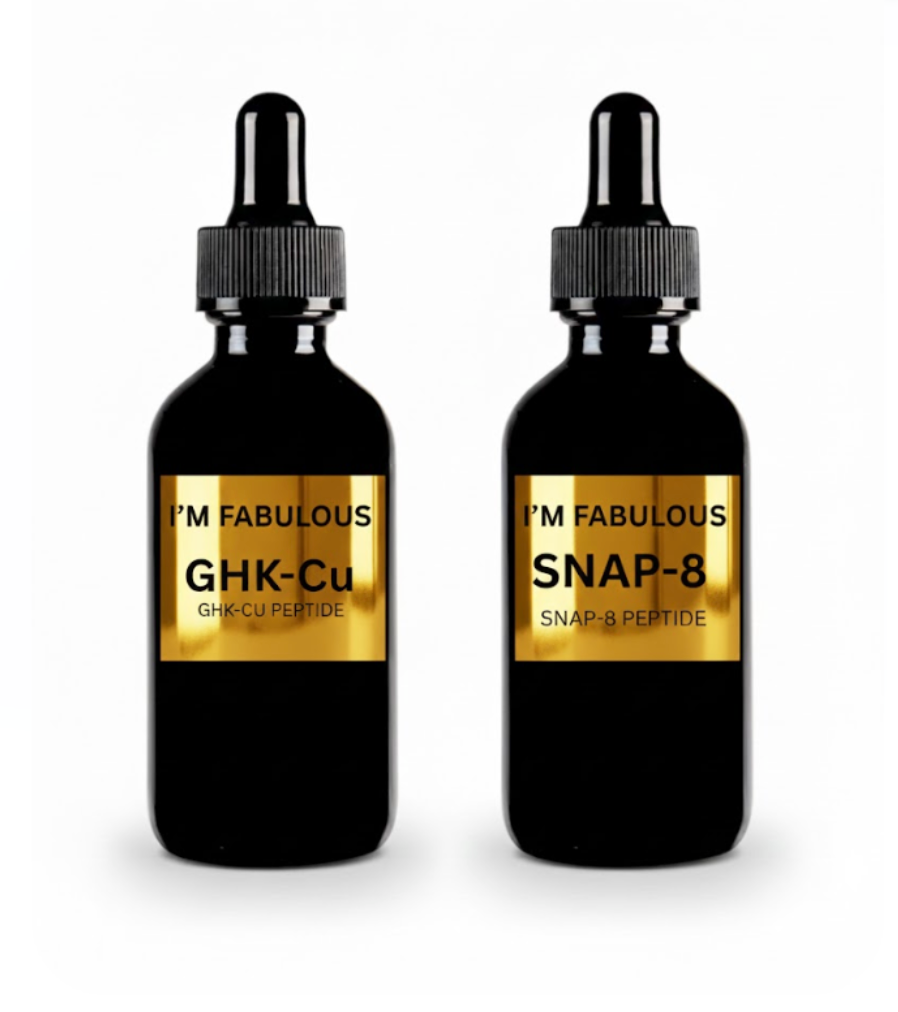
The I'M FABULOUS GHK-Cu Copper Peptide Serum 10% is a lightweight organic formula that layers easily under moisturizer morning and night. Apply a few drops to clean, slightly damp skin on the face and neck, and give it a full 10 to 20 weeks before judging results, because collagen support is gradual. For the evidence behind copper peptides and how they compare with retinol, read our guide to the best peptide serums for wrinkles.

Step 4: Soften Expression Lines With SNAP-8
Lines around the eyes, between the brows and across the forehead form because the same muscles contract thousands of times a day. SNAP-8 is a neurotransmitter-inhibiting peptide that helps soften the look of these dynamic lines by gently reducing how forcefully those muscles contract. It does not paralyze muscles and does not replace injectables, but it offers a gentle topical way to soften expression lines over time.
The SNAP-8 Peptide Serum 10% is formulated for exactly this. Apply it to the forehead, between the brows, around the eyes and along the smile lines. If you want a second expression-line option, the Expression Line Peptide Serum is designed for the same concern. Many people alternate GHK-Cu and SNAP-8, using copper peptide in the morning and SNAP-8 at night, or layer them together. If you want both, the GHK-Cu + SNAP-8 Peptide Duo pairs them in one purchase.
Step 5: Lock It In With a Rich Moisturizer
A moisturizer seals the serums underneath it and supports the barrier so that water stays in the skin. As skin ages and produces fewer natural oils, a lightweight gel often is not enough, and a richer cream with lipids, plant oils and peptides becomes more important, especially at night when skin does most of its repair work.
The Peptide Collagen Repair Cream is a nourishing night cream with plant stem cells, silk amino acids and botanical hyaluronic acid, and it also works well on the neck and decolletage, which age just as visibly as the face. For daytime, or for those who prefer a lighter texture, the Marine Peptide Moisturizer offers hydration and firming at an accessible price.

Step 6: Protect With Daily Sunscreen
If you only do one thing for aging skin, make it sunscreen. Ultraviolet light breaks down collagen and elastin, causes sun spots and drives most visible aging, and no serum can outwork unprotected sun exposure. Dermatologists recommend a broad-spectrum sunscreen of SPF 30 or higher every morning, applied to the face, neck, chest and the backs of the hands, and reapplied every two hours outdoors.
For mature skin, a hydrating mineral formula with zinc oxide or titanium dioxide is usually the best fit because it is gentle and less likely to sting. Sunscreen is always the last step of your morning routine, after moisturizer. Treat it as the foundation that every other product in this routine depends on.
At Night: Retinoids and Bakuchiol
Retinoids remain one of the best-researched wrinkle treatments in dermatology. According to the AAD's guide to retinoids and retinol, they speed up cell turnover, boost collagen and improve skin tone and fine lines. The challenge is tolerance: thin, dry skin can become red and flaky, and irritation makes wrinkles look worse rather than better.
The solution is a slow start. Begin with a low-strength retinol or bakuchiol, a plant-based alternative shown to deliver comparable benefits with less irritation. The Retinol Bakuchiol Serum combines both. Use it two nights a week on dry skin, follow with moisturizer, and increase gradually if your skin stays comfortable. Our comparison of peptides versus retinol explains how to choose, and many people find that peptides in the morning and a gentle retinoid at night is the best of both.
Your Morning and Night Routine, Written Out
Morning (about 3 minutes)
1. Rinse or cleanse gently. 2. Hydrating serum on damp skin. 3. GHK-Cu copper peptide serum. 4. Lighter moisturizer. 5. Broad-spectrum SPF 30+ on face, neck and chest.
Night (about 5 minutes)
1. Cleanse to remove sunscreen. 2. Hydrating serum on damp skin. 3. SNAP-8 on expression lines. 4. Retinol or bakuchiol two to three nights a week (or GHK-Cu on the other nights). 5. Rich night cream on face, neck and decolletage.
How to Adjust Your Routine by Decade
In Your 40s: Prevention and Repair
The 40s are when collagen loss begins to show and the payoff from prevention is greatest. Prioritize daily SPF, antioxidants in the morning, a retinoid at night and peptides for collagen support. Skin usually tolerates active ingredients well at this stage, so it is a good time to establish the habits that pay off for decades.
In Your 50s: Hydration and Barrier Support
Around menopause, collagen declines faster and skin becomes noticeably drier and thinner. Shift toward richer hydration, barrier lipids and gentle actives. Keep SPF and peptides as the core, introduce retinoids more slowly, and swap foaming cleansers for creamy ones. For a routine focused on this decade, see our best anti-aging routine after 50, and for hormonal changes read peptides and menopause.
In Your 60s and Beyond: Gentleness and Deep Moisture
Mature skin is thinner and slower to repair, so irritation lingers. Choose gentle, consistent routines over aggressive ones: rich moisture, copper peptides, a low-strength retinoid or bakuchiol, and daily mineral sunscreen. Avoid harsh scrubs and strong acids. A richer cream and patience matter more than strength at this age. For a deeper dive, see our guide to the anti-aging ingredients that matter most.

Adjusting the Routine for Your Skin Type
The six steps stay the same, but texture and strength change with your skin type. Dry or very dry skin benefits from an extra hydrating layer, a cream-based cleanser and a richer night cream, with retinoids introduced only once the barrier feels comfortable. Apply serums to damp skin and consider layering a facial oil as the final step at night to seal in moisture.
Oily or combination aging skin still needs hydration, because oily skin can be dehydrated underneath. Choose lightweight gel textures, use the Marine Peptide Moisturizer or a thin layer of cream rather than a heavy balm, and keep peptides and hydrating serums as the core. Gentle retinoid use is often well tolerated here and can help with both texture and clogged pores.
Sensitive or rosacea-prone skin should lead with the most tolerated ingredients: copper peptides, hydrating serums and a barrier-supporting moisturizer, with sunscreen every day. Patch test every new product on the inner arm or behind the ear for 48 hours, introduce actives one at a time, and skip retinoids until the skin is calm. Peptides are an especially good fit because they work through signaling rather than exfoliation.
Post-menopausal skin combines dryness, thinning and slower repair, so gentleness is the priority. Use richer textures, avoid hot water and strong acids, and give every new active at least two weeks before judging it. Collagen support from peptides matters more here than fast resurfacing.
Ingredients Worth Looking For (and Those to Skip)
Reading a label is easier when you know what each ingredient is doing. Hyaluronic acid and glycerin attract water into the skin. Ceramides, squalane and plant oils rebuild the barrier. Peptides, including copper peptide GHK-Cu and SNAP-8, signal collagen activity and soften expression lines. Retinol and bakuchiol speed turnover and support collagen. Antioxidants such as vitamin C protect against free-radical damage in the morning, and niacinamide helps tone, texture and barrier function. Sunscreen filters protect all of it.
On the other side, be cautious with heavy fragrance, high levels of drying alcohol, harsh physical scrubs and strong acid peels, especially if your skin is thin or reactive. These can leave the barrier inflamed and make fine lines more visible. Concentration also matters less than formulation and consistency: a gentle product used daily for twelve weeks beats a very strong one that you abandon after a week of irritation. If you are unsure how ingredients combine, our guide to anti-aging ingredients covers what pairs well and what to separate.
Building the Routine on Any Budget
You do not need a twelve-step routine. If you are starting with a small budget, build in this order of priority: sunscreen first, because it prevents the most damage; a gentle cleanser and a hydrating moisturizer second; one active peptide serum third; and a retinoid or bakuchiol fourth. That four-product foundation outperforms a shelf of random products used inconsistently.
As your budget grows, add the second peptide serum for expression lines, a richer night cream and a dedicated hydrating serum. Bundles can lower the cost of getting both peptides at once, and starting with the GHK-Cu serum alone is a perfectly reasonable first step. Whatever you choose, keep the routine simple enough that you will actually do it every day, because daily consistency is what produces the visible changes.
Professional Treatments That Complement Your Routine
Home skincare and in-office treatments work best together. Treatments such as microneedling, light chemical peels, LED therapy and radiofrequency can stimulate collagen further, while sunscreen and a peptide-based routine protect and extend the results between appointments. After any procedure, skin is more sensitive, so return to gentle, barrier-supporting products and ask your provider how long to avoid actives such as retinoids. Peptides are generally well tolerated during recovery and are often recommended to support healing, but always follow your provider's guidance for your specific treatment.
For deeper wrinkles or significant sagging, a dermatologist can discuss options that topical skincare cannot replace, such as injectables, lasers or surgical procedures. A strong daily routine remains valuable alongside them, because it improves skin quality, hydration and tone, and it protects any investment you make in professional care.
Do Not Forget the Neck, Chest and Hands
The skin on the neck and chest is thinner than facial skin and has fewer oil glands, so it shows aging early and recovers slowly. Extending every serum, cream and sunscreen down to the collarbone and across the chest is one of the simplest ways to keep the whole look consistent. Apply products with upward strokes, and use the same peptides you use on the face, since collagen support matters just as much there. For a deeper look at this area, see our full guide to peptides for neck wrinkles.
The backs of the hands deserve the same attention because they receive constant sun exposure. Keep a sunscreen near the sink and apply a little to your hands each morning, and use any leftover moisturizer on them at night. Small habits like these add up over years and make a visible difference in how age shows across the whole body.
How to Introduce New Products Safely
The most common reason routines fail is irritation from adding too much too fast. Introduce one new product at a time and wait about two weeks before adding another, so that you can tell what is helping and what is bothering your skin. Patch test on the inner forearm or behind the ear for 48 hours before applying to the face, and begin by using new serums once a day before moving to twice a day.
Store serums away from direct sunlight and heat, keep caps closed, and use clean hands or a clean dropper. If you experience stinging that does not settle within a minute, redness that lasts, or peeling, pause the newest product and return to a simple routine of cleanser, moisturizer and sunscreen until the skin calms. You can then reintroduce actives more slowly. For a structured plan, our skincare protocols page lays out step-by-step routines, and the ingredients page explains what is in each formula.
Where Peptides Fit Alongside Everything Else
Peptides are the one category in this routine that combines well with almost everything. They pair with hydrating serums, moisturizers and sunscreen without conflict, and they are generally gentle enough to use alongside retinoids when the skin is comfortable. If you want to explore the whole range, from copper peptides to expression-line formulas and moisturizers, browse the full serum collection or the moisturizer collection. Men following the same principles can read our guide to copper peptides for men.
Common Myths About Anti-Aging Skincare
"More products mean better results." In practice, too many actives irritate mature skin and slow progress. "Expensive always means better." Formulation, stability and consistency matter more than price. "Natural is always gentler." Plant ingredients can irritate too, so patch testing is wise. "I can start later." Collagen loss is gradual and starting earlier helps, but skin responds to good care at any age, including the 60s and beyond. "Wrinkle creams erase wrinkles." They can soften and smooth, but realistic expectations keep you consistent.
Mistakes That Make Aging Skin Look Older
Skipping sunscreen is the biggest, because it undoes everything else. Over-exfoliating is second: mature skin repairs slowly, so scrubs and strong acids can leave the barrier inflamed for weeks and make lines look deeper. Introducing several new actives at once is another common trap, since irritation then makes it impossible to tell which product caused it. Add one new active at a time and wait about two weeks before the next.
Hot water, foaming cleansers and sleeping in makeup all dry the skin further. Neglecting the neck, chest and hands means the face can look ten years younger than the rest of you. Finally, switching products every few weeks prevents any of them from working: peptides and retinoids need 10 to 20 weeks of steady use to show their effect.
Beyond Skincare: Habits That Support Collagen
Skincare works best when lifestyle supports it. Sleep is when skin repairs itself, so consistent, adequate sleep shows on the face. A diet rich in protein, healthy fats and colorful produce supplies the building blocks for collagen, and staying hydrated supports skin moisture. Smoking breaks down collagen and is one of the most visible accelerators of aging, and high stress raises cortisol, which can thin the skin and trigger inflammation. None of these replace a routine, but they amplify it.
How Long Until You See Results?
Realistic timelines keep people consistent. Within days, hydration plumps the skin and softens the look of fine lines. Between four and six weeks, texture, radiance and tone improve. Between ten and twenty weeks, collagen-supporting peptides and retinoids show their effect on the depth of wrinkles. Mature skin renews more slowly than younger skin, so patience matters. Take a photograph in the same lighting every two weeks, since day-to-day changes are too gradual to notice in the mirror.
Frequently Asked Questions
What is the best skincare routine for aging skin?
The best routine for aging skin has six steps: a gentle cleanse, a hydrating serum, a copper peptide such as GHK-Cu for collagen support, an expression-line peptide such as SNAP-8, a rich moisturizer and daily broad-spectrum sunscreen of SPF 30 or higher. Add a gentle retinoid or bakuchiol at night, introduced slowly. Consistency over 10 to 20 weeks matters more than the number of products.
What order should I apply anti-aging skincare products?
Apply products from thinnest to thickest. In the morning: cleanser, hydrating serum, peptide serum, moisturizer, then sunscreen last. At night: cleanser, hydrating serum, peptide serum, retinoid or bakuchiol on the nights you use it, then a richer moisturizer or night cream.
Should I use GHK-Cu and retinol together?
You can use both in the same routine, but it is gentler to separate them. Many people use copper peptide GHK-Cu in the morning and retinol or bakuchiol at night, or alternate nights. Introduce one new active at a time and give your skin about two weeks before adding the next.
What is the best anti-aging ingredient for skin over 50?
Sunscreen and retinoids have the strongest evidence, and peptides are the best-tolerated supporting ingredient for mature skin. After menopause, skin is thinner and drier, so hydrating humectants, barrier lipids and collagen-signaling peptides such as GHK-Cu are especially valuable.
How long does it take for an anti-aging routine to work?
Hydration and plumping appear within days. Texture and radiance usually improve in 4 to 6 weeks, and visible softening of fine lines and wrinkles typically shows between 10 and 20 weeks of consistent daily use. Mature skin renews more slowly, so photograph your skin in the same light every two weeks to track progress.
Do peptides really work for wrinkles?
Peptides can help. Signal peptides such as GHK-Cu encourage the skin's own collagen and repair activity, and expression-line peptides such as SNAP-8 help soften the look of lines caused by repeated muscle movement. They work gradually and are well tolerated by most skin types, including sensitive and mature skin.
What does SNAP-8 do for skin?
SNAP-8 is a neurotransmitter-inhibiting peptide that helps soften the look of expression lines, such as crow's feet and forehead lines, by gently reducing how forcefully facial muscles contract. It is a topical option for smoother-looking lines and does not replace injectables.
Is retinol safe for aging, sensitive skin?
Retinoids are among the best-studied wrinkle treatments, but they can irritate thin, dry skin. Start with a low strength or bakuchiol, use it two nights a week, apply it on dry skin followed by moisturizer, and increase slowly. Stop or scale back if you have persistent redness, burning or peeling.
Do I need a different routine in my 40s, 50s and 60s?
Yes. In your 40s the focus is prevention and repair with SPF, antioxidants and peptides. In your 50s, as collagen and moisture decline faster, add richer hydration and barrier support. In your 60s, prioritize gentleness, deep moisture and collagen support over exfoliation and strong acids.
Build your aging skin routine
Start with the two peptide serums at the heart of this routine, or explore the full range of collagen-supporting formulas.
This article is for educational purposes and is not medical advice. Individual results vary. If you have a skin condition, are pregnant or nursing, or are unsure whether an ingredient is right for you, consult a dermatologist before starting a new routine. See our medical disclaimer.