Cortisol Face Is Trending for a Reason: What Chronic Stress Actually Does to Your Skin
I'M FABULOUS COSMETICS · The Stress-Skin Connection
Your face is keeping a diary of every stressful month you've had this year. Here's what's actually written in it, and what you can do about it starting tonight.
Quick summary: "Cortisol face" has exploded across social media, and while the dramatic version doctors describe (moon facies) is a genuine medical condition tied to Cushing's syndrome, not everyday stress, the underlying science is real: chronically elevated cortisol suppresses collagen, elastin, and hyaluronic acid production, increases inflammation, and weakens your skin barrier. That's not a TikTok theory. That's fibroblast biology. If your skin has looked duller, puffier, or more reactive during a stressful stretch, this is very likely why, and there's a specific ingredient stack with real research behind it built to fight back.
SHOP THE STRESS-DEFENSE SERUM →
The Trend Is Real. The Diagnosis Isn't, Necessarily.
Before anything else, let's be straight with you, because we'd rather earn your trust than sell you on a scare. "Cortisol face" as it's used on social media, implying that a stressful week can visibly reshape your face overnight, isn't a real diagnosis. The dramatic version of that phenomenon, doctors call it moon facies, is a genuine clinical sign of Cushing's syndrome or long-term corticosteroid use, and it requires sustained, medically significant cortisol elevation that everyday work stress simply doesn't produce. Endocrinologists have been clear about this, and we're not going to pretend otherwise to sell you a serum.
Here's what's actually, verifiably true, and it's more than enough on its own to take seriously without any embellishment: chronic, everyday stress does measurably affect your skin, through mechanisms that are well-documented in dermatological research. You don't need a Cushing's-level cortisol spike for your skin to show the wear of a genuinely hard year. You just need ordinary, sustained stress, the kind almost everyone reading this is currently living through.
What's Actually Happening Under Your Skin When You're Stressed
Skin fibroblasts, the cells responsible for producing collagen, elastin, and hyaluronic acid, have cortisol receptors. When cortisol is chronically elevated, even at levels well below what triggers Cushing's syndrome, those receptors get activated more often and for longer, and fibroblast activity gets suppressed as a result. Less fibroblast activity means less new collagen, less elastin, less hyaluronic acid, the three structural and hydration components your skin depends on to look firm, plump, and resilient.
At the same time, chronic stress ramps up inflammatory signaling throughout the body, skin included, and increases oxidative stress, the free-radical damage that accelerates visible aging at the cellular level. It also impairs barrier function, meaning your skin holds onto moisture less effectively and becomes more reactive to everything from weather to your existing skincare products. Put those three mechanisms together, less structural protein production, more inflammation, weaker barrier function, and you get exactly what people are describing online: duller tone, more visible puffiness and water retention, more frequent breakouts, and skin that simply looks tired even when you technically got some sleep.
You Are Not Imagining This
If it feels like almost everyone around you is more stressed than they used to be, that's not a perception problem. The American Psychological Association's 2025 Stress in America survey found that 75% of adults report feeling more stressed about the country's future than they used to, and roughly half report meaningful feelings of loneliness or isolation, both of which are well-established chronic stress contributors. This isn't a niche problem affecting a small, unlucky subset of people. It's close to a universal condition of modern life right now, and your skin has been quietly absorbing the cost of it, whether or not you've consciously connected the two.
"You don't need a medical diagnosis for your skin to be telling you the truth about how hard this year has been."
Why This Matters More Than a Bad Skin Day
The problem with chronic, low-grade stress on skin is that it doesn't announce itself the way an acute breakout or sunburn does. It accumulates quietly, month after month, in the form of slightly less collagen production than you'd otherwise have, slightly more oxidative damage than your skin can fully repair overnight, a slightly weaker barrier than you had a year ago. None of it feels dramatic in the moment. All of it adds up, and by the time it's visible in the mirror as persistent dullness or premature fine lines, months or years of accumulated stress-driven damage are usually behind it.
That's exactly why this isn't a problem you fix with a single good night's sleep or one relaxing weekend. It's a problem that needs an ingredient strategy built specifically to counteract the mechanisms stress actually uses to age your skin, not a generic moisturizer hoping to paper over the surface symptoms.
The Three Ingredients With Real Research Behind Them
This is the part where most "stress skincare" content gets vague, and where we're going to get specific instead, because your skin deserves ingredients backed by actual research, not wellness-adjacent marketing language.
Vitamin C has strong, repeated research support as an antioxidant and reactive-oxygen-species scavenger, directly relevant to the oxidative stress that chronic cortisol elevation drives. Our Vitamin C Hydrating Serum is formulated specifically to deliver that antioxidant defense in a stable, skin-friendly concentration, without the irritation that poorly-formulated vitamin C products are known for.
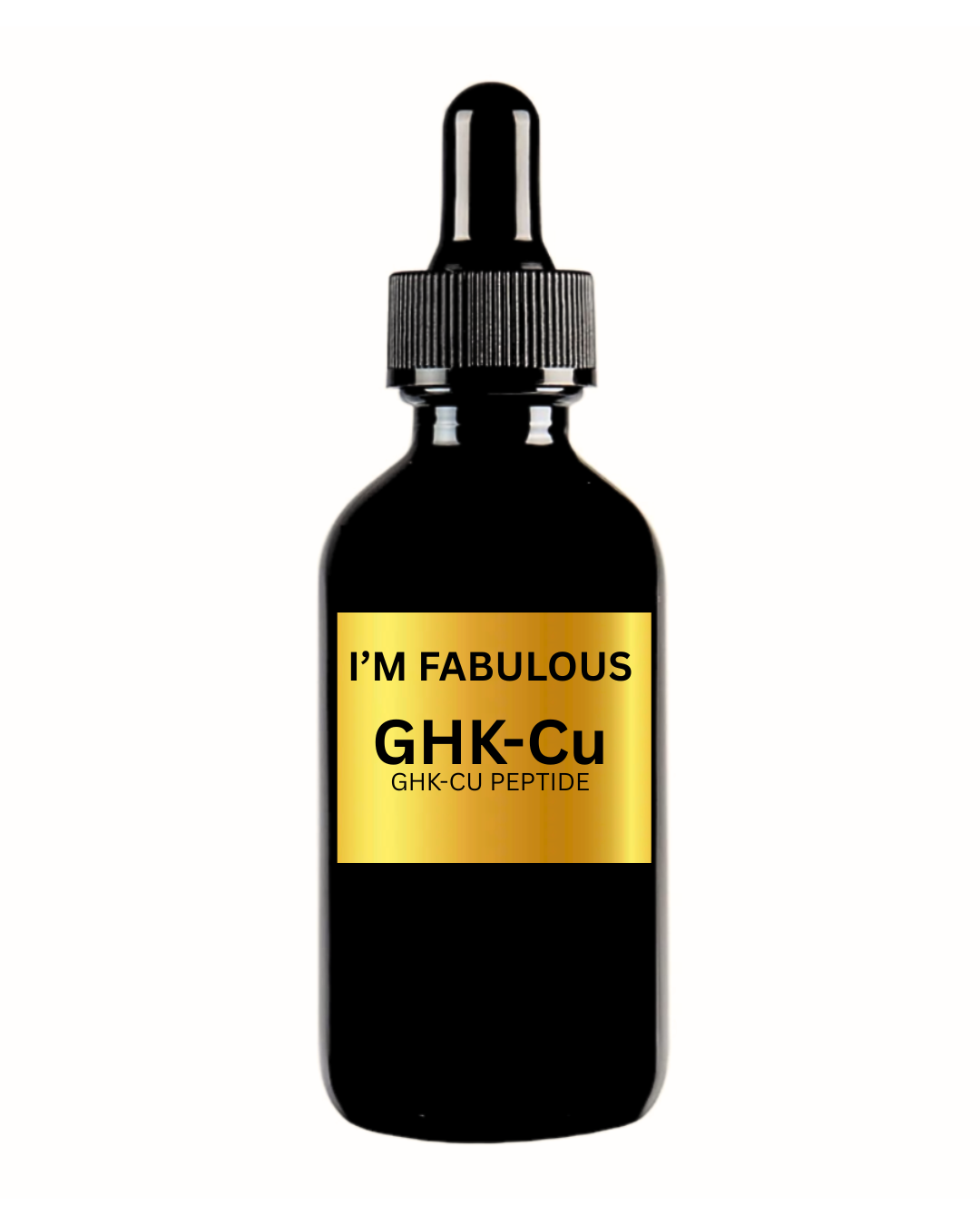
GHK-Cu, copper peptide, has documented research published in peer-reviewed cosmetic science journals showing it reduces reactive oxygen species and helps regulate the skin's own antioxidant defense pathways, including Nrf2 and SIRT1 signaling, both directly relevant to how skin cells respond to oxidative and inflammatory stress. Our GHK-Cu Copper Peptide Serum is built around this exact mechanism, collagen and elastin support through cellular signaling rather than muscle relaxation, making it a genuinely different tool than the peptides that work on expression lines.
NAD+, while the research connecting it specifically to stress-driven skin aging is earlier-stage than the vitamin C and copper peptide research above, has a well-established role in cellular energy metabolism and the sirtuin pathways involved in how efficiently your cells repair themselves overall. Our NAD+ Resveratrol Collagen Serum pairs it with resveratrol, itself a well-studied antioxidant, for a formula built around supporting your skin's own cellular resilience.
Why We're Not Overselling This to You
We could have easily called this article "Cortisol Face Is Destroying Your Skin" and leaned hard into fear to sell more product. We didn't, because that's not accurate, and because we'd rather you trust every claim we make than get one dramatic headline out of you today. What is accurate, and what should be enough to take seriously without exaggeration: chronic stress is affecting the structural and antioxidant health of your skin right now, through mechanisms science actually understands, and there are specific ingredients with real evidence behind them that address exactly those mechanisms. That's the honest pitch, and we genuinely believe it's a strong one entirely on its own merits, without needing to exaggerate anything.
Building a Stress-Defense Routine That Actually Makes Sense
The most effective approach isn't picking one hero ingredient and hoping it does everything. It's layering antioxidant defense with structural support, addressing both the oxidative damage stress causes right now and the collagen production stress is actively suppressing. One important formulation note first: Vitamin C (L-ascorbic acid) and copper peptides like GHK-Cu shouldn't be applied together in the same application, since the acid can destabilize the copper. That's not a reason to skip either one, it's a reason to sequence them correctly.
The routine that respects this: use the GHK-Cu Copper Peptide Serum in the morning to support collagen and elastin production and regulate inflammatory and oxidative-stress gene expression through the day, and reserve the Vitamin C Hydrating Serum for evenings or alternate days, giving your skin a dedicated antioxidant-focused session without the two actives destabilizing each other. If daily alternating feels like too much to track, many clients simply use GHK-Cu on odd days and Vitamin C on even days, which keeps both actives fully effective. For anyone specifically dealing with a sustained high-stress period, whether it's a demanding work stretch, a major life transition, or simply an unusually hard year, adding the NAD+ Resveratrol Collagen Serum into the rotation adds a cellular-resilience layer on top of the antioxidant and structural work already being done.
Why "Just Sleep More" Isn't a Complete Answer
It's tempting to reduce all of this to a single piece of advice: manage your stress and sleep better, and your skin will follow. That advice isn't wrong, but it's incomplete in a way that matters. Even people who are actively working on stress management, better sleep, exercise, therapy, whatever their approach, are usually not seeing those changes reflected in cortisol levels or skin condition overnight. Physiological stress adaptation is slow, and the skin damage that's already accumulated during a hard stretch doesn't automatically reverse the moment your life gets calmer.
That's exactly the gap targeted skincare is built to close. It doesn't replace stress management, but it does something stress management alone can't do quickly: actively support the antioxidant defense and structural repair processes that have been running at a deficit, so your skin has real support while the underlying stress resolves on its own timeline, not just after it fully has.
What Puffiness and Water Retention Are Actually Telling You
One of the most commonly reported symptoms in the "cortisol face" conversation online is facial puffiness and water retention, and there's a real physiological basis worth understanding. Cortisol influences fluid balance and can contribute to water retention when chronically elevated, and inflammation itself often presents visually as puffiness, particularly around the eyes and jawline where skin is thinner and more reactive. This isn't the same mechanism as the dramatic swelling seen in Cushing's syndrome, but it's a real, milder version of a related process, and it responds well to consistent anti-inflammatory and antioxidant skincare over time, alongside the more obvious lifestyle factors like sleep and hydration.
What About Dullness Specifically?
Dullness is one of the most frequently mentioned complaints in the online "cortisol face" conversation, and it has a fairly direct explanation once you understand the underlying oxidative stress mechanism. Skin's natural radiance depends heavily on efficient cell turnover and a healthy, unoxidized surface layer. When oxidative stress is elevated, as it is under chronic cortisol exposure, free radicals damage skin cells faster than normal repair processes can keep up, and the visible result is exactly the flat, tired-looking tone people describe. Antioxidants work here by directly neutralizing that free-radical load, which is why Vitamin C in particular tends to produce a visibly brighter look relatively quickly compared to some of the slower structural changes described elsewhere in this article.
Why Breakouts Often Show Up During Stressful Periods
If you've noticed your skin breaking out more during genuinely hard weeks, that's not a coincidence, and it's not just "eating worse when stressed," although that plays a role too. Cortisol influences sebum production, and chronic stress-driven inflammation can worsen existing acne-prone tendencies. This is one of the most consistently reported patterns in dermatology clinics, stress-triggered breakouts in people who don't otherwise have significant acne, and it tracks directly with the inflammatory mechanism described throughout this article.
Two Composite Examples
Consider someone navigating a demanding executive role who noticed her skin looking noticeably duller and more reactive over a six-month stretch of back-to-back deadlines, despite no real change in her existing skincare routine. The shift wasn't dramatic week to week, it was cumulative, and by the time she addressed it directly, she'd essentially been living with low-grade oxidative and inflammatory skin stress for months without connecting it to what was happening at work.
Or consider someone going through a major life transition, a move, a relationship change, a demanding new job, who started noticing more frequent breakouts along the jawline despite having clear skin for years prior. The pattern resolved significantly once an antioxidant and barrier-support routine was introduced alongside addressing the underlying stress directly, reinforcing that skincare and stress management work best as complements, not substitutes for each other. Neither example required an existing skin condition or a dramatic trigger, just an ordinary stretch of ordinary modern pressure, which is precisely why this topic applies so broadly rather than to some narrow, unusual subset of people.
What Skincare Can and Can't Fix Here
We want to be direct about the limits, because overpromising erodes trust faster than anything else. No serum lowers your actual cortisol levels. That's a hormonal and physiological process influenced by sleep, movement, nervous system regulation, and in some cases professional support, not topical skincare. What targeted skincare can genuinely do is defend against and help repair the downstream effects, the oxidative damage, the inflammatory response, the suppressed collagen production, that chronically elevated cortisol causes. Addressing both levels together, the underlying stress and the skin-level defense, produces meaningfully better results than either approach alone.
The bottom line on mechanism: Stress doesn't age your skin through some vague, unfalsifiable "energy" concept. It ages skin through specific, documented biological pathways: suppressed fibroblast activity, increased oxidative stress, elevated inflammation, and impaired barrier function. That specificity is exactly why targeted ingredients work better here than a generic "calming" moisturizer.
Why Sequencing Your Actives Correctly Matters More Than You'd Think
Getting the order and timing of active ingredients right isn't fussy perfectionism, it measurably changes how much benefit you actually get from the same products. GHK-Cu works through cellular signaling that regulates collagen, elastin, and inflammatory gene expression, and it needs a stable, uninterrupted environment to do that effectively, which is exactly why it shouldn't be layered directly against a strong acid like Vitamin C. Giving each active its own dedicated window, rather than stacking everything into one routine and hoping for the best, is the difference between a routine that looks comprehensive on paper and one that's actually optimized for how these ingredients behave on skin.
For anyone building this out for the first time, our ingredients philosophy page breaks down how we think about formulation and active-ingredient compatibility across the full product line, and our skincare protocols guide walks through full routine sequencing in more depth than we can cover here.
How This Differs From a Generic Anti-Aging Routine
It's worth being clear about why this isn't just a rebranded version of a standard anti-aging routine. A generic routine is typically built around chronological age and general prevention, broad-spectrum SPF, a retinoid, a moisturizer, applied on a fixed schedule regardless of what's actually happening in someone's life. A stress-defense routine is built around a specific, time-limited physiological state, elevated inflammatory and oxidative load during a genuinely hard stretch, and it's meant to be intensified during those periods and eased off once the underlying stress resolves. That's a fundamentally different way of thinking about skincare: responsive to what your skin is actually dealing with right now, rather than static regardless of circumstances.
This also means the routine described here isn't necessarily a permanent, forever addition for everyone. For some people managing chronic, long-term stress, whether due to caregiving responsibilities, demanding careers, or ongoing life circumstances, it becomes a permanent fixture. For others navigating a temporary hard stretch, it's a targeted intervention to use intensively for a defined period and then scale back once life stabilizes.
Who This Routine Is Actually For
This isn't a niche routine for a small subset of people. If you've been through a demanding few months at work, a major life transition, a period of poor sleep, financial pressure, caregiving responsibilities, or honestly just the ordinary accumulated weight of modern life, and you've noticed your skin looking less resilient than it used to, this routine is built for exactly that situation. Given that 75% of Americans report elevated stress about the state of the world right now, this describes the overwhelming majority of people reading this, not a rare edge case, which is exactly why we built this article around real, general-audience science rather than a narrow niche claim.
A Note on Consistency Over Intensity
One mistake worth avoiding directly: reaching for the strongest possible concentration of every active at once, hoping to reverse months of accumulated stress damage in a week. That approach tends to backfire, particularly on skin that's already dealing with elevated inflammation and a compromised barrier, since introducing too much at once can trigger irritation that adds to the inflammatory load rather than reducing it. Consistent, correctly-sequenced use of fewer, well-chosen actives outperforms an aggressive multi-active stack applied inconsistently, almost every time. This is a routine to build steadily and stick with, not one to front-load and abandon after a week when results aren't instant.
What to Expect and When
Most clinical research on antioxidant and peptide actives shows measurable improvements in tone, texture, and skin resilience within four to eight weeks of consistent use. That timeline reflects the reality of fibroblast biology, new collagen production takes time to become visible, not a marketing shortcut. Early changes tend to show up first as improved tone and reduced dullness, since antioxidant defense has a faster visible impact than structural collagen rebuilding, with firmness and texture improvements following over the following weeks as consistent use continues.
The Under-Eye Area Deserves Special Attention Here
If you're noticing stress-related puffiness or water retention specifically around the eyes, that's not a coincidence, the skin there is thinner and more reactive to inflammation and fluid balance shifts than anywhere else on the face, which is why it's often the first place stress becomes visible. A dedicated formula built for that specific zone, like our Super Peptide Eye Serum, combines targeted peptide support with hyaluronic acid to address both the structural and hydration side of under-eye stress symptoms, without the strength of a full-face active that eye-area skin doesn't need or tolerate as well.
Calming the Inflammatory Side of the Equation
Antioxidants and structural peptides address two of the three mechanisms driving stress-related skin changes, but inflammation deserves its own direct attention too. Ingredients like Bisabolol and Zinc, both included in our Caviar Luxury Lifting Serum, are specifically included in formulations to calm inflammatory signaling and support skin resilience, which makes that formula worth considering as an additional layer for anyone whose stress-related skin symptoms lean more toward reactivity, redness, and sensitivity than dullness or fine lines.
Combining This With the Rest of Your Routine
None of this requires abandoning actives you're already using for other concerns. If you're managing expression lines alongside stress-related skin changes, layering in SNAP-8 Peptide Serum addresses that separately from the antioxidant and structural work described here. For anyone who wants the full stress-defense and anti-aging stack in one purchase rather than building it product by product, the Luxury Peptide Powerhouse Bundle combines GHK-Cu with additional structural-support peptides for comprehensive coverage. You can also browse our full serums collection to build a routine tailored to exactly which stress-related symptoms you're seeing most.

Why We Formulate This Way
Every product referenced in this article is organic, vegan, and cruelty-free, part of a broader formulation philosophy you can read more about on our About Us page. We built this brand around the idea that effective skincare doesn't require synthetic fillers or harsh actives to work, and the stress-defense ingredients discussed throughout this article, Vitamin C, GHK-Cu, resveratrol, are exactly the kind of clean, research-backed actives that philosophy is built around. If you have questions about any of these formulas before starting, our FAQ page covers the most common ones, and clients working with an esthetician can also explore compatible in-office treatments like microneedling through our mesotherapy tool guide for accelerating active-ingredient absorption.
Don't Let This Become Next Year's Regret
Here's the uncomfortable truth about cumulative, low-grade skin damage: it's genuinely easier to prevent and manage early than to reverse once it's fully visible. The oxidative stress and suppressed collagen production happening in your skin right now, during whatever stressful stretch you're currently in, compounds the longer it goes unaddressed. Waiting until the damage is obvious in the mirror means starting from a deeper deficit than starting now, while the changes are still subtle. If this article described what your skin has been going through, that's your signal, not a reason to wait for a "better time" that stress has a habit of never actually delivering. The version of you dealing with next year's version of this same stretch will either be working from a skin baseline that's already been supported, or starting from further behind. That's entirely a choice made in the next few weeks, not next year.
Frequently Asked Questions
Is "cortisol face" a real medical diagnosis?
Not exactly. The dramatic facial swelling doctors call moon facies is a real clinical sign of Cushing's syndrome or long-term steroid use, not something everyday stress produces. What everyday chronic stress does cause is real and measurable: elevated cortisol suppresses collagen and hyaluronic acid production, increases inflammation, and impairs barrier function, which shows up as puffiness, dullness, and breakouts even without a clinical diagnosis.
How does cortisol actually affect skin?
Cortisol binds to receptors on skin fibroblasts, the cells responsible for producing collagen, elastin, and hyaluronic acid. When cortisol is chronically elevated, fibroblast activity is suppressed, weakening the skin's structural support over time. Chronic stress also increases inflammatory signaling, oxidative stress, and impairs the skin barrier, which can worsen breakouts and water retention.
Can skincare actually counteract stress-related skin damage?
Skincare cannot lower cortisol itself, but targeted ingredients can address the downstream effects. Antioxidants like Vitamin C help neutralize the oxidative stress that chronic cortisol elevation drives, and copper peptides like GHK-Cu have documented research showing they reduce reactive oxygen species and support the skin's own antioxidant defense pathways.
How long does it take to see improvement in stress-affected skin?
Most clinical research on antioxidant and peptide actives shows measurable improvements in tone, texture, and resilience within four to eight weeks of consistent use, though results depend on formulation strength and whether the underlying stress is also being addressed.
Does managing stress matter more than skincare?
Both matter, and neither replaces the other. Skincare can help defend against and partially repair the visible effects of stress on skin, but it doesn't change cortisol levels. Addressing the underlying stress through sleep, movement, or professional support works on a different, equally important level.
The Bottom Line
"Cortisol face" as a dramatic, overnight condition isn't medically accurate, and we're not going to tell you otherwise to sell a serum. But the science underneath the trend is completely real: chronic stress suppresses your skin's own collagen production, increases oxidative and inflammatory damage, and weakens your barrier, through mechanisms dermatological research has documented clearly. If the last several months have been hard, your skin has almost certainly been keeping score, quietly, the whole time. The good news is that the ingredients that counteract those exact mechanisms, antioxidants like Vitamin C and structural-support peptides like GHK-Cu, have real research behind them, and a consistent routine built around them can meaningfully change the trajectory starting now, not eventually. You don't need a diagnosis to justify taking care of your skin during a hard year. You just need to notice that it's been a hard year, and give your skin the same seriousness you'd give any other part of your life that's been under sustained pressure.
SHOP VITAMIN C SERUM → SHOP GHK-CU SERUM →
Want a broader plan? Browse our bestselling serums or read our skincare protocols guide for a full routine breakdown. This article reflects publicly available dermatological and psychological research as of 2025-2026 and is for informational purposes only. It is not medical advice. See our medical disclaimer for more, and consult a licensed dermatologist or physician for any persistent skin or health concerns, including symptoms that could indicate a genuine hormonal condition.