How to Layer Niacinamide, AHA Exfoliants, and Peptides Without Cancelling Each Other Out
The Ingredient Science Edit
Three of the most searched skincare ingredients right now, and three of the most misunderstood when it comes to using them together. Here's what the actual chemistry says about combining niacinamide, AHA exfoliants, and peptides, and a schedule that keeps all three working.
There is a particular kind of skincare cabinet that belongs to someone who has stopped chasing trends and started reading ingredient decks instead: a niacinamide serum standing beside an exfoliating acid, a peptide bottle catching the morning light, each one purchased for a specific, defensible reason rather than because an algorithm said so. The instinct to want all three working at once is a good one. The question of how to actually let them, without one quietly undoing another, is where most routines built this carefully still go wrong.
Quick summary: Niacinamide, AHA exfoliants, and peptides can absolutely coexist in one routine, but they don't all belong in the same five minutes. Niacinamide is gentle and stable enough to pair with either ingredient daily. AHA exfoliants work at a low pH that can destabilize copper peptides specifically if applied back to back, which is why spacing them by time or alternating them by night protects the more sensitive actives. This guide breaks down the real chemistry, debunks the outdated niacinamide-cancels-everything myth, and lays out a specific weekly schedule using 20% Niacinamide + B3 Rescue Serum, Gorgeous Peel, and GHK-Cu Copper Peptide Serum.
Why This Question Keeps Coming Up
Search interest in combining niacinamide, AHA, and peptides has climbed steadily as all three ingredients individually gained mainstream popularity over the past several years, moving from dermatologist-office recommendations into everyday skincare routines. That popularity created a predictable side effect: people building increasingly sophisticated routines on their own, often layering products from different brands with different formulation philosophies, without a single clear source explaining how the three actually interact once combined rather than evaluated one at a time.
Why This Specific Combination Confuses So Many People
Niacinamide, AHA exfoliants, and peptides are three of the most recommended skincare ingredients in 2026, and they're also three of the ingredients most frequently caught up in conflicting advice about what can and can't be used together. Some of that confusion traces back to genuinely outdated information. Some of it comes from applying a blanket rule, "don't mix actives," to a situation that's actually more specific and more manageable than that blanket advice suggests.
The honest answer is that all three ingredients belong in the same routine for most skin types. The more useful question isn't whether they can coexist, it's how to sequence and space them so each one gets to do its job without working against the others.
The Niacinamide Myth, Addressed Directly
For years, a persistent claim circulated that niacinamide "cancels out" other actives, most commonly vitamin C, by converting into niacin, a form that can cause flushing and reduced efficacy. That claim traces back to old laboratory studies using conditions that don't reflect how skincare is actually formulated or applied, extreme heat, unusually high concentrations, and pH environments far outside what a finished, stabilized serum ever reaches on your skin.
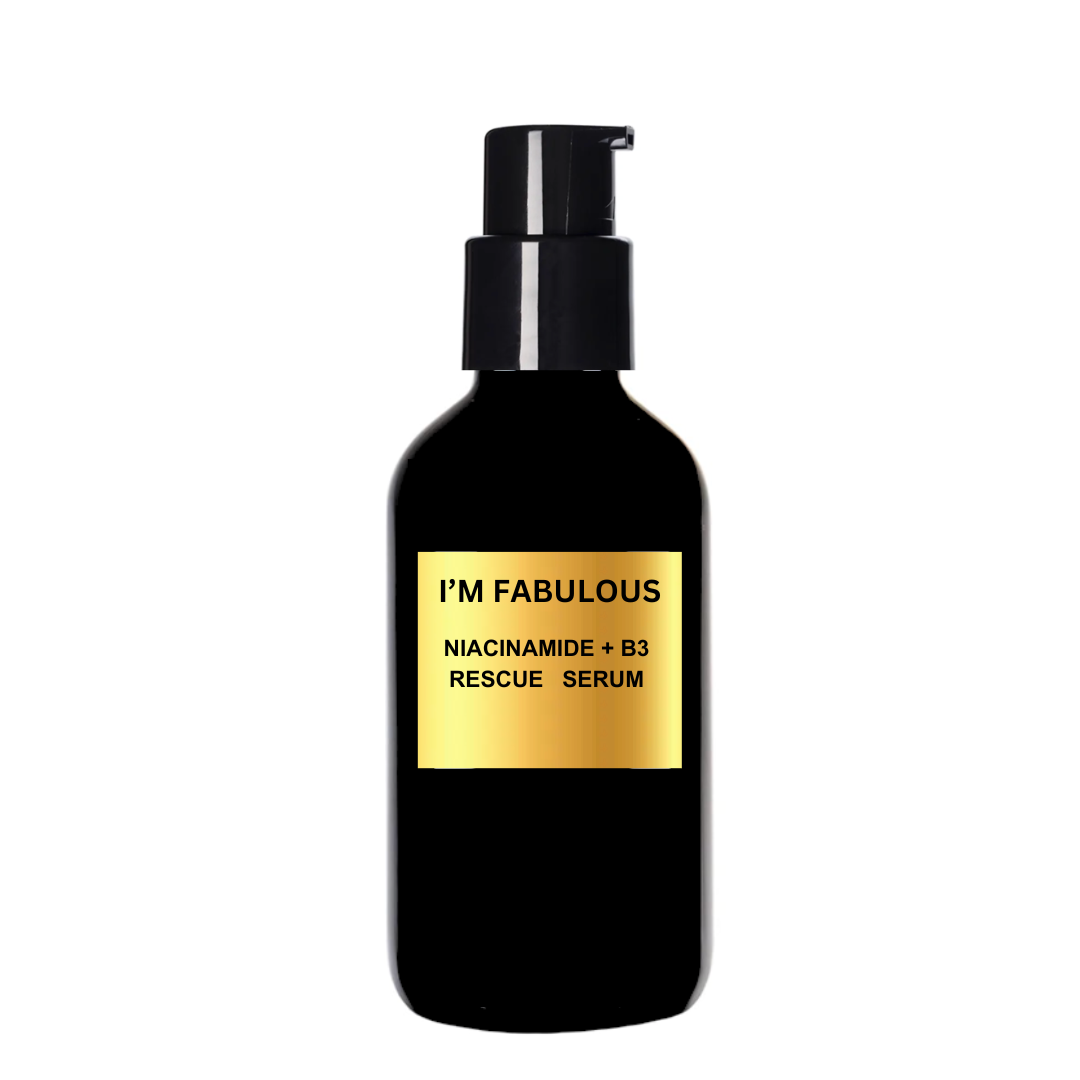
At the concentrations and pH ranges used in modern formulations, including a 20% niacinamide serum like 20% Niacinamide + B3 Rescue Serum, niacinamide is chemically stable and does not meaningfully convert or degrade when layered with AHA exfoliants, vitamin C, or peptides. This myth has been walked back by cosmetic chemists repeatedly, but it persists online because "don't mix X and Y" is a simpler, more shareable claim than the more accurate, more boring answer: it's fine, formulated correctly.
Where the Real Interaction Actually Lives
The genuine consideration in this three-ingredient combination isn't niacinamide at all, it's the relationship between AHA exfoliants and copper peptides specifically. AHA ingredients, glycolic and lactic acid among them, need a low pH environment, typically in the 3 to 4 range, to actually exfoliate effectively. Copper peptides, including GHK-Cu, are most chemically stable in a closer-to-neutral pH range, roughly 5 to 7, and can lose some stability and effectiveness when exposed directly to a strongly acidic environment.
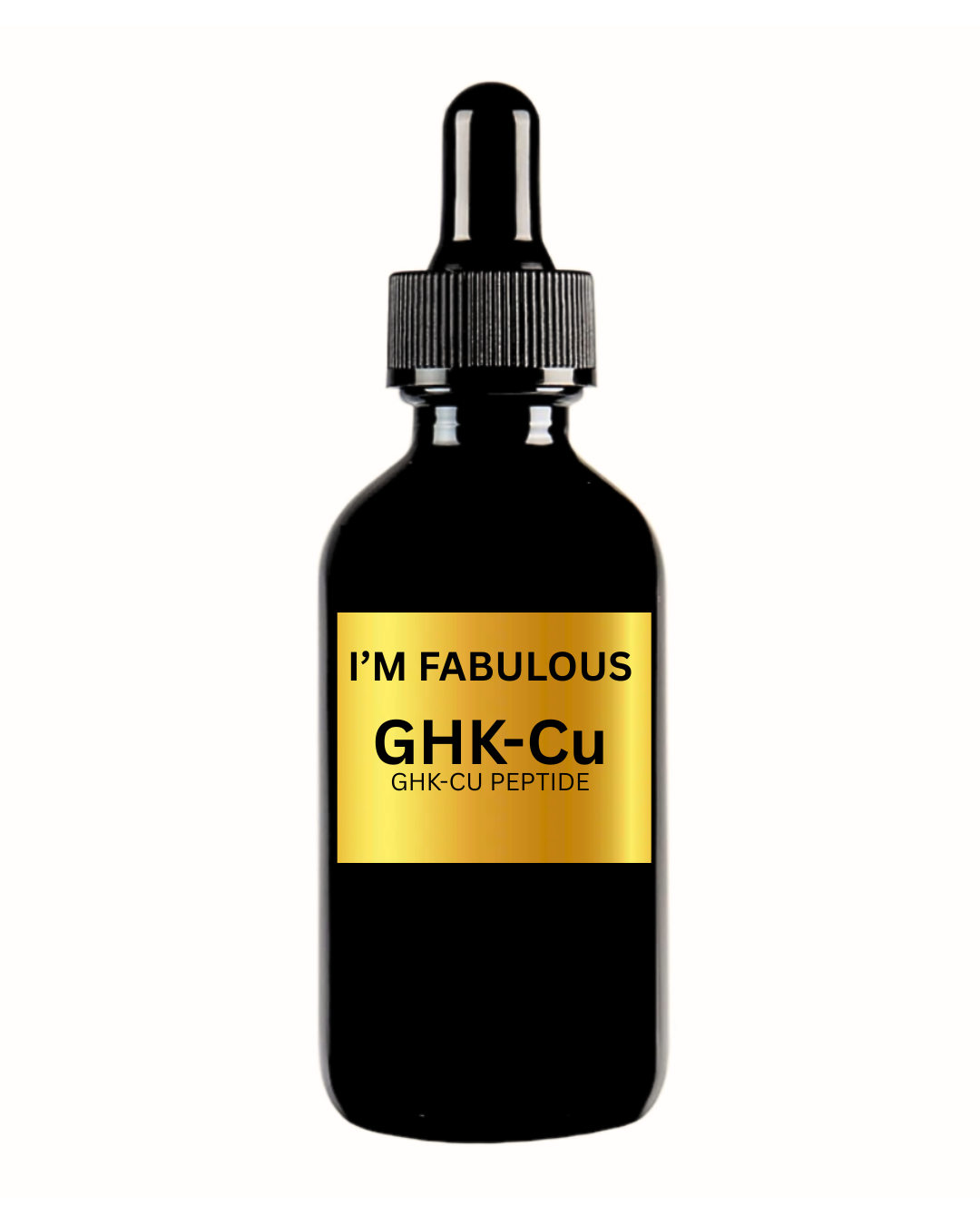
This is the same underlying chemistry behind the product-label guidance on GHK-Cu Copper Peptide Serum, which recommends against combining copper peptides with strong acids in the same application. It isn't that the two ingredients are dangerous together, it's that layering a low-pH acid directly onto a copper peptide serum can reduce how well the peptide performs, which is a real efficacy consideration worth respecting rather than a safety issue worth panicking over.
"Niacinamide was never the problem in this combination. The actual chemistry to respect sits between your exfoliating acid and your copper peptide, not between niacinamide and anything else."
Where Niacinamide Actually Fits Into All of This
Because niacinamide is stable across a wide pH range and doesn't carry the same sensitivity peptides do, it's the most flexible ingredient of the three and can reasonably be used daily, in the same routine as either AHA exfoliation or peptide serum, without the sequencing concerns that apply to the acid-and-peptide relationship. Many people apply niacinamide in the morning as part of a barrier-supporting, oil-regulating step, then use either an AHA exfoliant or a peptide serum at night depending on which night of the week it is.
This makes niacinamide the connective layer of a three-ingredient routine rather than a competing one, present daily, while AHA and peptides rotate through the week around it.
A realistic weekly schedule for all three:
- Daily (AM): 20% Niacinamide + B3 Rescue Serum
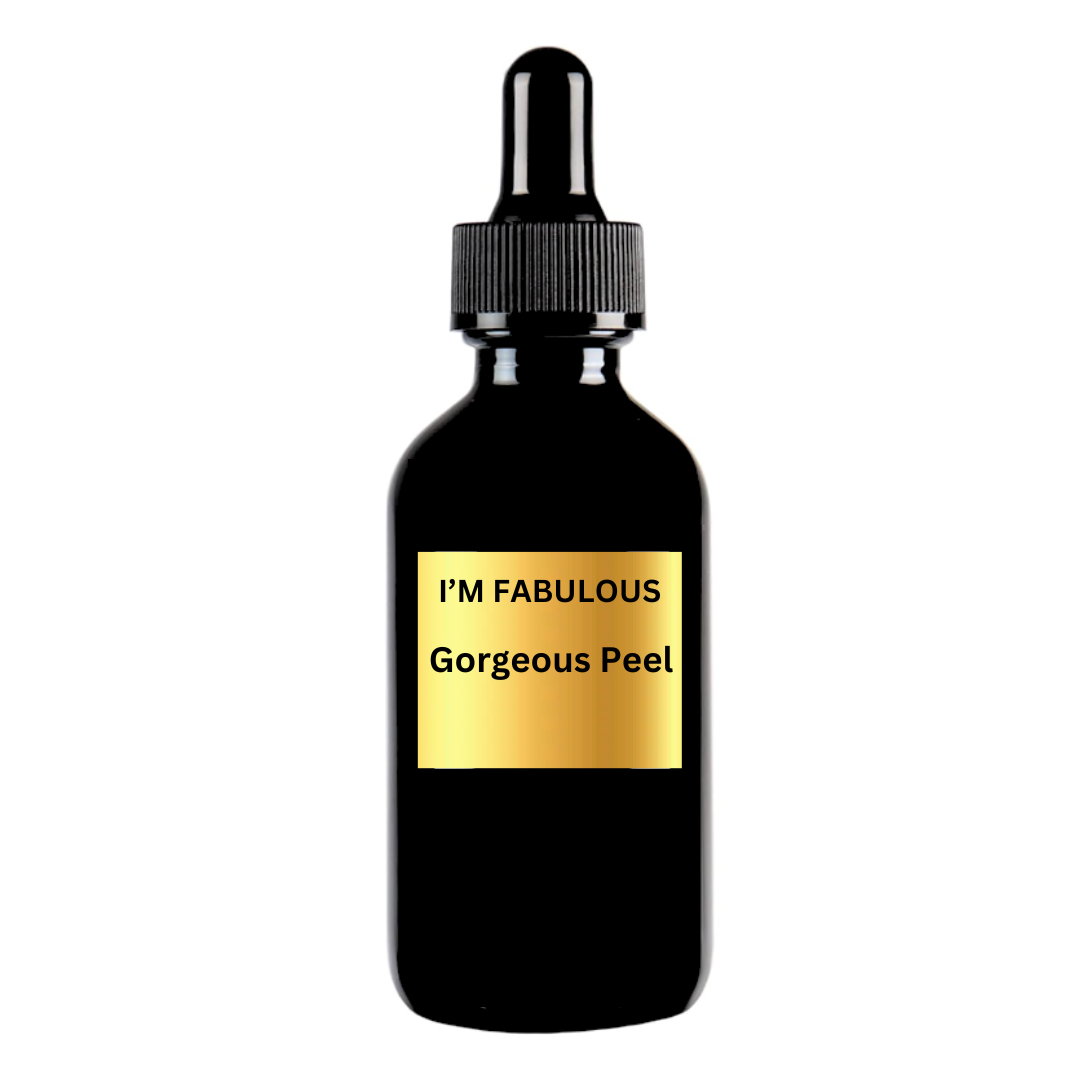
- 2-3 nights/week: Gorgeous Peel (AHA exfoliation)
- Alternating nights: GHK-Cu Copper Peptide Serum
- Every AM: broad-spectrum SPF, non-negotiable while exfoliating
Why Alternating Nights Solves the Problem Elegantly
Rather than trying to layer an AHA exfoliant and a copper peptide serum in the same nighttime routine, spacing them onto alternating nights entirely removes the pH conflict without requiring either ingredient to be diluted, timed to the minute, or used at reduced strength. Monday, Wednesday, Friday might be AHA exfoliation nights using Gorgeous Peel. Tuesday, Thursday, Saturday become peptide nights using GHK-Cu Copper Peptide Serum or SNAP-8 Peptide Organic Anti-Wrinkle Serum. Sunday becomes a rest night for both, giving the skin barrier a genuine recovery day, particularly useful for anyone newer to regular exfoliation.
Niacinamide sits underneath all of it in the morning, unaffected by whichever active ran the night before, doing its own separate work on oil regulation, redness, and barrier support throughout.
If You Genuinely Want to Use Them the Same Night
For people who prefer a single nighttime routine rather than alternating actives across different nights, spacing AHA and peptide application by roughly 20 to 30 minutes, rather than applying them back to back, gives the skin's surface pH time to normalize partway between the acidic exfoliation step and the more pH-sensitive peptide step. This isn't as clean a separation as alternating full nights, but it's a workable middle ground for people who find a rotating schedule harder to stick to consistently than a single nightly sequence.
In this same-night approach, the order matters: cleanse, apply the AHA exfoliant, wait the 20 to 30 minutes, then follow with the peptide serum, rather than the reverse order, since applying peptides first and then exposing them to a low-pH acid immediately afterward is the sequence most likely to reduce the peptide's stability.
"A well-built routine isn't the one with the most ingredients. It's the one where every ingredient still gets to do the specific job it was formulated for."
What About Non-Copper Peptides Like SNAP-8?
It's worth noting that the pH sensitivity discussed above is most relevant to copper peptides specifically, GHK-Cu among them, because copper is the reactive element that becomes less stable in strongly acidic conditions. Non-metal peptides like SNAP-8, which don't rely on a bound copper ion, are generally more tolerant of a wider pH range and less prone to the same specific interaction with AHA exfoliants.
This means someone using SNAP-8 Peptide Organic Anti-Wrinkle Serum rather than a copper peptide has somewhat more flexibility in same-night layering with AHA exfoliation than someone using a copper-based formula, though the alternating-night approach remains the simpler, lower-maintenance option regardless of which specific peptide is in your routine.
Where Hyaluronic Acid and Barrier Support Fit In
Because AHA exfoliation and peptide-focused routines can both, over time, put some demand on the skin barrier, particularly for people using both regularly, layering in a hydrating, barrier-supporting step matters more in a three-active routine than in a simpler one. Hyaluronic Acid Hydrating Serum works well applied after niacinamide and before a heavier moisturizer, on any night, exfoliation or peptide, since hyaluronic acid doesn't carry the same pH sensitivity concerns as the acid or peptide steps.
On nights immediately following AHA exfoliation specifically, leaning slightly more on hydration and slightly less on additional actives gives the skin barrier room to recover before the next active-focused night arrives.
Common Mistakes With This Specific Combination
A handful of avoidable mistakes show up repeatedly among people trying to combine all three ingredients. Starting all three at full strength in the same week, rather than introducing one at a time, makes it genuinely difficult to identify which product is responsible if irritation shows up, since three new variables changed simultaneously. Using AHA exfoliation more than the two to three nights a week most skin types tolerate well, simply because niacinamide and peptides are "gentle" and therefore feel like they leave room for more aggressive exfoliation, is a second common mistake, over-exfoliation risk comes from the AHA itself, independent of what else is in the routine.
Skipping morning SPF while actively exfoliating with AHA is a third, particularly consequential mistake, since AHA-treated skin is measurably more sensitive to UV damage in the days following exfoliation, regardless of how gentle the rest of the routine is.
Introducing the Combination as a Genuine Beginner
For anyone new to combining all three ingredients, a staged introduction works better than starting everything simultaneously. Week one, introduce niacinamide alone, daily, and confirm it's well tolerated. Week two or three, add AHA exfoliation once or twice a week, watching for any unexpected sensitivity before increasing frequency. Week four or five, once both of the first two are established and comfortable, introduce peptide serum on the non-exfoliation nights.
This staged approach takes roughly a month to fully establish all three ingredients in a routine, considerably slower than diving in all at once, but it gives skin, and the person wearing it, a much clearer picture of what's actually working and what, if anything, needs adjusting along the way.
What Niacinamide Actually Does, Beyond the Myth
Once the cancellation myth is set aside, it's worth being clear about what niacinamide (vitamin B3) genuinely contributes to this routine, since its actual, well-supported benefits are reason enough to include it daily regardless of what else is in the lineup. Niacinamide supports the skin barrier by increasing ceramide production, helps regulate sebum output in oilier skin types, has demonstrated brightening and post-inflammatory redness benefits, and shows measurable pore-appearance improvement with consistent use. 20% Niacinamide + B3 Rescue Serum sits at a concentration commonly cited in the research showing meaningful barrier and brightening benefit without the diminishing returns and higher irritation risk sometimes seen at concentrations pushed past 20%.
This barrier-supporting role is specifically valuable in a routine that also includes AHA exfoliation, since exfoliation, by its nature, temporarily thins the outermost skin layer. Niacinamide's ceramide-boosting effect works as a genuine counterbalance to that temporary thinning, which is part of why pairing the two, on different steps of the same routine, rather than viewing them as competitors, makes physiological sense.
What AHA Exfoliation Is Actually Doing to Your Skin
Alpha-hydroxy acids, glycolic and lactic acid most commonly, work by loosening the bonds between dead skin cells on the surface, allowing them to shed more efficiently than they would through normal skin turnover alone. This is why consistent AHA use improves texture, reduces the appearance of fine surface lines, helps fade superficial discoloration, and improves how well subsequent products absorb, since a properly exfoliated surface allows serums applied afterward to penetrate more effectively than a surface layered with unshed dead skin cells.
Gorgeous Peel and Bio Gorgeous Peel both work through this same basic glycolic-acid mechanism, formulated at a professional-adjacent strength intended for consistent at-home use rather than a single, intense in-office treatment. This is also why frequency matters more than raw strength for most users: two to three nights a week at a moderate strength typically outperforms daily use at the same strength, since over-exfoliation compromises exactly the barrier function niacinamide is working to support.
What Peptides Are Actually Doing, and Why the Distinction From AHA Matters
Peptides work through an entirely different mechanism than AHA exfoliation, which is part of why the two are complementary rather than redundant. Rather than removing surface cells, peptides function as signaling molecules, short chains of amino acids that communicate with skin cells to encourage specific behaviors: GHK-Cu is associated with supporting collagen and elastin production and wound-healing-adjacent repair signaling, while SNAP-8 works through a different mechanism related to reducing the muscle micro-contractions that contribute to expression lines over time.
Because peptides work on cellular signaling rather than surface removal, they don't compete functionally with AHA's resurfacing action, they address a different layer of what's actually happening in skin aging. This is precisely why combining them makes sense in principle, exfoliation clears the surface and improves how well other products absorb, while peptides work on the deeper signaling that affects firmness and collagen support, provided the pH-related sequencing covered earlier is respected so the peptide step actually gets to perform at its intended stability.
It's worth being clear that peptides are not a substitute for exfoliation, and exfoliation is not a substitute for peptides, despite occasionally being marketed as interchangeable "anti-aging" solutions. A routine relying purely on AHA exfoliation will improve texture and tone but does relatively little for the deeper collagen-signaling work peptides are specifically formulated to support, and vice versa. Treating them as complementary rather than as alternatives to choose between is the more accurate way to think about why this three-ingredient combination is worth the small amount of scheduling effort it requires.
A Closer Look at pH and Why It Matters More Than "Percentage"
A common but incomplete way people evaluate active ingredients is by concentration alone, a "10% AHA" versus a "20% niacinamide," without accounting for pH, which is frequently the more important variable for how an ingredient actually performs and interacts with others. An AHA product's effectiveness depends heavily on its formulated pH, not just its percentage; the same 10% glycolic acid concentration formulated at pH 3 exfoliates meaningfully more than the identical percentage formulated at pH 4.5, because a lower pH means more of the acid is in its active, unbuffered form.
This is exactly why the copper-peptide sensitivity discussed earlier isn't really about AHA "percentage" at all, it's about the working pH the AHA needs to be effective, which happens to sit outside copper peptides' most stable range. Understanding this distinction, that pH and concentration are related but separate variables, helps make sense of why some acid products are described as gentler than their percentage alone would suggest, and why the peptide-spacing guidance in this article is about pH specifically, not a general "these percentages don't mix" rule.
How This Combination Interacts With Retinoids, If You Use Them Too
Many people building a niacinamide, AHA, and peptide routine are also using a retinoid, over-the-counter retinol or a prescription tretinoin, which adds a fourth variable worth addressing briefly even though it's not the core focus of this piece. Retinoids and AHA exfoliants both increase cell turnover and photosensitivity, which means using both aggressively at once meaningfully raises irritation risk beyond what either ingredient causes alone. Most dermatology guidance suggests using retinoids and AHA exfoliation on different nights entirely, rather than combining them, mirroring the same alternating-night logic already recommended here for AHA and copper peptides.
For someone managing all four ingredients, niacinamide, AHA, peptides, and a retinoid, a workable structure looks like: niacinamide daily, AHA exfoliation two nights a week, retinoid two to three different nights a week, and peptide serum on whatever nights remain, with at least one full rest night for surface-level actives altogether. This is more moving parts than the three-ingredient version covered in the rest of this article, but the same underlying principle applies: separate the ingredients that compete for pH or increase shared irritation risk, and let the gentler ones, niacinamide chief among them, run daily underneath the rotation.
Signs You've Overdone the Combination
Even with a sensible schedule, it's worth knowing the specific signs that indicate the routine needs to be pulled back rather than pushed through. Persistent stinging or burning that doesn't resolve within a few minutes of application, visible flaking or peeling beyond what's expected from normal exfoliation, a rough or "sandpaper" texture that develops over days rather than smooths out, and increased redness that doesn't calm down between active nights are all signals that the current frequency is outpacing what the skin barrier can currently handle.
The most common fix isn't eliminating an ingredient entirely, it's reducing frequency: dropping AHA nights from three to two, adding an extra rest night, or pausing peptide serum for a week while the barrier recovers, then reintroducing gradually rather than assuming the entire combination needs to be abandoned.
Adjusting the Routine for Sensitive Skin
Sensitive skin types can generally still use all three ingredients, but the schedule needs more built-in recovery time than the standard version. A sensitive-skin-adjusted version might use AHA exfoliation just once a week rather than two to three times, extend the gap between AHA and peptide application on shared nights to a full 24 hours rather than 20 to 30 minutes, and introduce niacinamide at a lower starting frequency, every other day rather than daily, before working up to daily use once tolerance is established.
Patch testing any new product in this routine, a small amount on the inner forearm for 24 to 48 hours before applying it to the face, is a worthwhile extra step specifically for sensitive skin types building out a multi-active routine like this one for the first time, before committing to it across the entire face.
Frequently Asked Questions
Can you use niacinamide, AHA, and peptides in the same routine?
Yes, but not necessarily all in the same application. Niacinamide pairs easily with both AHA and peptides, but AHA exfoliants and copper peptides specifically benefit from being separated by time or day due to their different pH requirements.
Does niacinamide really cancel out vitamin C or AHA?
No. The old niacinamide-plus-acid conversion myth was based on outdated, high-heat lab conditions that don't reflect how modern formulas are made or how skin actually absorbs product. At standard cosmetic concentrations and pH, niacinamide is stable alongside both AHA and vitamin C.
Why can't you apply AHA and copper peptides at the exact same time?
AHA exfoliants work at a low pH, typically 3 to 4, while copper peptides like GHK-Cu are most stable closer to neutral pH. Applying them back to back in the same few minutes can reduce the copper peptide's stability, so spacing them out or alternating nights protects the more sensitive ingredient.
What's a realistic weekly schedule for all three ingredients?
A common, dermatologist-informed approach uses AHA exfoliation two to three nights a week, peptide serum on the alternating nights, and niacinamide daily, since niacinamide is gentle enough to layer with either one.
Should beginners start with all three ingredients at once?
No. Introducing one active ingredient at a time, roughly one to two weeks apart, makes it much easier to identify which product is responsible if irritation occurs, compared to starting all three simultaneously.
Building the Full Routine, Step by Step by Time of Day
It helps to see this entire combination laid out as an actual sequence, morning and night, rather than only as a weekly calendar. Every morning, regardless of what happened the night before, the routine starts with a gentle cleanse, followed by 20% Niacinamide + B3 Rescue Serum, then Hyaluronic Acid Hydrating Serum while skin is still slightly damp to help lock in moisture, then a moisturizer, and finally, without exception, broad-spectrum SPF, particularly important given how much more UV-reactive exfoliated skin becomes.
On AHA nights, the sequence is: cleanse, apply Gorgeous Peel to fully dry skin (dampness can increase acid penetration and irritation risk), wait the recommended contact time on the product's own instructions, then follow with a hydrating, barrier-supporting moisturizer, skipping additional actives that same night to give the exfoliation room to work without competing irritation risk.
On peptide nights, the sequence is: cleanse, apply GHK-Cu Copper Peptide Serum or SNAP-8 Peptide Organic Anti-Wrinkle Serum to fully dry, non-acidic skin, then follow with moisturizer. Because this is a rest night from exfoliation, the skin's pH has had a full day to return to its normal, slightly acidic baseline, which is exactly the stable environment copper peptides perform best in.
How Long Before You See Results From This Combination
Realistic timelines differ meaningfully by ingredient, and setting expectations correctly upfront reduces the temptation to abandon the routine too early or, in the opposite direction, to push frequency higher than originally intended out of sheer, understandable, human impatience. Niacinamide's oil-regulating and redness-reducing effects are commonly noticeable within two to four weeks of consistent daily use. AHA exfoliation's texture and glow benefits are often visible faster, sometimes within one to two weeks, since the effect is partly mechanical, removing dead surface cells, rather than requiring deeper cellular change. Peptide benefits, working through slower collagen-support signaling rather than immediate surface change, typically take the longest to become visually apparent, commonly 8 to 12 weeks of consistent, uninterrupted use before firmness and fine-line improvements are clearly noticeable to the person actually wearing the results.
This staggered timeline is worth knowing upfront specifically because it's common to feel like peptides "aren't doing anything" in the first month, when in reality the niacinamide and AHA benefits arriving faster are simply masking the slower, still-in-progress peptide signaling quietly happening underneath the whole time.
Why This Combination Specifically Suits an Anti-Aging Routine
Looked at together rather than ingredient by ingredient, this three-part combination covers three genuinely distinct mechanisms that overlap to address visible skin aging from different angles: niacinamide strengthening the barrier and calming inflammation that accelerates visible aging, AHA exfoliation improving surface texture and allowing better absorption of everything applied afterward, and peptides working on the deeper collagen-signaling side of firmness and fine lines. Few single-ingredient routines address all three of these mechanisms simultaneously, which is part of why this specific combination, built with appropriate spacing rather than layered carelessly, tends to outperform any one of the three ingredients used entirely in isolation over the same stretch of consistent, patient months.
The Bottom Line
Niacinamide, AHA exfoliants, and peptides are not competing ingredients, and the old blanket warnings about mixing actives oversimplify a combination that actually works well with a small amount of intentional scheduling. Niacinamide can be used daily as the connective layer of the routine. AHA exfoliation and copper peptides specifically benefit from alternating nights or a deliberate 20 to 30 minute gap, protecting the peptide's stability without requiring either ingredient to be dropped or watered down.
Built this way, all three ingredients get to do the specific job they're actually good at, brightening and barrier support from niacinamide, resurfacing from AHA, and firming, collagen-supporting signaling from peptides, without any of them undermining the others, a genuinely achievable outcome once the schedule respects the one real interaction that actually matters between them, rather than the several imagined ones that circulate online without much scrutiny. For anyone who wants the resurfacing and brightening pieces pre-combined, the Hyperpigmentation & Brightening Solution Bundle pairs a niacinamide serum with complementary brightening actives in one step, and the Luxury Peptide Powerhouse Bundle covers the peptide side of the rotation with four different formulas to rotate through as skin adjusts, without needing to source and compare separate single-ingredient products from several different brands.
Ready to build the routine?
Shop Niacinamide Serum → Shop Gorgeous Peel →Or explore the full serum collection and skincare protocols for more routine guidance.
This article is for informational purposes and is not a substitute for personalized advice from a licensed dermatologist. See our full medical disclaimer.