The Men's Biohacking Skin Stack: What Topical Peptides Actually Do (And Why Serious Optimizers Are Adding Them)
The Optimization Edit
The same men tracking HRV, sleep scores, and VO2 max are starting to treat their skin as another input worth optimizing. Here's the actual science behind the peptide stack they're reaching for, and where it fits next to the rest of a longevity protocol.
Biohacking used to mean supplement stacks, cold plunges, and a stack of lab panels most people had never heard of. It's expanded. The global biohacking market is projected to grow from roughly $45 billion in 2025 to over $56 billion in 2026, and toward $135 billion by 2030, a growth curve driven largely by men and women who've decided that optimization doesn't stop at the neck. Skin, like sleep and cardiovascular fitness, is a measurable, trackable system, and a specific category of ingredient, topical peptides, has the closest thing skincare has to a biohacker's evidence bar: published mechanism, dose-dependent response, and a track record that predates the current wellness-culture moment by decades.
Quick summary: Peptide skincare is becoming part of the standard men's biohacking and longevity stack, alongside sleep optimization, strength training, and metabolic tracking. Two ingredients carry the strongest research base: GHK-Cu (copper peptide), studied since the 1970s for collagen and wound-healing signaling, and SNAP-8, which reduces the repetitive micro-contractions behind expression lines. This article covers what each actually does, how they differ from injectable "biohacking peptides" like BPC-157 or CJC-1295 (an important and often-blurred distinction), and how to build them into a stack using GHK-Cu Copper Peptide Serum and SNAP-8 Peptide Organic Anti-Wrinkle Serum together as a coordinated daily stack.
Why Biohackers Are Adding Skin to the Stack
The biohacking and longevity movement has always been oriented around measurable systems: sleep architecture, heart rate variability, blood biomarkers, grip strength, VO2 max. Skin was, for a long time, treated as cosmetic rather than physiological, something separate from the "real" optimization work happening internally. That framing has started to shift, partly because skin is itself a genuinely trackable, responsive organ system, and partly because the same consumers driving the biohacking market's growth toward a projected $134.75 billion by 2030 have started applying the same evidence standards to skincare that they already apply to supplements and training protocols.
That evidence standard matters, because skincare marketing has historically been generous with unproven claims. Peptides are one of the few skincare ingredient categories that hold up reasonably well under that stricter scrutiny, provided the specific peptide and its research base are examined individually rather than treated as one interchangeable ingredient class.
An Important Distinction: Topical Peptides vs. Injectable "Biohacking Peptides"
This is worth addressing directly, because it's a common point of confusion once someone starts researching peptides from a biohacking angle. The peptide-therapy world associated with names like BPC-157, TB-500, CJC-1295, and ipamorelin refers to injectable or subcutaneous compounds intended to act systemically, on tissue repair, growth hormone signaling, or gut lining, and that category sits in a genuinely different regulatory and evidence position, with more limited human clinical trial data and significant legal variability by jurisdiction.
Topical skincare peptides, GHK-Cu and SNAP-8 among them, are an entirely different application: applied to the skin's surface, working locally on skin cells rather than entering systemic circulation the way an injectable does, and backed by a research base built specifically around topical use, cosmetic formulation, and dermal absorption rather than systemic pharmacology. We sell and formulate exclusively in this topical category. Anyone researching "biohacking peptides" should keep this distinction clear, since the safety profile, evidence base, and regulatory status of topical cosmetic peptides and injectable peptide therapy are not interchangeable, and conflating them is one of the more common mistakes in biohacking-adjacent content online.
"Optimization only works if you're applying it to the right category of evidence. Topical peptides earn their place in a stack because the research was built for exactly what they're being used for."
GHK-Cu: The Peptide With the Longest Research History in the Stack
GHK-Cu, a naturally occurring copper-binding tripeptide, was first isolated from human plasma in the early 1970s, making it one of the longest-studied peptides in cosmetic and wound-healing research, well predating the current interest in peptides as a skincare category. Its research base covers stimulation of collagen and elastin production, antioxidant activity, anti-inflammatory signaling, and a documented role in the body's natural wound-repair process. For a biohacker's evidence standard, that combination of a multi-decade research history and a specific, published mechanism is closer to what you'd expect from an evaluated supplement ingredient than from a typical trend-driven skincare active.
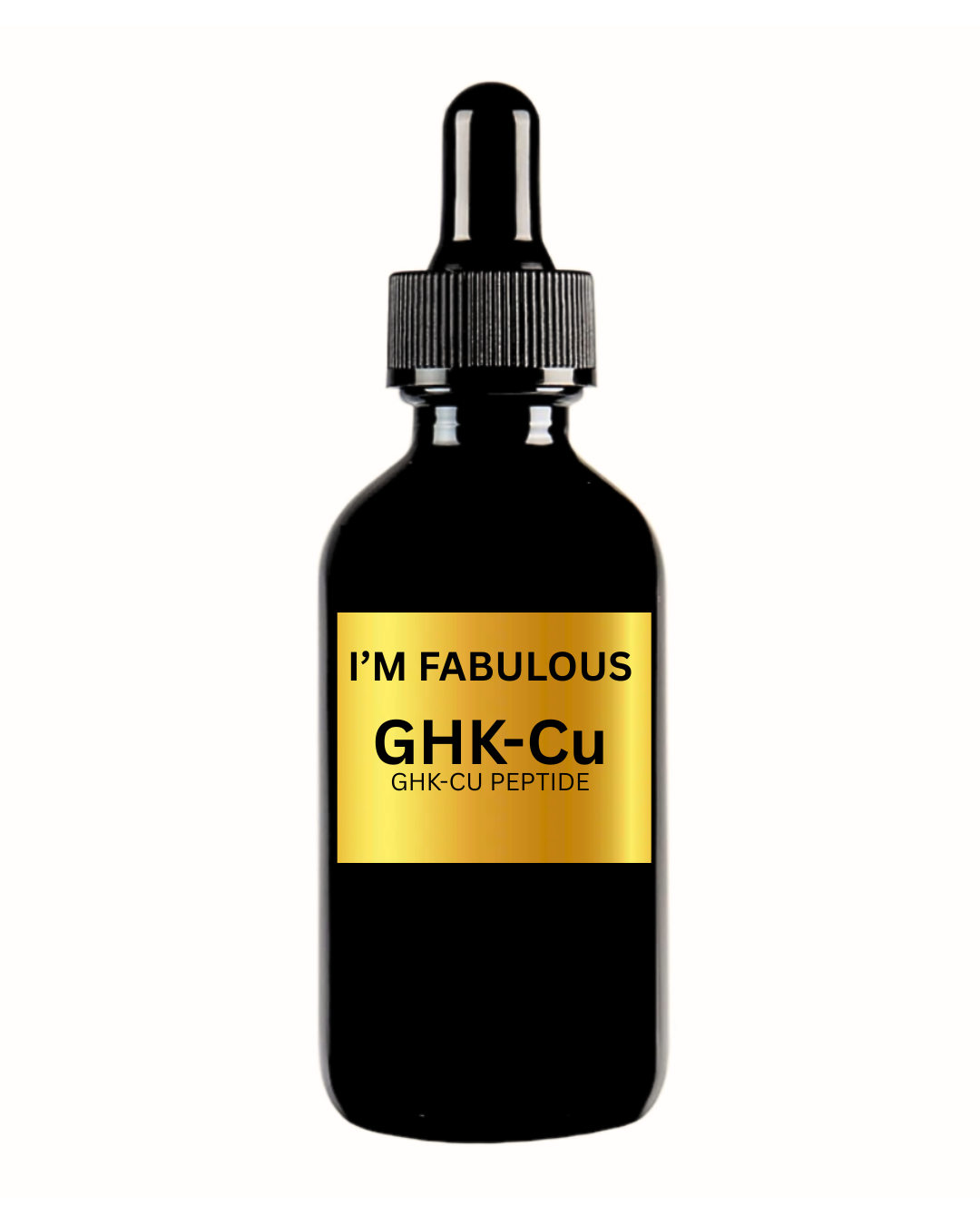
Our GHK-Cu Copper Peptide Serum is formulated to deliver this specific compound in a stable, absorbable topical format, positioned as a full-face daily layer within a broader routine rather than a single spot treatment.
SNAP-8: Targeting the Mechanical Side of Expression Lines
SNAP-8 (a longer-chain relative of the more widely known acetyl hexapeptide-8 molecule) works through a different mechanism entirely: rather than acting on collagen synthesis, it targets the repetitive micro-contractions in facial muscles, the forehead-raising, brow-furrowing, and squinting movements that, repeated daily over years, contribute to expression lines in the areas where those movements concentrate. This mechanical, movement-based approach is part of why SNAP-8 gets referenced as a topical alternative-adjacent option relative to neuromodulator injections, though it's worth being precise: SNAP-8 works through a different, milder mechanism than an injectable neuromodulator and shouldn't be expected to replicate that level of effect, even as a legitimate, evidence-supported option in its own right for reducing the visible impact of repetitive expression over time.
Our SNAP-8 Peptide Organic Anti-Wrinkle Serum is formulated for targeted application to the forehead, glabellar area, and crow's feet zone, the specific regions where repetitive muscle movement concentrates.

Why Men's Skin Changes the Calculus Slightly
The underlying peptide mechanisms aren't sex-specific, GHK-Cu's collagen-signaling pathway and SNAP-8's action on muscle micro-contraction work the same way regardless of who's applying them. What does differ is the substrate. Men's skin is generally about 20-25% thicker than women's on average, with higher collagen density and different sebaceous gland activity, differences that affect both how quickly visible aging typically becomes noticeable and how a topical active penetrates and performs over time. Thicker, oilier skin can also mean men sometimes need a slightly longer consistency window before subtle results become apparent, since baseline skin structure is already denser going in.
None of this changes the underlying protocol logic, consistent daily application, an 8-12 week minimum evaluation window, appropriate layering with the rest of a routine, but it's a reasonable, evidence-grounded answer to the fair question of whether men's skincare needs to be formulated any differently. Mostly, it doesn't; the format and mechanism stay the same, the timeline expectations are just slightly recalibrated.
Why the Male Biohacking Demographic Is Driving This Category
Biohacking has historically skewed heavily male, particularly in its more data-intensive, self-quantification-driven corners, though that's shifting: women now represent an estimated 45% of biohacking consumers overall, up from roughly 20-25% in the field's earlier, more niche years. What hasn't shifted as much is who's driving spend at the higher end of the optimization category, where men, particularly in the 35-55 range with established careers and disposable income, remain a disproportionately large share of the customer base for premium longevity and performance products. That's a demographic already comfortable spending meaningfully on inputs with a clear evidence trail, whether that's a continuous glucose monitor, a sleep-tracking ring, or a cold-plunge setup, and increasingly comfortable extending that same spending logic to skin, provided the ingredient can clear the same evidence bar everything else in the stack already has to clear.
This is part of why the framing matters as much as the ingredients themselves. A peptide serum marketed purely on aesthetic vanity language undersells the actual audience reaching for it. The more accurate framing, mechanism, dose, evidence base, tracked outcome, is the one that actually maps onto how this buyer already evaluates everything else they're putting into their body or their daily protocol.
Cost-Per-Input: How Topical Peptides Compare to Other Longevity Spending
Framed in the same cost-per-input terms a biohacker would apply to any other protocol decision, topical peptide serums sit at a notably accessible price point relative to other categories in the same longevity-spending bracket. A single med-spa exosome session can run $500-2,500 depending on the provider and treatment area, a cost that recurs with each session rather than functioning as a durable daily input. A continuous glucose monitor subscription commonly runs $150-250 a month. Against that backdrop, running the full two-serum stack at $149 each, $298 total for a multi-month supply of two coordinated, daily-use products, is a comparatively low-cost addition to a broader longevity budget, particularly given the multi-decade research history behind GHK-Cu specifically, a track record most trending longevity inputs, biological or otherwise, simply don't have yet.
This isn't an argument that price alone validates a product, cost and evidence are separate questions, but for a buyer already comfortable allocating meaningful budget toward less-established interventions, a well-evidenced, comparatively affordable daily input is a reasonable, low-risk place to start applying the same optimization logic to skin that's already being applied everywhere else.
Building the Full Stack: How the Two Peptides Work Together
GHK-Cu and SNAP-8 aren't competing for the same job, which is exactly why they're commonly used together rather than as alternatives to each other. GHK-Cu operates as a broad, full-face daily layer supporting the skin's structural collagen framework and providing ongoing antioxidant coverage. SNAP-8 operates as a targeted, mechanism-specific application addressing the mechanical, movement-driven side of expression lines in the zones where that's most relevant. Layered together in a single routine, cleanse, SNAP-8 to targeted zones, GHK-Cu across the full face, they address two genuinely distinct mechanisms rather than duplicating the same one, which is the same "stack, don't overlap" logic biohackers already apply when combining supplements that work through different pathways.
The stack, in plain terms:
- GHK-Cu: full-face daily layer, collagen and elastin signaling, antioxidant and anti-inflammatory support
- SNAP-8: targeted application, reduces repetitive expression-line muscle micro-contractions
- Different mechanisms, additive rather than redundant when layered together
- Evaluate on an 8-12 week minimum window, consistent with how any biohacking input should be tracked
Buying Both Together: GHK-Cu Plus SNAP-8
For anyone building this into a stack rather than testing one product in isolation, pairing the GHK-Cu Copper Peptide Serum with the SNAP-8 Peptide Organic Anti-Wrinkle Serum at $149 each, $298 for the full stack, covers both mechanisms outlined above in a single order. It's built for the same reason a biohacker buys a stack rather than a single supplement: the two inputs are designed to be used together as a coordinated protocol rather than in isolation, cleanse, SNAP-8 to targeted zones, GHK-Cu across the full face, structured specifically around the full-face-plus-targeted-zone protocol described earlier.
Tracking Your Peptide Stack Like Any Other Biohacking Input
The same measurement discipline biohackers apply to sleep, training load, and supplementation applies here. Photograph consistently, same lighting, same angle, same time of day, at baseline and every two to four weeks. Track adherence the way you'd track a supplement protocol, since inconsistent application is the most common reason a genuinely effective topical active gets dismissed as "not working" when the real issue was irregular use. Give the full stack a minimum 8-12 week window before drawing conclusions, since collagen remodeling and muscle micro-contraction adaptation both operate on a multi-week biological timeline, not a multi-day one, regardless of how motivated the initial application schedule is.
Treating a peptide stack with the same rigor as any other tracked biohacking input isn't just a stylistic choice, it's genuinely the difference between an accurate read on whether a specific input is working and a subjective impression shaped by inconsistent use and impatience with a biological timeline that simply requires more than a week or two to become visible.
A Worked Example: Building the Stack Into an Existing Morning Protocol
Consider a man already running a fairly standard optimization morning: wake, hydrate, a cold exposure or sauna session a few times a week, resistance training four to five days, a protein-forward breakfast, and a supplement stack that includes something targeting NAD+ support. Adding the peptide layer doesn't require restructuring any of that. Post-shower, before the rest of the morning routine begins, the sequence is simple: cleanse, apply SNAP-8 to the forehead and eye area, layer GHK-Cu across the full face and neck, then continue with sunscreen as the final step before the day starts. The entire addition takes under two minutes and slots into a step that's already happening, the post-shower skincare moment, rather than requiring a new block of time carved out of an already dense morning protocol.
For the same man already tracking inputs in a spreadsheet or an app, adding "peptide serum, AM" as a line item alongside sleep score and training log is a low-friction way to actually apply the tracking discipline described earlier, rather than letting a new input become the one part of the protocol that gets evaluated purely on vibes instead of consistent, logged data.
What a Realistic Timeline Actually Looks Like
Setting accurate expectations matters as much as the ingredients themselves. Most users applying a consistent daily peptide stack report early textural changes, smoother feel, slightly improved hydration, within the first two to four weeks, well before the deeper collagen-related changes become visible. The more structurally meaningful changes, reduced fine-line depth, improved firmness, tend to fall in the 8-12 week range, consistent with the biological timeline for measurable collagen remodeling. Some continued improvement is commonly reported out to the four-to-six-month mark with sustained use, which tracks with how slowly the deeper structural layers of skin actually turn over and rebuild.
This timeline isn't a marketing softener, it's consistent with how collagen synthesis and remodeling are understood to work physiologically, and it's worth setting that expectation upfront rather than promising a faster result that the underlying biology doesn't support.
Where This Fits Next to the Rest of a Longevity Protocol
Most men building a serious longevity stack are already managing several other inputs, sleep consistency, resistance training, a protein target, some version of NAD+ support, and a morning antioxidant habit driven by the same free-radical-management logic that shows up in longevity research generally. Topical peptides slot into that structure without requiring a separate framework: apply in the morning alongside a broader antioxidant step, our NAD+ Resveratrol Collagen Serum is a reasonable pairing given the cellular-energy angle already familiar to anyone tracking NAD+ as part of a longevity protocol, and treat the peptide layer as one more measurable input rather than a separate, disconnected skincare routine bolted onto an otherwise data-driven regimen.
Post-workout skin, particularly for anyone training consistently, also benefits from a hydration layer that supports barrier function without interfering with the peptide actives already in play. Hyaluronic Acid Hydrating Serum is commonly layered underneath peptide serums for exactly this reason, replenishing water content lost to sweat and frequent cleansing without diluting or interfering with either GHK-Cu or SNAP-8's mechanism.
Reading a Peptide Ingredient Label Like a Biohacker Would
The same label literacy biohackers already apply to supplement stacks, checking dose, form, and third-party testing rather than trusting a front-of-package claim, transfers directly to peptide skincare. A few practical checks: confirm the specific peptide name appears in the ingredient list (GHK-Cu or Copper Tripeptide-1, not just "peptide complex"), check ingredient list position since concentration generally correlates with earlier placement, and look for stabilizing formulation details, since peptides, like many actives, are sensitive to oxidation and require appropriate packaging (opaque, airless dispensing) to remain effective through the product's shelf life. A listing that names the specific peptide and is transparent about formulation approach is generally offering more useful information than one relying on a vague "peptide complex" descriptor without further detail.
How This Connects to the Rest of Our Peptide Research
This stack builds directly on research we've published previously on peptide mechanisms and safety. Our deep dive on the two kinds of wrinkles, dynamic and static, covers why a movement-targeting peptide like SNAP-8 addresses a fundamentally different problem than a collagen-support peptide like GHK-Cu, the same distinction driving how this stack is structured. Our 90-day peptide protocol guide lays out a more detailed week-by-week tracking framework for anyone who wants a more structured version of the measurement approach described above. And for anyone weighing topical peptides against more expensive med-spa procedures as part of a broader longevity-spending decision, our honest comparison of exosome treatments and topical peptides covers that cost-versus-evidence tradeoff directly.

A Note on Consistency Over Intensity
One pattern worth flagging for anyone coming from a high-intensity training or supplement background: more isn't the operative variable here the way it might be with, say, progressive overload in resistance training. Applying a peptide serum more frequently than directed, or in higher amounts, doesn't accelerate collagen remodeling or muscle micro-contraction adaptation, both processes run on their own biological timeline regardless of application volume, and over-application mainly increases the odds of irritation without a corresponding increase in benefit. The controllable variable that actually matters is consistency: the same daily application, at the same steps in the routine, sustained across the full 8-12 week evaluation window and beyond, which is a less exciting optimization lever than intensity but the one the underlying biology actually rewards.
Frequently Asked Questions
Are topical peptide serums the same as biohacking peptide injections?
No. Topical peptides in skincare, like GHK-Cu and SNAP-8, are applied to the skin's surface and work locally. Injectable peptides used in some biohacking protocols enter systemic circulation and are a separate, more medically regulated category.
What does GHK-Cu actually do for skin?
GHK-Cu is a copper-binding peptide with decades of published research showing it supports collagen and elastin production, has antioxidant and anti-inflammatory activity, and assists wound healing signaling.
Is peptide skincare worth it for men specifically?
The underlying mechanisms aren't sex-specific, but men's skin is generally thicker with different oil production, which can affect texture, absorption, and how quickly visible results from consistent use show up.
How long before a topical peptide stack shows results?
Most peptide serum research and formulation guidance points to a meaningful initial response window of eight to twelve weeks of consistent daily use, with continued improvement over several months.
Can you stack GHK-Cu and SNAP-8 together?
Yes, they work through different mechanisms, GHK-Cu on collagen signaling and SNAP-8 on reducing repetitive muscle micro-contractions, and are commonly used together in a layered routine.
Do I need to change my routine on rest days or non-training days?
No. Unlike training load, which is typically periodized around recovery, peptide application should stay consistent every day regardless of training schedule, since the skin-level mechanisms being targeted don't follow the same load-and-recover pattern as muscle tissue.
Does sweat or frequent showering from training reduce peptide effectiveness?
Not meaningfully, provided the serum is applied to clean, dry skin as directed. The main consideration for high-frequency trainers is simply ensuring consistent reapplication after showers rather than skipping a session because a previous application was rinsed off mid-day.
Common Mistakes That Undermine an Otherwise Solid Protocol
A few patterns show up repeatedly among first-time peptide-stack users, and most of them have nothing to do with the ingredients themselves. The most common is inconsistent application, using a serum diligently for two weeks, skipping several days during a busy stretch, then judging the product as ineffective at the one-month mark, when the actual issue is a broken data set rather than a failed ingredient. A second common mistake is layering too many new actives simultaneously, adding a peptide serum, a new retinol, and a new exfoliating acid all in the same week, which makes it functionally impossible to attribute any change, positive or negative, to a specific input. A third is applying peptide serums over damp, product-layered skin rather than a clean base, which can reduce absorption and dilute the concentration actually reaching skin cells.
Avoiding these isn't complicated, but it does require applying the same protocol discipline already familiar from other parts of a biohacking routine: one variable change at a time, consistent application logged the same way any other input gets logged, and a genuine multi-week window before drawing conclusions rather than a premature judgment call at week two.
How This Differs From a Generic Anti-Aging Routine
It's worth being direct about what separates this from a standard anti-aging skincare routine, since the peptide category alone doesn't automatically qualify as a "biohacking" approach in any meaningful sense. What makes the framing accurate here is the same thing that makes any input count as biohacking rather than just wellness marketing: a specific, published mechanism, a defined evaluation window, consistent measurement, and an honest accounting of what the evidence does and doesn't support, including the explicit distinction drawn earlier between topical peptides and injectable peptide therapy. A routine built around unverified ingredient claims and vague "anti-aging" language doesn't meet that bar regardless of how it's marketed. A routine built around GHK-Cu and SNAP-8 specifically, applied consistently and tracked honestly, does, not because of the branding, but because the underlying research actually supports the specific mechanisms being targeted.
Who This Stack Isn't For
In the interest of the same evidence-honesty this entire framework is built on, it's worth naming who this specific stack is less suited for. Anyone seeking a fast, dramatic change within days, the kind sometimes associated with injectable neuromodulators, will find a topical peptide stack's more gradual, multi-week timeline mismatched with that expectation, and should have that expectation set accurately before purchasing rather than after. Anyone with a known sensitivity to a specific peptide or formulation ingredient should patch-test before full-face application, as with any new active. And anyone looking specifically for the systemic, injectable peptide-therapy category discussed earlier, for reasons related to recovery, growth hormone signaling, or other systemic goals, should understand clearly that this is a different category entirely, one we don't sell or make claims about, and one that carries its own separate risk and regulatory profile worth researching independently and discussing with a physician rather than conflating with topical skincare peptides.
The Bottom Line
Skin is a legitimate biological system, and the same evidence discipline applied to sleep, training, and supplementation holds up when applied to topical peptides specifically, GHK-Cu and SNAP-8 carry real, published, mechanism-specific research, distinct from and not to be confused with the injectable peptide category more commonly discussed in broader biohacking circles. For a stack-minded buyer, that distinction and that evidence base are exactly the standard worth applying before adding anything new to a protocol.
Built consistently, tracked honestly, and given a realistic 8-12 week evaluation window, a topical peptide stack is one of the more evidence-grounded additions available in the current skin-as-optimization moment, not because it's trending, but because the mechanism was published decades before the trend caught up to it, a rarer position for a skincare ingredient to be in than most trending-ingredient marketing would suggest. For a buyer who's already applied this level of scrutiny to sleep, training, and supplementation, extending the same standard to skin is less a new habit than a logical, overdue extension of one already firmly in place.
The stack itself is straightforward: a full-face collagen-support layer in GHK-Cu, a targeted expression-line layer in SNAP-8, applied consistently, tracked like any other input, and evaluated on the timeline the underlying biology actually requires rather than the timeline marketing copy might promise. That's the whole framework, and it holds up under the same scrutiny the rest of a serious longevity protocol is already built to withstand, without requiring a leap of faith the rest of the stack doesn't also ask for.
Build your peptide stack the evidence-based way
Shop GHK-Cu Serum → Shop SNAP-8 Serum →Or explore the full serum collection and skincare protocols for more routine guidance.
This article is for informational purposes and is not a substitute for personalized advice from a licensed dermatologist or physician. See our full medical disclaimer.