When to Use a Peptide Serum: Morning, Night, and the Science Behind the Right Timing
The Ingredient Science Edit
When should you use a peptide serum, morning or night? Night wins, and it's not a style preference, it's biology. Collagen synthesis and cell turnover peak somewhere between 11pm and 4am, which is exactly the window a peptide serum is designed to support. Here's the science, and how to build a routine around it.

Quick Answer: When to Use a Peptide Serum
Use your peptide serum at night, not in the morning. Skin research on circadian biology shows that cell turnover, collagen synthesis, and blood flow to skin all peak overnight, roughly between 11pm and 4am, which is precisely the biological process peptides like GHK-Cu and SNAP-8 are designed to support. Morning skin, by contrast, prioritizes defense against UV and environmental stress rather than active repair. Transepidermal water loss (TEWL) separately peaks earlier in the evening, between about 9pm and 11pm, which is why an evening routine should pair your peptide serum with a moisturizer built to support that window too.
11pm-4am
Peak window for collagen synthesis and cell turnover
9pm-11pm
Peak window for transepidermal water loss (TEWL)
2 modes
Skin operates in daytime defense mode vs. nighttime repair mode
2026
Recent research on timed day/night collagen interventions
When to Use a Peptide Serum: The Short Answer
If you only take one thing from this article: use your peptide serum at night. GHK-Cu and SNAP-8 work by signaling the skin's own collagen and elastin production, and that signaling process is most active during the same overnight window, roughly 11pm to 4am, when your skin's cell turnover and blood flow naturally peak. Applying a peptide serum in the morning does not waste the product, but it does mean the active ingredient is working against the skin's daytime defensive priority rather than with its nighttime repair priority. The rest of this article explains exactly why, and how to build the rest of your routine around that same principle.
Your Skin Runs on a 24-Hour Clock, Not Just a Morning and Night Routine
Most skincare routines are built around convenience: cleanse and moisturize in the morning, repeat with maybe an extra serum at night. What that structure misses is that skin itself operates on a genuine biological clock, a circadian rhythm, that governs when different cellular processes are actually most active. This is not a wellness trend or a marketing framing. It is documented in dermatological research on the skin's peripheral circadian clock, which shows that skin cells shift their priorities on a predictable daily cycle, defense during daylight hours, repair overnight.
During the day, skin cells are oriented toward protection. UV exposure, pollution, and general environmental stress put skin into what researchers describe as a defensive posture, allocating resources toward shielding cells from damage rather than actively rebuilding tissue. This is part of why daytime skincare is built around SPF and antioxidants like vitamin C: the goal during daylight hours is damage prevention, not active repair.
At night, that priority flips. Cell turnover, collagen synthesis, and blood flow to the skin all increase, with research pointing to a peak window roughly between 11pm and 4am. During this window, skin cells actively work to correct DNA damage accumulated during the day and rebuild structural proteins like collagen. This is the biological basis behind the popular idea of "beauty sleep," and it is a real, measurable pattern in skin physiology rather than a figure of speech.
"Your skin isn't idle at 2am. It's doing more repair work than at almost any other point in the day. The question is whether your routine is actually supporting that window or just sitting on top of it." — I'M FABULOUS COSMETICS, The Ingredient Science Edit
The TEWL Problem: Why Skin Gets Thirstier Before It Gets Better
One of the more counterintuitive findings in circadian skin research involves transepidermal water loss, or TEWL, which is the rate at which water evaporates through the skin barrier. Rather than staying stable overnight, TEWL actually peaks earlier in the evening, generally between 9pm and 11pm, coinciding with a period of active protein assembly in the skin. During this process, amino acids bind together to form connective tissue, releasing water as a byproduct and temporarily making the skin barrier more permeable.
The practical effect is that skin becomes more prone to water loss in the hours before its deepest repair window even begins, which is part of why so many people wake up with skin that feels tighter or more dehydrated than it did the night before, even after a full eight hours of sleep. A nighttime routine that only addresses repair, without also addressing this earlier hydration dip, is working with half the picture. This is one of the reasons we formulate our Peptide Collagen Repair Cream to combine peptide actives with a genuinely hydrating base, rather than treating repair and hydration as two separate steps that only sometimes make it into the same routine.
Why This Matters More for Peptides Specifically
Peptides like GHK-Cu and SNAP-8 work by signaling the skin's own collagen and elastin production, which means their effectiveness is at least partly tied to how active that underlying collagen synthesis machinery already is at the time of application. Applying a peptide serum during a window when collagen synthesis is naturally ramping up, rather than during a period when skin is oriented toward defense, is a more strategic use of the same active ingredient.
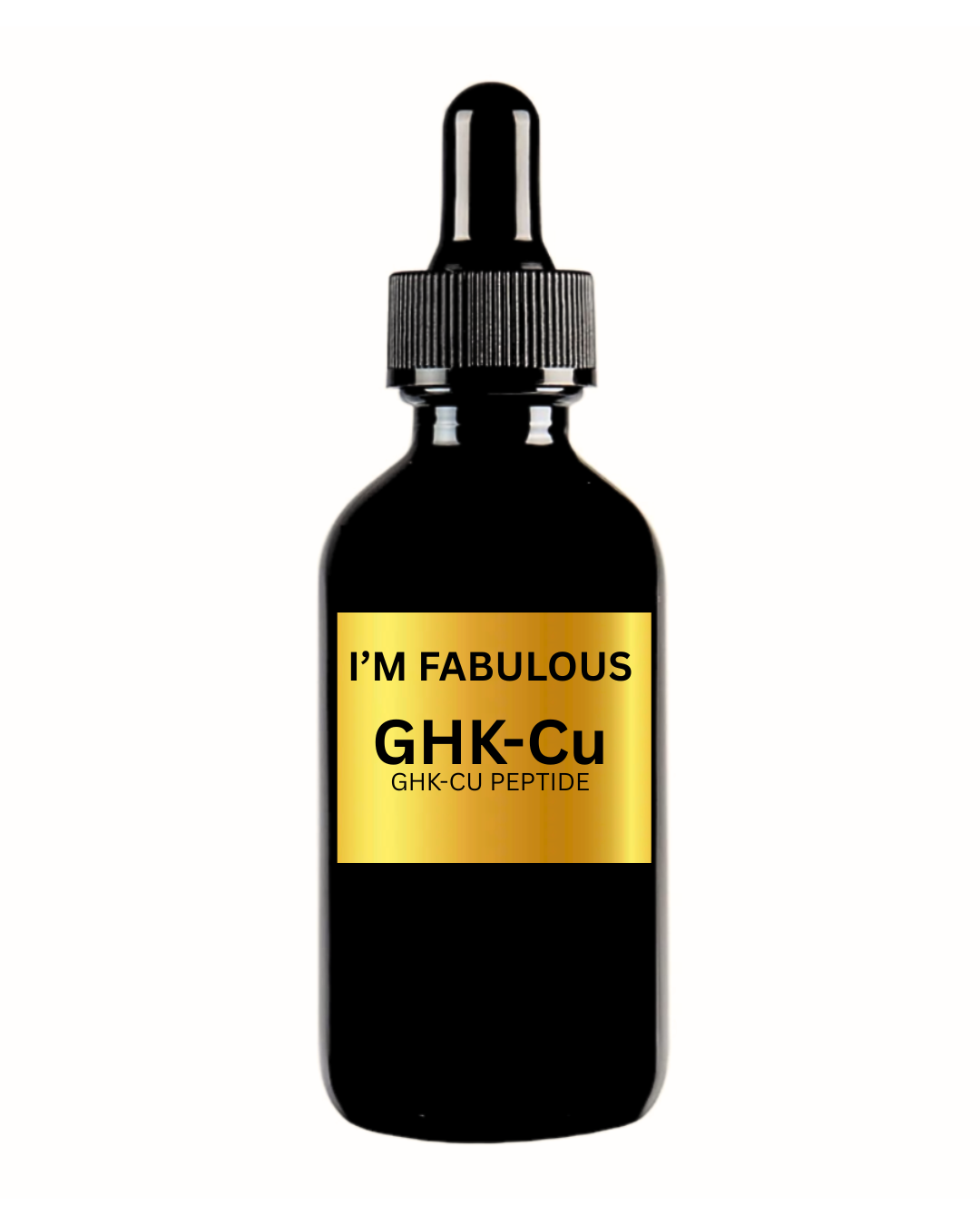
This is part of the reasoning behind recommending GHK-Cu Copper Peptide Serum and SNAP-8 Peptide Serum as evening products rather than daytime ones. It is not that peptides stop working if applied in the morning, but that evening application aligns the active ingredient with the biological window where the skin is already prioritizing the exact processes, collagen synthesis and cell turnover, that these peptides are designed to support. Several of our customers already alternate these two serums nightly as what they've started calling the "GHK-Cu plus SNAP-8 peptide duo," which happens to line up well with this circadian pattern even though most describe the routine simply in terms of results, not the underlying biology.
What Recent Research Adds to the Picture
Circadian skin research has moved well beyond simply documenting that repair peaks at night. More recent studies have started investigating whether timing specific interventions to different phases of the cycle can meaningfully improve outcomes. Research on fibroblasts, the cells responsible for producing collagen, has found that genes involved in collagen assembly tend to peak during the day, while genes governing collagen synthesis and secretion peak at night, revealing a more complex two-phase process than a simple "day versus night" framing suggests.
Separately, timed intervention studies have explored combining daytime and nighttime-targeted compounds to work with, rather than against, each phase of this cycle, with some research reporting measurable improvements in collagen fiber density and clinical measures like skin firmness and fine line depth when interventions were properly timed. While this research is still developing and should not be overstated, the overall direction is consistent: skin is not a static surface that responds identically to the same product regardless of when it's applied, and thoughtful timing based on the skin's actual biological rhythm appears to matter.
Building a Routine That Actually Respects the Clock
A circadian-aware routine does not require an elaborate overhaul of your existing skincare. It requires reallocating a small number of key actives to the time of day when they are most likely to be effective, and making sure your evening routine addresses both the early-evening hydration dip and the deeper overnight repair window rather than only one or the other.
In the evening, after cleansing, apply a peptide serum like GHK-Cu Copper Peptide Serum or SNAP-8 Peptide Serum to clean, dry skin, allowing several minutes for full absorption. Follow with a moisturizer formulated to support both barrier hydration and continued peptide activity through the night, such as our Peptide Collagen Repair Cream, which is specifically formulated to work alongside our GHK-Cu and SNAP-8 serums to amplify collagen synthesis overnight rather than simply sealing the skin after the fact. If you use a retinoid, which is already conventionally an evening-only active due to UV sensitivity, this is also the appropriate window for a formula like our Retinol Bakuchiol Serum, alternated on non-peptide nights to avoid over-layering active ingredients.
In the morning, the priority shifts to protection rather than repair. Antioxidant-forward products like vitamin C are best used here, supporting the skin's daytime defensive posture against UV and environmental stress, followed by SPF as the final and most important step. Reserving your most active, repair-oriented products for evening and your most protective products for morning is not simply a matter of ingredient interactions, though that matters too. It is a matter of working with the skin's own biological schedule rather than against it.
A note on collagen-focused actives: For clients specifically focused on longer-term collagen support rather than immediate results, our NAD+ Resveratrol Collagen Serum is formulated around ingredients studied for their role in cellular energy and collagen metabolism, and pairs naturally with an evening-focused routine given collagen synthesis's overnight peak.
How This Connects to Stress and Cortisol
This circadian repair window does not operate in isolation from the rest of the body's stress systems. We have written previously about how chronic stress and elevated cortisol show up visibly in skin, a pattern often described as "cortisol face." Cortisol follows its own circadian pattern, typically dropping to its lowest point in the early hours of sleep, which is part of why sleep quality and stress management are not just general wellness advice but directly relevant to how effectively your overnight repair window actually functions. Poor sleep or chronically elevated evening cortisol can blunt the same collagen synthesis and cell turnover processes that a well-timed peptide routine is designed to support, meaning the product timing discussed here works best as one part of a broader picture that includes genuine sleep quality, not as a substitute for it.
A Realistic Timeline for Circadian-Timed Results
Shifting your routine to better align with skin's circadian rhythm is not an overnight fix in the literal sense, despite the nightly nature of the biological window itself. Collagen remodeling is a gradual, cumulative process, and most users following a consistent evening peptide routine report visible improvements in texture and hydration within four to six weeks, with more structural improvements, firmness and reduced fine lines, building over eight to twelve weeks of consistent use. We have documented a similar timeline in detail in our 90-day peptide protocol breakdown, which walks through what to realistically expect at each stage when peptide actives are used consistently over that period.
What circadian-aware timing changes is not the underlying speed of collagen biology, but the efficiency of the actives you're already using. Applying the same peptide serum at the right time, rather than an arbitrary one, is a way of getting more out of a routine you may already be following, rather than requiring an entirely new set of products.

A Composite Example: Rebuilding a Routine Around the Clock
Consider a composite, illustrative example built from patterns we see regularly rather than a specific client. A woman in her early forties had been using a strong vitamin C serum both morning and night for several years, alongside an occasional peptide serum applied inconsistently, sometimes morning, sometimes evening, depending on her schedule. She had good products but no real structure behind when she used them, and her results had plateaued despite a reasonably comprehensive routine.
After learning about the skin's circadian repair pattern, she restructured her routine along the lines described in this article: vitamin C and SPF exclusively in the morning to support daytime defense, and her peptide serum moved to a consistent nightly evening slot, followed by a peptide-based moisturizer to address the early-evening hydration dip. Nothing about her product lineup changed significantly. What changed was the timing discipline behind when each product was actually used. Over the following eight to ten weeks, she reported noticeably improved texture and a reduction in the morning dehydrated, tight feeling she had come to consider normal. The products had always been capable of delivering this result; they simply hadn't been given a consistent, biologically appropriate window to do it in.
Sleep Quality as Part of the Equation
Because the skin's repair window is tied directly to the same circadian system that governs sleep, sleep quality itself functions as an input into how effectively that window operates, not just a separate wellness concern running in parallel to your skincare routine. Fragmented or insufficient sleep has been associated with disruption to the same hormonal and cellular signals that drive nighttime collagen synthesis and repair, meaning two people using an identical, perfectly timed peptide routine could see meaningfully different results if one is sleeping seven to eight consolidated hours and the other is getting five hours of interrupted sleep.
This is not a reason to feel discouraged if your sleep is currently inconsistent, but it is a reason to treat sleep hygiene as genuinely connected to your skincare goals rather than a completely separate category of self-care. Small, sustainable changes, a consistent bedtime, reduced screen exposure in the hour before sleep, a cooler room temperature, all support the same circadian systems that your evening peptide routine is designed to work with. Clients who address both factors together, product timing and sleep quality, consistently report better outcomes than those who optimize one while ignoring the other entirely.
Common Questions About Timing Your Routine
A frequent question is whether it's worth setting an actual bedtime around this repair window, given the research points to a specific 11pm to 4am period. We don't recommend treating this as a rigid deadline. The circadian skin research reflects general patterns rather than a strict switch that flips at a precise minute, and consistent sleep timing matters more than hitting an exact window. The more actionable takeaway is simpler: apply your reparative, peptide-based products in the evening, well before bed, rather than saving your most active products for a rushed five-minute routine right as you're falling asleep, since absorption and initial activity benefit from some settling time before you're horizontal for eight hours.
Another common question is whether this means skipping a morning routine altogether, since the research emphasizes nighttime repair so heavily. That would be a mistake. Daytime skin is in defense mode for a reason: UV exposure and environmental stress are actively accumulating damage that your nighttime routine will otherwise have to spend its limited repair window correcting. A strong morning routine, centered on antioxidants and SPF, effectively reduces the workload your overnight repair processes have to handle, making your evening peptide routine more effective by giving it less damage to undo and more capacity to focus on active collagen support instead.
Why We're Being Precise About This Rather Than Just Saying "Use It at Night"
Most skincare advice about nighttime routines is fairly generic, largely because the underlying biology rarely gets explained in consumer-facing content. We think the actual mechanism matters, because understanding why an evening peptide routine outperforms a morning one changes how seriously people take consistency. It is one thing to be told "use this at night" as an arbitrary instruction. It is another to understand that your skin is running an active, measurable biological repair process during specific hours, and that your routine is either working with that process or largely sitting on top of it without much strategic benefit.
This is also why we formulate products like our Peptide Collagen Repair Cream specifically as evening companions to our peptide serums rather than as generic all-purpose moisturizers. The goal is a routine built around when skin actually does its most important work, not simply a routine that happens to be applied at a convenient time of day. You can find our full range of peptide-focused evening formulas in our serum collection and moisturizer collection, and a complete ingredient breakdown for every formula on our ingredients page.
How Age Changes Your Skin's Circadian Rhythm
An important nuance in circadian skin research is that this overnight repair rhythm is not static across a lifetime. Younger skin tends to show a more pronounced difference between its daytime defensive state and nighttime repair state, with a sharper, more efficient overnight peak in collagen synthesis and cell turnover. As skin ages, that rhythm tends to flatten somewhat, with a less dramatic distinction between day and night cellular activity, and a generally slower rate of repair even during the peak window.
This has a direct practical implication for how mature skin should approach an evening routine. If your skin's natural overnight repair signal is weaker than it once was, the case for actively supporting that window with targeted peptide actives becomes stronger, not weaker. This is part of why we see such strong engagement with our copper peptide and SNAP-8 formulas among customers in their forties, fifties, and beyond: these customers are not just using peptides for their direct collagen-signaling effect, they are also compensating for a naturally blunted circadian repair signal that would otherwise leave more of the night's biological opportunity unused. Younger skin can sometimes get away with a less strategic routine simply because its own internal rhythm is doing more of the work; skin that has lost some of that rhythm benefits more from a routine deliberately built around it.
Travel, Time Zones, and a Disrupted Repair Window
Circadian skin rhythm is downstream of the same internal biological clock that governs sleep and jet lag, which means the same disruptions that throw off your sleep schedule when traveling across time zones also disrupt your skin's repair timing. Frequent travelers and shift workers, whose sleep patterns are irregular by necessity, often notice that their skin behaves less predictably than people with consistent sleep schedules, even when using an identical skincare routine.
For clients who travel frequently or work irregular hours, we generally recommend anchoring the routine to actual sleep timing rather than the clock on the wall. If your body is treating 2am as the middle of your "night" due to a shifted schedule, that is functionally your skin's overnight repair window, regardless of what a standard 11pm-to-4am reference range assumes for someone on a conventional schedule. The consistency of applying reparative actives before your personal sleep period matters more than hitting a specific universal clock time, since the underlying biological rhythm shifts to follow your actual sleep-wake cycle over time, not the other way around.
What This Research Does Not Claim
It's worth being precise about the limits of circadian skin research, since overstating findings does a disservice to anyone trying to make genuinely informed decisions about their routine. This research does not claim that products applied outside the ideal window are ineffective, only that timing appears to influence relative efficiency. A peptide serum applied in the morning due to a client's schedule constraints will still deliver its active ingredient and still provide benefit; it is simply working somewhat against the grain of the skin's natural rhythm rather than with it.
This research also does not suggest that circadian timing alone can substitute for consistency, ingredient quality, or realistic expectations about timelines. A well-timed but inconsistently applied routine will still underperform a slightly less optimally timed routine that is used every single night without fail. We present the circadian science here as a way to extract more value from a routine you are already committed to maintaining, not as a shortcut that replaces the more fundamental requirement of consistent, correct use over the eight-to-twelve-week timeline that real collagen remodeling actually requires.
Putting It All Together: A Sample Circadian-Aligned Routine
To summarize the practical structure this research points toward: mornings should focus on protection, cleansing followed by an antioxidant like vitamin C and finished with SPF, minimizing the damage your skin accumulates during its daytime defensive phase. Evenings should focus on repair, cleansing followed by a peptide serum such as GHK-Cu or SNAP-8 applied to dry skin with time to absorb, then a moisturizer formulated to support both barrier hydration during the early-evening TEWL peak and continued peptide activity through the deeper overnight collagen synthesis window. Retinoid users can alternate a retinol-based evening on nights when peptides are not the primary focus, keeping the overall routine simple rather than layering every active every single night.
None of this requires an elaborate routine or an unusual number of products. It requires understanding that the timing of a small number of key steps matters as much as the products themselves, and building your evening routine around the biological window when your skin is genuinely doing the most work, rather than treating night skincare as simply a repeat of your morning steps with an extra layer added on top.
Frequently Asked Questions
When should I use a peptide serum, morning or night?
Night is the better time to use a peptide serum like GHK-Cu or SNAP-8. Research on skin's circadian rhythm shows that collagen synthesis and cell turnover, the exact processes peptides are designed to support, peak overnight, roughly between 11pm and 4am. Applying peptides in the evening aligns the active ingredient with this natural repair window, while morning use works against the grain of the skin's daytime defensive priority.
What time does skin repair itself at night?
Research on skin's circadian rhythm shows that cell turnover, collagen synthesis, and blood flow to the skin all peak overnight, roughly between 11pm and 4am. Separately, transepidermal water loss (TEWL) tends to peak earlier in the evening, between about 9pm and 11pm, as the skin barrier temporarily becomes more permeable during active protein assembly.
Why does skincare work better at night than during the day?
During the day, skin cells shift into a defensive mode, prioritizing protection against UV exposure, pollution, and environmental stress. At night, that defensive priority relaxes and the skin redirects resources toward repair: DNA damage correction, collagen synthesis, and cell turnover all increase. Applying reparative actives like peptides and retinoids at night works with this biological shift rather than against it.
Does using a peptide serum at night interact with other actives?
Using peptides at night helps avoid any theoretical interaction with daytime actives like vitamin C, which are better suited to morning use for antioxidant protection. Peptides generally pair safely with hydrating ingredients and other signal peptides at night, but should be separated from direct-acid exfoliants and vitamin C by a full daily cycle.
Why does my skin feel more dehydrated in the morning?
This is consistent with the skin's natural overnight biology. Transepidermal water loss (TEWL) increases at night as the skin barrier becomes more permeable during active repair and protein assembly, which can leave skin feeling drier by morning if it wasn't given enough hydration support before bed.
Does this mean daytime skincare doesn't matter?
No. Daytime skincare, especially SPF and antioxidants like vitamin C, plays a different but equally important role: minimizing the damage your skin has to repair later. Nighttime repair-focused actives and daytime protective actives work together as two halves of the same 24-hour cycle, not as competing strategies.
Does this circadian pattern change as skin ages?
Yes. Younger skin tends to show a sharper, more pronounced difference between its daytime defensive state and nighttime repair state. As skin ages, that distinction tends to flatten, with a generally slower rate of repair even during the peak overnight window, which is part of why mature skin often benefits more from a deliberately timed, peptide-supported evening routine rather than relying on the skin's own natural rhythm alone.
The Bottom Line
Skin is not a passive surface that responds identically to a product regardless of when it's applied. It runs on a documented internal rhythm, defense during the day, repair overnight, with transepidermal water loss peaking in the early evening and collagen synthesis and cell turnover peaking later, generally between 11pm and 4am. Building a routine that respects this rhythm, protective actives like vitamin C and SPF in the morning, reparative peptide actives like GHK-Cu and SNAP-8 in the evening, paired with a moisturizer formulated to support both the early hydration dip and the deeper overnight repair window, is a way of extracting more consistent value from the products you are already using rather than requiring a complete routine overhaul. Combined with genuine attention to sleep quality and consistent nightly application, this kind of circadian-aware structure is one of the more evidence-grounded ways to make an existing peptide routine work harder for you over time.
This article is for informational purposes and reflects general dermatological research on skin circadian biology along with I'M FABULOUS COSMETICS' own product formulation details. It is not a substitute for advice from a licensed dermatologist. See our FAQ page for shipping, returns, and general product questions.