PDRN vs. GHK-Cu: Which Is Better for Your Skin, and Can You Use Both?
The Skin Edit | The Comparison Issue | October 2026
PDRN vs. GHK-Cu
Two of the most talked-about regenerative ingredients in skincare, constantly compared and often confused. A Master Esthetician explains how they differ, what the research says, which one your skin needs, and how to use both.
Written by the I'M FABULOUS COSMETICS® team, with notes from our founder, a Master Esthetician of more than twenty years | 11 minute read
The short answer
PDRN and GHK-Cu are both regenerative skincare ingredients, but they work differently. GHK-Cu is a copper-binding peptide naturally found in the body that has decades of research behind it and is best known for supporting firmness, density and smoother-looking skin. PDRN (polydeoxyribonucleotide) is made from purified DNA fragments, is best known for calming and supporting skin recovery, and has its strongest evidence as an injectable, with topical research still emerging. Choose GHK-Cu if your main concern is firmness, laxity or crepey texture. Choose PDRN if your skin is stressed, sensitized, dehydrated or recovering from treatments. For mature skin, they work beautifully together: PDRN in the morning, GHK-Cu in the evening.
At a glancePDRN vs. GHK-Cu: the key differences
| PDRN | GHK-Cu | |
|---|---|---|
| What it is | Purified DNA fragments (polydeoxyribonucleotide) | A three-amino-acid peptide bound to copper |
| Origin | Traditionally salmon or trout DNA; also plant and microbial sources | Naturally present in human plasma, saliva and urine; made in the lab for skincare |
| On the label | Usually "sodium DNA" | "Copper tripeptide-1" |
| How it works | Studied for activating adenosine A2A receptors and supplying building blocks for cell repair | Studied for delivering copper to skin and influencing genes linked to collagen, elastin and antioxidant defense |
| Best known for | Calming, recovery, resilience | Firmness, density, smoother texture |
| Strongest evidence | Injectables and post-procedure recovery | Topical creams in small clinical studies, plus extensive lab research |
| Topical evidence | Emerging | More established |
| Irritation risk | Very low | Low; can tingle at higher strengths |
| Best time to use | Morning or evening | Evening preferred |
| Ideal for | Sensitized, stressed, dehydrated or post-treatment skin | Laxity, crepiness, fine lines, thinning skin |
Chapter oneWhat is GHK-Cu?
GHK-Cu is a tiny peptide made of three amino acids (glycine, histidine and lysine) bound to a copper ion. It was first identified in human plasma by researcher Loren Pickart in the 1970s, and our natural levels decline significantly with age. That decline is one reason it became so interesting to skincare scientists.
Copper is essential for several enzymes that build and stabilize collagen and elastin, and for the skin's antioxidant defenses. GHK acts as a gentle delivery system for that copper. Research reviews describe GHK-Cu as influencing a large number of human genes, many linked to tissue repair, collagen production and antioxidant activity.
What the topical research shows: GHK-Cu has been studied in cosmetic creams for decades. In one 12-week study cited in a peer-reviewed review by Pickart and Margolina, a GHK-Cu facial cream applied to 71 women with signs of photoaging improved skin density and thickness, reduced laxity and improved the look of fine lines and wrinkles. These studies are relatively small, but together they make GHK-Cu one of the better-researched peptides in skincare.
Want to go deeper? Read who should use copper peptides, and why.
Chapter twoWhat is PDRN?
PDRN (polydeoxyribonucleotide) is a blend of purified DNA fragments. Its best-known source is salmon or trout DNA, which is why it's nicknamed "salmon DNA" and why Korean clinic treatments using it are called "salmon facials." Plant-derived versions (from sources such as ginseng or green tea) and microbial versions are also available.
Researchers describe PDRN as working in two ways: it activates the adenosine A2A receptor, a pathway linked to calming inflammation and supporting tissue repair, and it supplies nucleotide building blocks that cells can recycle during recovery. A 2025 review in Pharmaceutics explains these mechanisms in detail.
What the research shows: most of PDRN's clinical evidence comes from injections and from recovery after aesthetic procedures such as lasers, peels and microneedling, as summarized in a narrative review on post-procedure recovery. Topical PDRN is a large molecule that works mainly at the skin's surface, where it acts as a soothing, skin-conditioning ingredient. Topical clinical evidence is growing, but it is still emerging.
New to PDRN? Start with our guide, What Is PDRN in Skincare?
“GHK-Cu helps skin rebuild. PDRN helps skin recover. Mature skin usually needs both.”
From our founder's treatment room notes
Chapter threeWhich one does your skin need?
Start with your main concern. This is the decision guide we use with clients.
| If your main concern is… | Start with | Why |
|---|---|---|
| Sagging, loss of firmness, crepey texture | GHK-Cu | The most research for firmness and density |
| Thin, fragile-looking mature skin | GHK-Cu | Supports skin that looks thicker and denser |
| Redness, sensitivity, reactive skin | PDRN | Known for calming, with very low irritation |
| Recovering from peels, lasers or microneedling | PDRN | Its strongest evidence is in post-procedure recovery |
| Dull, tired, dehydrated skin | PDRN with NAD+ | Calming plus radiance and hydration |
| Overall aging in your 40s, 50s, 60s+ | Both | Recovery by day, rebuilding by night |
Our PDRN serum
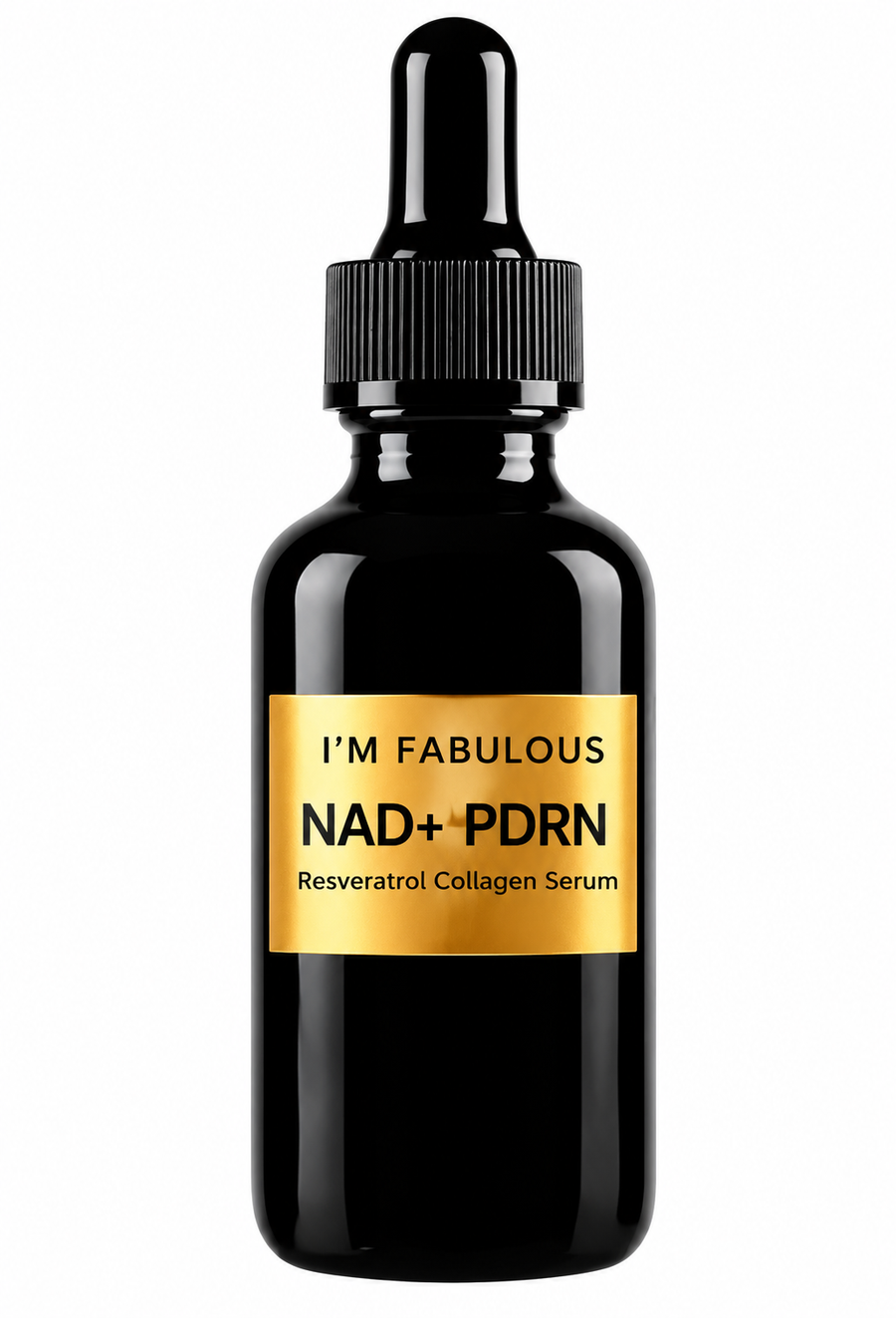
The NAD+ PDRN Resveratrol Collagen Serum pairs PDRN with NAD+ for an "energy and recovery" approach.
- Sodium DNA (PDRN)
- Soothing, skin-conditioning recovery support.
- NAD+ & niacinamide
- Radiance and a stronger-looking barrier.
- Resveratrol & vitamin C derivative
- Antioxidant support and brightness.
- Hyaluronate, glycerin & collagen
- Immediate hydration and plumpness.
Chapter fourCan you use PDRN and GHK-Cu together?
Yes. They work through different pathways, so they complement rather than compete. There is no known conflict between them, and both are generally well tolerated. As with any new actives, introduce one at a time, and patch-test if your skin is sensitive.
The routine we recommend
-
Morning: recover and protect. Cleanse, apply NAD+ PDRN Resveratrol Collagen Serum, moisturize, then SPF 30 or higher.
-
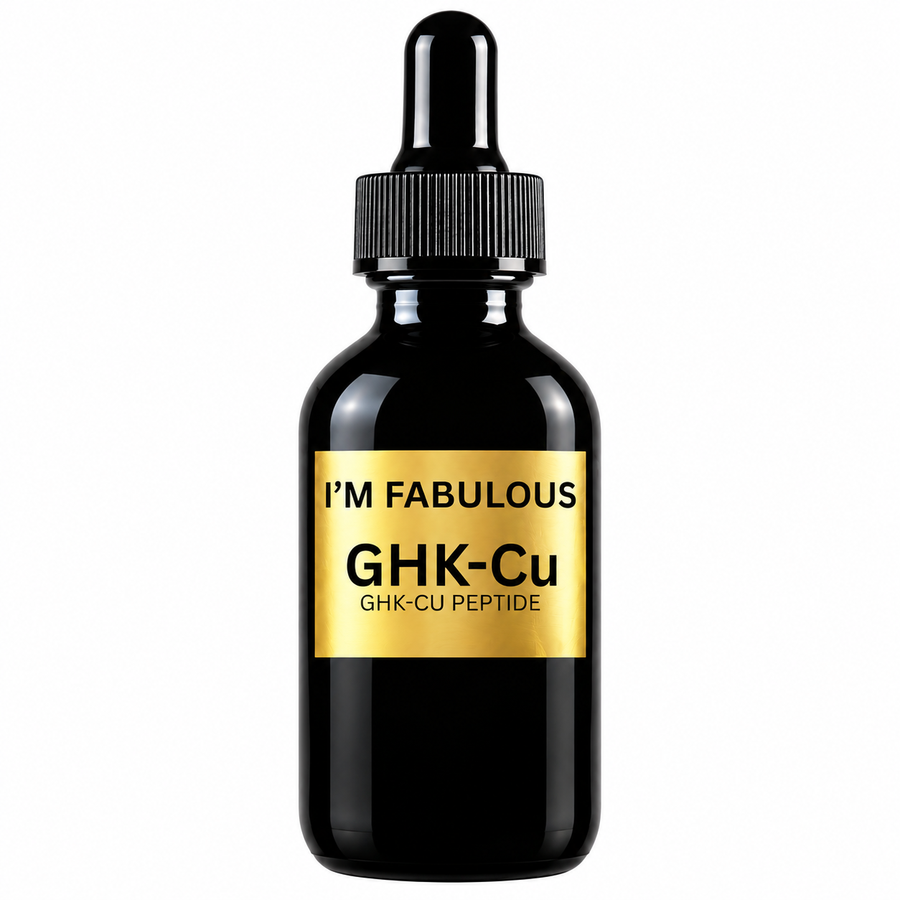
Evening: rebuild. Cleanse, apply GHK-Cu Copper Peptide Serum to face and neck, and let it absorb.
-
Evening: seal. Finish with Peptide Collagen Repair Cream.
-
If you prefer both at night, apply PDRN first, wait a minute, then GHK-Cu, then moisturizer.
-
After a professional treatment, follow your provider's instructions. PDRN-based care is often favored for the recovery phase.
What to be careful with
Many experts suggest keeping GHK-Cu away from strong exfoliating acids and pure L-ascorbic acid in the same application, using them at different times of day instead. Our guide to using vitamin C with copper peptides explains how. Retinoids can be used in the same routine on alternating nights if your skin is sensitive.

Chapter fiveThree myths, corrected
"PDRN and GHK-Cu do the same thing." They don't. GHK-Cu is mainly associated with rebuilding the skin's structure; PDRN is mainly associated with calming and recovery.
"A topical PDRN serum works like a PDRN injection." It doesn't. Injections deliver PDRN directly into the skin. A serum works mostly at the surface, as a soothing, conditioning ingredient.
"The stronger the copper peptide, the better." Not necessarily. Very high concentrations can irritate, and formula quality matters as much as percentage. Consistency over 8 to 12 weeks matters most.
Chapter sixHow long until you see results?
Hydrating ingredients in both serums make skin feel softer and look plumper within days. With GHK-Cu, the clinical studies cited above ran for 12 weeks, which is a realistic window for visible changes in firmness and fine lines. With topical PDRN, expect calmer, more comfortable, more radiant-looking skin over several weeks. No specific timeline has been clinically established for our finished formulas, and results vary.
Building a full peptide routine? Read our peptide serum bundle guide and when to use a peptide serum.
The questions we're asked mostPDRN vs. GHK-Cu, answered
What is the difference between PDRN and GHK-Cu?
GHK-Cu is a copper-binding peptide best known for supporting firmness, density and smoother-looking skin, with decades of research. PDRN is made of purified DNA fragments and is best known for calming and supporting skin recovery, with its strongest evidence as an injectable.
Is PDRN better than copper peptides?
Neither is better overall; they do different jobs. GHK-Cu has more topical research for firmness and fine lines. PDRN is better suited to sensitized, stressed or recovering skin. Many mature skin routines use both.
Can I use PDRN and GHK-Cu together?
Yes. They work through different pathways and complement each other. A simple approach is PDRN in the morning and GHK-Cu in the evening. Introduce one at a time and patch-test if you have sensitive skin.
Which should I apply first, PDRN or GHK-Cu?
If you use both in the same routine, apply PDRN first, let it absorb for a minute, then apply GHK-Cu, followed by moisturizer.
Which is better for sagging skin?
GHK-Cu. It has the most research supporting improvements in firmness, laxity and skin density.
Which is better for sensitive skin?
PDRN is generally the gentler choice and is known for its calming properties. GHK-Cu is also well tolerated, but can tingle at higher strengths.
Can I use GHK-Cu with vitamin C?
Many experts recommend using GHK-Cu and pure L-ascorbic acid at different times of day. Gentler vitamin C derivatives are easier to combine. Strong exfoliating acids are best kept separate from copper peptides.
Is PDRN vegan?
Traditional PDRN comes from salmon or trout DNA, so it is not vegan. Plant-derived and microbial versions exist. Check with the brand to confirm the source of a specific product.
SourcesFurther reading
Pickart L, Margolina A. Regenerative and Protective Actions of the GHK-Cu Peptide in the Light of the New Gene Data. International Journal of Molecular Sciences, 2018.
Comparison of Polynucleotide and Polydeoxyribonucleotide in Dermatology: Molecular Mechanisms and Clinical Perspectives. Pharmaceutics, 2025.
Polydeoxyribonucleotide (PDRN) in Post-procedure Recovery in Aesthetic Medicine: A Narrative Review. Cureus, 2026.
Recover by day. Rebuild by night.
Two advanced serums, one complete approach. Made fresh in small batches in the USA, with three complimentary samples in every order.
Shop the PDRN Serum Shop GHK-Cu SerumThis article is for educational purposes and is not medical advice. Cosmetic products are not intended to diagnose, treat, cure or prevent any disease. Individual results vary. Read our medical disclaimer.