Why Hair Thins After 50, and How Peptides Can Help Bring It Back
I'M FABULOUS COSMETICS · The Peptide Science Edit
Menopause doesn't just change your skin. It changes your hair, at a hormonal level most women are never actually told about. Here's exactly what's happening beneath the surface after 50, and the specific peptides that address it directly.
Roughly half of women notice visible hair thinning during perimenopause and menopause, driven by falling estrogen, relatively higher androgen activity, and the same collagen decline that affects skin. Copper peptides like GHK-Cu work independently of estrogen, improving scalp circulation and follicle health directly. Paired with GHK-Biotin and cellular-support ingredients like NAD+, a consistent, daily peptide routine can meaningfully improve density, thickness, and scalp health over 3-6 months of committed use.
The Hair Change Nobody Warns You About
Most conversations about menopause focus on hot flashes, sleep, and mood. Hair rarely comes up, and yet it's one of the most common and most emotionally difficult changes women describe during this transition. Research suggests roughly half of women notice visible thinning by the time they're through perimenopause and menopause, whether that shows up as a wider part, more hair in the shower drain, or simply hair that no longer holds volume the way it once did.
This isn't a cosmetic coincidence or simply "getting older." It's a direct, biological consequence of the same hormonal shift responsible for the collagen loss showing up in your skin, roughly 30% of skin collagen is lost in the first five years of menopause alone. Hair follicles are just as hormonally responsive as skin, and they're affected by the exact same estrogen decline, just in ways that are less talked about and, until recently, far less understood by the women actually experiencing them.
What's Actually Happening to Your Hair Follicles After 50
Estrogen does more for hair than most people realize. It helps extend the growth, or anagen, phase of the hair cycle, supports blood flow to the scalp, and helps keep follicles anchored in a healthy, collagen-supported environment. When estrogen drops sharply during menopause, several things happen simultaneously.
Androgens, present in every woman's body but normally balanced by estrogen, become relatively more dominant. This shift can cause genetically sensitive hair follicles to gradually shrink, a process called follicular miniaturization, producing progressively finer, shorter strands over time. At the same time, the collagen matrix that surrounds and supports each follicle weakens, the same structural decline responsible for skin thinning and sagging. And the hair growth cycle itself can shorten, meaning more hairs enter the shedding phase before they've had a chance to grow to their full length and thickness.
None of this is a personal failure or a sign that something is fundamentally wrong. It's a predictable, biological consequence of hormonal change, and importantly, one with real, evidence-based options for addressing it directly, at the root, rather than simply living with it indefinitely.

"Copper peptides don't need estrogen to work. That's exactly why they matter so much for hair after menopause."
Why Copper Peptides Specifically Address This Problem
This is the central insight that makes peptides so relevant for hair loss after 50: peptide signaling pathways operate independently of estrogen. GHK-Cu, the most extensively researched copper peptide, activates its own receptor mechanisms to improve blood flow to the scalp, support the collagen environment around each follicle, and help extend the hair follicle's active growth phase, all without needing the hormonal signal that menopause eliminates.
In practice, this means GHK-Cu can meaningfully support hair health even in women who are years past menopause and have negligible circulating estrogen. It works on the follicle directly rather than trying to restore a hormonal signal that's no longer there, which is precisely why it's become one of the most discussed ingredients in menopausal hair care over the past several years.
Our GHK-Cu Copper Peptide Serum delivers this ingredient in a pharmaceutical-grade, organic formulation designed for daily use on the scalp and hairline, and works especially well when paired with a microneedling tool to improve absorption into the scalp's deeper layers.
Rebuild scalp health and follicle support with the copper peptide formula built for daily use.
Shop GHK-Cu Copper Peptide Serum →GHK-Biotin: Pairing Peptide Science With a Hair-Specific Nutrient
While GHK-Cu addresses circulation and follicle support, biotin plays a separate, complementary role. It's a B-vitamin directly involved in keratin production, the structural protein that makes up the hair shaft itself. Combining copper peptide technology with biotin in a single formulation addresses both sides of the hair thinning equation: the follicle environment and the raw material the follicle needs to actually produce a strong strand.
Our GHK-Biotin Peptide Serum was formulated specifically around this combination, giving thinning, menopausal hair both the circulation and structural support it needs in one daily application, without synthetic fillers or silicones that simply coat the hair temporarily rather than addressing the underlying cause.
The Cellular Layer: What NAD+ Adds to a Menopausal Hair Protocol
Beyond the hormonal and structural story, there's a third, cellular-level factor worth understanding: NAD+, a coenzyme found in every cell that fuels mitochondrial energy production and cellular repair. NAD+ levels decline naturally with age, by some estimates as much as 50% by the time women reach their 40s, and that decline directly affects how efficiently hair follicles can regenerate.
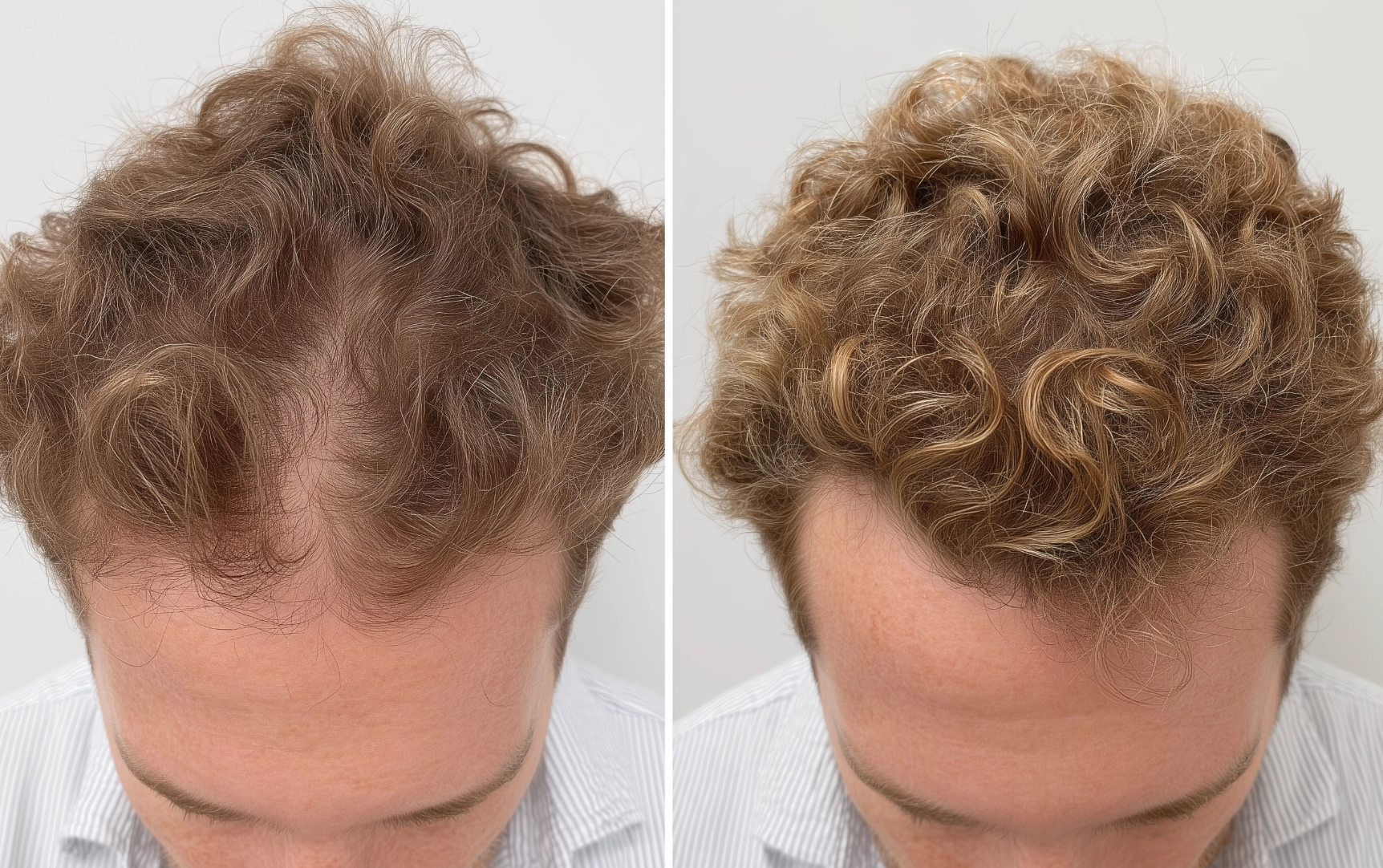
NAD+ supports the anagen, or active growth, phase of the hair cycle, helping dormant follicles reactivate, while also improving scalp circulation and reducing the oxidative stress that hair follicles are particularly sensitive to. It's especially relevant for women navigating perimenopause, when hormonal fluctuation and cellular stress often compound each other. Our full breakdown of this mechanism is available in our guide on NAD+ for anti-aging, biohacking, and hair growth, and the NAD+ Resveratrol Collagen Serum pairs this cellular-support ingredient with collagen-boosting resveratrol for a combined effect.
Two More Formulas Worth Knowing: High Tech Copper Peptide Serum and Ultra Soft Peptide Hair Serum
Beyond the daily copper peptide and biotin duo, two additional formulas address specific needs common among women over 50 dealing with hair thinning. Our High Tech Copper Peptide Serum is a higher-concentration formulation designed specifically for regenerating scalp tissue in more advanced thinning, combining GHK-Cu with supporting actives that stimulate collagen and elastin directly at the follicle level, increase circulation, and calm the oxidative stress and inflammation that often accompanies menopausal scalp changes.
For the hair itself, not just the scalp, our Ultra Soft Peptide Hair Serum addresses a common companion issue to menopausal thinning: strands that have become simultaneously finer and more brittle. Applied to damp mid-lengths and ends, it strengthens hair from within using bioactive peptides rather than simply coating strands the way silicone-based products do, which matters enormously for hair that's already thinning and can't afford additional weight or buildup weighing it down further.
Our full breakdown of the clinical research behind both formulas is available in Are Peptides Good for Hair Growth and Shine?, including double-blind trial data showing copper peptide users outperforming minoxidil-only users on multiple measures over six months.
How This Compares to Minoxidil
Minoxidil remains one of the most established, well-studied treatments for hair thinning, and it works through a genuinely different mechanism than peptides, primarily by widening blood vessels around the follicle and extending the growth phase through a separate pathway. Because the mechanisms are distinct rather than redundant, many women use both together: minoxidil for its vasodilation effects, and copper peptides for follicle support, collagen environment, and circulation, applied at different times of day for a combined routine.
Peptides also tend to be significantly better tolerated on the sensitive, more reactive scalp that often accompanies menopause, without the scalp irritation or unwanted facial hair growth that some women experience with minoxidil. For women looking for a gentler starting point, or a complement to an existing minoxidil routine, peptides offer a genuinely evidence-based option rather than a trend.
Building a Daily Routine for Menopausal Hair Thinning
Consistency matters more than any single product for hair, since the growth cycle itself unfolds over months, not days. A simple, sustainable morning and evening routine tends to produce far better results than an elaborate one that's abandoned after a few weeks.
In the morning, apply GHK-Cu Copper Peptide Serum directly to a clean, dry scalp, focusing on the areas of visible thinning, typically the crown and part line for most women experiencing menopausal hair loss. In the evening, alternate with GHK-Biotin Peptide Serum to layer in the structural, keratin-supporting benefits overnight, when cellular repair processes are naturally most active.
Once weekly, using a microneedling tool on the scalp before applying peptide serum can dramatically increase absorption into the deeper layers where follicles actually live, an approach borrowed directly from clinical dermatology and increasingly used at home for exactly this purpose.
Pair GHK-Biotin with the full peptide collection to support both circulation and hair structure.
Shop GHK-Biotin Peptide Serum →How Hormonal Hair Loss Differs From Other Types of Hair Loss
Not all hair thinning after 50 is hormonal in origin, and understanding the difference matters for choosing the right approach. Female pattern hair loss, technically androgenetic alopecia, tends to follow a specific pattern: diffuse thinning across the crown and part line, with the frontal hairline typically preserved, distinct from the receding hairline pattern more commonly seen in men. This is the pattern most directly linked to the estrogen-androgen shift of menopause, and it's the pattern copper peptides are most extensively studied for addressing.
Telogen effluvium, by contrast, is a temporary, diffuse shedding triggered by a specific stressor, illness, surgery, extreme dietary change, or significant emotional stress, that typically resolves on its own within six to nine months once the trigger passes, though supporting the scalp with peptides during that window can still meaningfully improve comfort and the quality of regrowth. Distinguishing between these patterns, ideally with input from a dermatologist for anyone experiencing sudden or severe shedding, helps set realistic expectations for what a peptide routine can and can't address on its own.
Autoimmune-related hair loss, such as alopecia areata, presents differently still, typically as distinct, well-defined bald patches rather than diffuse thinning, and requires medical evaluation and treatment beyond what topical peptides alone can address. Understanding which pattern you're actually dealing with is the single most useful diagnostic step before investing in any hair-thinning routine.
A Realistic Timeline for Results
Hair grows in cycles, not overnight, and setting realistic expectations upfront makes the difference between sticking with a routine and abandoning it too early. In the first two to four weeks, most women notice reduced shedding when brushing or in the shower, and improved scalp comfort, especially if dryness or sensitivity was part of the original picture.
By weeks six to eight, new, finer hairs, sometimes called "baby hairs," often become visible along the hairline and part, a genuinely encouraging early sign that dormant follicles are reactivating. The most meaningful change, visible increases in overall density and thickness, typically shows up between three and six months of consistent daily use, which mirrors the timeline for skin collagen rebuilding described in our companion guide on peptides and menopause, since both processes depend on the same underlying collagen and cellular repair mechanisms.
A Composite Example: What This Looks Like in Practice
Consider a composite, illustrative example, built from patterns commonly reported rather than a single individual, that reflects what this process often looks like among women navigating this transition. A woman in her early fifties, two years post-menopause, noticed her ponytail had become noticeably thinner and her part visibly wider over the previous eighteen months. She'd assumed this was simply an inevitable part of aging and hadn't connected it to menopause specifically, since most of what she'd read about the transition focused on hot flashes and mood, not hair.
She started a simple routine: GHK-Cu Copper Peptide Serum each morning, GHK-Biotin Peptide Serum in the evening, and once-weekly scalp microneedling before her morning application. Within the first month, she noticed less hair in her brush and a scalp that felt less tight and irritated. By month two, fine new hairs were visible along her hairline. By month five, her hairdresser commented unprompted on how much fuller her ponytail felt. Her experience reflects the general timeline described throughout this piece, not an overnight transformation, but a genuine, biologically grounded improvement built on consistency.
What Else Contributes to Hair Thinning After 50
While hormonal change is the primary driver for most women, it's rarely the only factor, and ruling out or addressing other contributors alongside a peptide routine produces the best results. Thyroid function changes are common around menopause and can independently affect hair density; a simple blood panel with your physician can rule this in or out. Iron and nutritional deficiencies, particularly common in women with heavier perimenopausal bleeding, are another frequently overlooked contributor worth checking.
Chronic stress also plays a measurable role, elevating cortisol in ways that can push more hairs into the shedding phase prematurely, which is part of why NAD+ support, which helps regulate stress hormone activity at a cellular level, can complement a topical peptide routine so effectively. Addressing sleep quality, which often deteriorates during menopause, supports the same cellular repair processes that peptides and NAD+ are designed to enhance.
The Emotional Side of Menopausal Hair Thinning
It's worth naming something rarely discussed openly: hair thinning after 50 carries a real emotional weight for many women, one that's often dismissed or minimized compared to other menopausal symptoms. Hair is deeply tied to identity and self-perception for most people, and watching it visibly change can feel disproportionately distressing compared to how it's typically discussed, as a minor cosmetic footnote rather than a genuine, valid source of distress.
Part of what makes an evidence-based, biologically grounded approach so valuable here isn't just the physical results, it's the sense of agency it restores. Understanding exactly why this is happening, and having a concrete, science-backed routine to address it, tends to reduce the anxiety and helplessness that vague, undiagnosed hair thinning often produces. This is worth acknowledging directly rather than treating hair thinning as purely a technical problem to solve.
Common Mistakes Women Make Addressing Hair Thinning After 50
Waiting too long to start is one of the most common and most correctable mistakes. Hair follicles that have been dormant for years take longer to reactivate than follicles that are just beginning to miniaturize, which is why starting a peptide routine at the first signs of thinning, rather than after years of visible loss, tends to produce meaningfully better outcomes.
Expecting overnight results is another frequent source of frustration that leads women to abandon an approach that was actually working, simply too early to see it. Hair biology moves on a timeline measured in months, and a routine needs to be given a genuine three-to-six-month window before its effectiveness can be fairly evaluated.
And treating hair thinning as purely cosmetic rather than addressing the underlying hormonal and cellular factors, sleep, stress, nutrition, alongside a topical routine, tends to produce more limited results than a genuinely comprehensive approach.
Switching products too frequently is a subtler but equally common mistake. Because hair growth cycles unfold over months, evaluating a new product every few weeks and switching before it's had a fair chance to work resets the clock repeatedly without ever allowing enough time for real results to emerge. Committing to one well-formulated routine for a genuine three-month minimum, rather than chasing the next new product every time results feel slow, is one of the simplest and most effective changes most women can make.
Why Ingredient Compatibility Matters More After 50
Menopausal skin and scalp tend to be more reactive and less tolerant of harsh actives than they were in earlier decades, which makes ingredient compatibility a genuinely important consideration when building a hair routine, not just an afterthought. Copper peptides pair well with hyaluronic acid for added hydration and generally with most other actives, but should be kept separate from strong acids like AHAs or BHAs and from vitamin C, which can destabilize the peptide complex if applied at the same time. Spacing these actives to different times of day, or alternating days, preserves the effectiveness of each without conflict.
This matters especially for women over 50, since a compromised scalp barrier, already more common during and after menopause, is more vulnerable to irritation from poorly sequenced actives. A simpler, well-sequenced routine consistently outperforms an aggressive, poorly planned one, both for results and for comfort.
Lifestyle Factors That Support a Peptide Routine
Topical peptides work best as part of a broader approach rather than in isolation, and a handful of lifestyle factors meaningfully influence how well a hair routine performs. Protein intake matters significantly, since hair is fundamentally made of keratin, a protein, and inadequate dietary protein limits the raw material available for the very growth peptides are working to support. Women following restrictive diets, whether for weight management or other reasons, are particularly worth checking in on this front.
Iron and vitamin D status are two of the most commonly overlooked nutritional contributors to hair thinning in women over 50, and both are worth discussing with a physician, especially if fatigue or other symptoms accompany the hair changes. Sleep quality and stress management support the same cellular repair and hormone regulation processes that both peptides and NAD+ formulations are designed to enhance, meaning a genuinely comprehensive approach addresses lifestyle alongside topical treatment rather than expecting a serum alone to compensate for chronic sleep deprivation or unmanaged stress.
Gentle hair handling also matters more for thinning hair than for fuller hair, since each strand carries proportionally more importance when there are fewer of them. Minimizing heat styling, tight hairstyles that pull on the hairline, and harsh brushing all reduce unnecessary mechanical stress on follicles that are already working hard to recover.
Building the Complete Peptide Protocol for Menopausal Hair
For women looking for the most comprehensive, evidence-based approach, combining copper peptide technology with a broader anti-aging peptide routine tends to produce results that extend well beyond hair alone, since skin, collagen, and hair thinning during menopause share the same underlying biological drivers. Our full peptide serum collection is formulated specifically around this overlap, giving women a single, pharmaceutical-grade, organic system that addresses hair, skin, and overall cellular health together rather than treating each as an unrelated concern.
Frequently Asked Questions
Can peptides actually regrow hair in women over 50?
Peptides like GHK-Cu can improve scalp circulation, revitalize hair follicles, and support the conditions follicles need to produce thicker, healthier strands. Results vary, but consistent use over several months is typically when density improvements become visible.
Why does hair thin so much after menopause?
Declining estrogen and progesterone during menopause allow relatively higher androgen activity, which can shrink hair follicles. Estrogen decline also reduces collagen support around each follicle and can shorten the hair growth phase, all contributing to visible thinning.
What's the best peptide for menopausal hair loss?
GHK-Cu (copper peptide) is the most researched option for hair, since it works on scalp circulation and follicle health independently of estrogen. It is often paired with GHK-Biotin and, for cellular-level support, NAD+ boosting formulas.
How long does it take to see results using peptides for hair thinning after 50?
Most users notice reduced shedding and improved scalp comfort within 4-6 weeks, with visible density and thickness improvements typically appearing between 3 and 6 months of consistent daily use.
Can peptides be combined with minoxidil for hair loss after 50?
Yes. Peptides and minoxidil work through different mechanisms, so many women use both together, applying peptide serum and minoxidil at different times of day, for a combined effect greater than either alone.
Are peptides safe for hair loss caused by menopause?
Yes, topical peptides are generally well tolerated, including on the sensitive, more reactive scalp that often accompanies menopause, and do not carry the systemic hormonal risks associated with some prescription hair-loss treatments.
Setting Realistic Expectations for Long-Term Results
It's worth being direct about what a peptide routine can realistically deliver versus what it can't. Peptides are not a cure for genetic predisposition to hair thinning, and they won't reverse decades of dormant follicles overnight. What they can realistically deliver, based on the mechanisms described throughout this piece, is meaningfully improved scalp health, reduced shedding, revitalization of follicles that are miniaturized but not permanently dormant, and a genuine improvement in the thickness and quality of existing hair.
For women with more advanced hair loss, a peptide routine combined with other evidence-based approaches, minoxidil, addressing underlying nutritional or thyroid factors, and in some cases procedures like PRP or low-level laser therapy under a dermatologist's guidance, tends to produce the most complete results. Peptides work exceptionally well as the foundation of a comprehensive approach rather than as a standalone miracle solution, and setting that expectation from the outset leads to far greater satisfaction with the results that do materialize.
Perhaps most importantly, this transition, and the hair changes that come with it, are genuinely temporary in the sense that the body does eventually adjust to its new hormonal baseline. Supporting that adjustment with the right ingredients, patience, and a realistic timeline gives your hair the best possible chance of finding a new, healthy equilibrium on the other side of it.
Questions Worth Asking Before Starting a Hair Peptide Routine
Have you had a recent physical or blood panel that ruled out thyroid dysfunction, anemia, or significant nutritional deficiency as contributing factors? Is your thinning pattern diffuse across the crown and part line, consistent with hormonal hair loss, or does it present differently, in patches or with a receding hairline, which would warrant a dermatology consultation before starting any topical routine? And realistically, can you commit to a consistent daily application for at least three months, since inconsistent use is one of the most common reasons a genuinely effective routine appears not to work?
Answering these honestly before starting sets accurate expectations and helps identify whether a topical peptide routine alone is likely to be sufficient, or whether it should be paired with medical evaluation and additional treatment. There's no wrong answer here, only useful information that shapes a more effective, realistic plan going forward.
The Bottom Line
Hair thinning after 50 isn't simply an inevitable part of aging to quietly accept. It's a specific, biologically understood consequence of hormonal change, one with real, targeted solutions that work independently of the estrogen decline driving the problem in the first place. Copper peptides, paired with biotin and cellular-support ingredients like NAD+, address the actual mechanisms behind menopausal hair loss directly at the follicle and cellular level, rather than simply masking the symptoms with temporary volumizing or coating agents.
Consistency and realistic timelines matter more than any single product, but for women willing to commit to a genuine three-to-six-month routine, meaningful improvement in density and hair health is a realistic, evidence-based outcome, not just a hopeful marketing claim. The same collagen and cellular repair mechanisms that rebuild skin during menopause are available to rebuild hair health too, and understanding that connection is often the first, most empowering step toward actually addressing it, rather than quietly accepting it as simply another cost of getting older.
For more on how peptides address the broader hormonal changes of menopause, read our guide on peptides and menopausal skin, explore NAD+ for hair growth and cellular health, or browse our full serum collection to build a complete routine that supports your hair, skin, and overall wellbeing through this transition and beyond.
This article is for informational purposes and is not a substitute for medical advice. Hair loss can have multiple causes, and women experiencing significant or sudden hair thinning should consult a physician or dermatologist to rule out underlying medical conditions. Individual results vary, and no topical product can guarantee a specific outcome.